Parmy Olson’s Supremacy is the rare technology book that resists the thrill of novelty and aims instead for understanding. It captures the moment when artificial intelligence stopped being an abstract idea and became a force reorganizing the world.
Olson’s achievement lies in showing how two men—Sam Altman of OpenAI and Demis Hassabis of DeepMind—set off a chain reaction that now defines our relationship to knowledge, work, and even truth. The result is both a narrative of invention and a study of power: how ideals born in the language of progress can turn into engines of control.
Olson details how generative systems reproduce the inequalities embedded in their training data
Olson writes with the precision of a reporter and the patience of a historian. Her style avoids exaggeration, which makes the story all the more unsettling. Beneath the glamour of billion-dollar valuations, she finds two moral experiments that began with hope and ended under the shadow of monopoly.
Supremacy: The Architecture of Ambition
The book begins with a simple question: who, in the age of machines that write, still owns meaning? From that point, Olson reconstructs how Altman and Hassabis each imagined intelligence as a system to be perfected.

Both saw AI as the next frontier of human achievement, but their paths diverged—one driven by entrepreneurial zeal, the other by scientific curiosity.
Altman’s trajectory, from precocious coder in St. Louis to Silicon Valley icon, reveals the evolution of a particular American faith in innovation. His confidence borders on the theological: that through computation humanity can improve itself.
Olson’s portrait is not hostile but precise. She depicts a man who believes deeply in abundance and progress, even as his tools threaten the very social fabric he hopes to enhance.
Hassabis, in contrast, emerges as a figure from a different tradition—the rationalist who wants to understand the mind by recreating it. His company, DeepMind, was meant to be a research utopia.
Yet Olson shows how both founders, despite their differences, end up at the same destination: dependent on the resources of Big Tech, unable to escape the gravitational pull of Google and Microsoft. The dream of independence gives way to the logic of capital.
From Utopia to Corporate Capture
One of Olson’s sharpest insights is how quickly ethical blueprints collapse once confronted with the scale required to build powerful AI. Both Altman and Hassabis started with principles—transparency, safety, open collaboration. Those ideals lasted only until they met the cost of training their models. To survive, they had to align with the largest companies on Earth.
Olson forces readers to confront a difficult question: if intelligence itself becomes a product, what remains of autonomy?
Olson’s account of these alliances reads less like a business story and more like a modern fable about dependency. The “open” in OpenAI becomes a historical relic, and DeepMind’s philosophical vision is subsumed by Google’s commercial priorities. What began as an intellectual race to understand intelligence turns into a corporate struggle for market dominance.
The author does not moralize. Her method is documentary: she lets facts and consequences speak. The tone recalls the best of narrative nonfiction—measured, unsparing, alert to irony. The story of artificial intelligence becomes inseparable from the story of its industrialization.
The Machinery of Bias and Control
In its middle chapters, Supremacy moves from boardrooms to consequences. Olson details how generative systems reproduce the inequalities embedded in their training data: women rendered as sexualized figures, executives imagined as white men, and “criminal” as a synonym for Black. These distortions, she argues, are not accidents but reflections of the hierarchies that built the systems.

She connects the dots between technological bias and economic displacement. Artists, teachers, and journalists appear throughout the book as early casualties of a process that treats creativity as raw material for automation. Olson’s tone remains factual, yet her message is unmistakable: a society that automates judgment cannot avoid automating prejudice.
What makes her analysis compelling is the absence of hysteria. She neither condemns nor celebrates. Instead, she describes how AI quietly reorganizes life—how algorithms trained on collective labor return as instruments of surveillance and replacement. It is this slow violence, not the imagined apocalypse, that defines Olson’s concern.
Echoes of Power and History
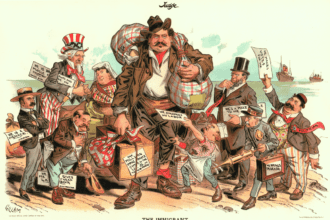
One of the book’s most memorable comparisons links today’s AI race to the nineteenth-century “War of the Currents.” Just as Edison and Westinghouse fought to electrify the modern world, Altman and Hassabis compete to define the architecture of intelligence. In both cases, innovation ends in consolidation. General Electric won the war over electricity; Google and Microsoft dominate the one over data.
Explore Books Written by Our Contributors
Olson is at her best when she treats these parallels not as metaphors but as structures of power. She shows how every generation invents a technology that promises emancipation and delivers hierarchy. The idea of “solving intelligence,” once a scientific quest, now serves as a corporate mission statement. Her writing captures the moral exhaustion of a culture that can imagine building superintelligence but struggles to fund public education or regulate monopolies.
Through it all, Olson never loses sight of the human element. She is attentive to the engineers who believe in their work, to the young artists who lose income when their styles are mimicked by machines, to the ordinary users who cannot distinguish fact from algorithmic fiction. Her empathy grounds the book and keeps it from turning into polemic.
Reading Supremacy in the Present Tense
By its end, Supremacy feels less like a story about technology and more like a study of the modern condition. Olson forces readers to confront a difficult question: if intelligence itself becomes a product, what remains of autonomy? Her answer is not definitive, but her documentation makes avoidance impossible. The narrative accumulates into a quiet sense of dread—the recognition that humanity’s new tools are designed by institutions with almost no democratic oversight.
For academics, policymakers, and readers simply trying to grasp the stakes, Olson’s work offers a framework rather than a prophecy. She reveals how language, labor, and morality are being reorganized under the banner of innovation. The clarity with which she writes—neither technical nor simplistic—makes this book a touchstone for public debate.
Supremacy earns its title not because it celebrates dominance but because it explains it. Olson traces how control migrated from code to culture, from laboratory ambition to everyday life. Few recent books have described this transformation with such restraint and intelligence. Reading it is not only to understand artificial intelligence, but to see the mirror it holds up to human desire, fear, and power.
Further Readings