Professor in the Graduate School of Public and International Affairs at the University of Ottawa and Leverhulme Visiting Professor at the University of Birmingham. Her most recent book is the co-authored World to the Right: Radical Conservatism and Global Order (Cambridge University Press 2024).
Professor of Sociology at John Jay College and the CUNY Graduate Center. She is the author of Fetal Positions: Understanding Cross-National Public Opinion about Abortion (Oxford, 2025), a global study of abortion attitudes, and coauthor of Handing Down the Faith. Her award-winning research on religion and public opinion appears widely in academic journals and major media outlets.

Professor of Political Science at the University of Chicago, and author of Land Power: Who Has It, Who Doesn’t, and How That Determines the Fate of Societies.
Professor of International Law and Human Rights at the University of Lund, she is also a Research Fellow at the Elcano Royal Institute in Madrid. She holds a Ph.D. from the European University Institute and a political science diploma from UC Berkeley. Her research focuses on human rights, international adjudication, and collective security.
Professor of Anthropology and Human Geography at the University of Central Lancashire, Alsford directs the Institutes for the Study of the Asia Pacific and Area and Migration Studies. A Research Associate at SOAS and Associate Member at Oxford, he specializes in Taiwan, Korea, and the Pacific. He edits academic series at BRILL, Routledge, and Palgrave.

Lecturer of Spanish, works at Christopher Newport University. His book, Guardians of Discourse: Literature and Journalism in Porfirian Mexico, was published in May 2024. Other work can be found in journals such as Letras Hispanas, Hispania, and Studies in Latin American Popular Culture.
Professor at the University of Alicante, he holds a PhD in Mathematics and has experience in both academia and the private sector. His research centers on convex analysis and optimization algorithms. He has published over 40 papers, coauthored multiple works, and serves as Associate Editor for journals such as TOP and Optimization Letters.
British Academy Research Fellow at the University of Oxford and author of Domicide: Architecture, War and the Destruction of Home in Syria (2023). He leads research projects on the impact of violence on urban environments. His work has been featured in the New York Times, the Guardian, and the New Statesman.

Sylvia Dlugasch Bauman Professor of American Studies and the Chair of the Program for the Study of Women, Gender, and Sexuality at Smith College. She is a regular writer and contributing editor at Ms. magazine. Her book, Abortion Pills: US History and Politics, is available as open access through Amherst College Press.
Associate Professor of politics at Kirklareli University, Turkey, with a PhD from Sussex. Author of books on populism and Turkish politics, his research spans party politics, populism, and clientelism, with articles published in leading journals like Third World Quarterly and Party Politics.

Jesse Isidor Straus Professor of Business Administration at the Harvard Business School. His recent books include Complicit; Decision Leadership (with Don A. Moore); Better, Not Perfect; The Power of Experiments (with Michael Luca); The Power of Noticing; Judgment in Managerial Decision Making (with Don A. Moore); and Blind Spots (with Ann Tenbrunsel).
Distinguished Professor and Canada Research Chair in Religious Diversity and Social Change in the Department of Classics and Religious Studies at the University of Ottawa. She is Principal Investigator of the Nonreligion in a Complex Future Project. Her books include Deep Equality in an Era of Religious Diversity (Oxford University Press) and The Transition of Religion to Culture in Law and Public Discourse (Routledge).
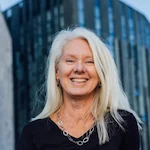
Emerita Professor of Philosophy at George Mason University, USA. Her research focuses on the epistemology, ethics, and politics of human rights, sexual violence, and genocide from a feminist perspective. She has authored books and co-edited several volumes. Her recent essays examine the Woman, Life, Freedom movement in Iran, the politics of disgust, and Japan’s WWII "comfort" stations.
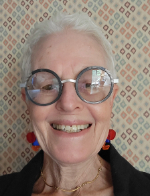
Dillon Professor of American History at Harvard University, where she teaches in the Department of African and African American Studies and Studies of Women, Gender, and Sexuality. Her previous book, Racial Innocence: Performing American Childhood from Slavery to Civil Rights, won five awards. @robinmbernstein, robinbernsteinphd.com

Emeritus Professor of Policy Analysis at the London School of Economics and Political Science. Former Head of the Department of Management. He has worked for the National Coal Board, HM Treasury, the first regulator of quality in the NHS in England and Wales, as an economic consultant, and as an academic in English business and medical schools. In 2023, LSE Press published his book How Did Britain Come to This?.
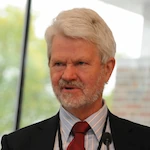
Distinguished Fellow at the Center for History and Strategy, Hillsdale College. A British historian and prolific author of over 190 books, he has had an esteemed career as a professor of history at the University of Exeter.
Professor of History and Africana Studies at Brown University, Guggenheim and Carnegie Fellow, and author of Without Fear: Black Women and the Making of Human Rights (W.W. Norton, 2025).
Professor of Political Science at Clark University and Director of Research for the National Institute for Civil Discourse at the University of Arizona. He has written extensively on primary elections and campaign finance. An ungated chapter from his most recent book, Reform and Retrenchment is available.
Ph.D. in History from the University of Buenos Aires. Professor at the National University of Tierra del Fuego and Assistant Researcher at the National Scientific and Technical Research Council (CONICET). She specializes in the study of 20th-century racism in the United States, focusing on white supremacy and its connections to Christianity.

PhD Candidate in Public Governance and Policy at the University of Bologna. Junior Researcher at Eurac Research, Bolzano/Bozen, specializing in Latin American deliberative democracy.

Deputy-Director of the European Children’s Rights Unit and Derby Fellow at the University of Liverpool. His research focuses on justice, children's rights, and the capabilities approach. A former Newton International Fellow at Queen’s University Belfast, he is the author of Childhood in Liberal Theory (Oxford University Press, 2024).
Associate Professor of Philosophy at San José State University. His research explores political philosophy, ethics, and technology, focusing on misinformation, content moderation, and algorithmic recommendation. Founder of Philmod.org, he has published in leading philosophy journals and authored Moral Judgement: An Introduction Through Anglo-American, German, and French Philosophy (Rowman & Littlefield, 2023).
Professor of Chinese Studies and Director of the Lau China Institute at King's College London. He is the author of over 20 books on modern China, the most recent of which are 'The Great Reversal: Britain, China and the 400-Year Contest for Power ' (Yale) and 'The Taiwan Story ' (Penguin Random House).
Visiting Assistant Professor of Philosophy at Eckerd College in St. Petersburg, Florida. His articles on political philosophy and climate change have appeared in various academic journals. He is also the author of Democracy in Spite of the Demos (Rowman & Littlefield International, 2020).

Professor of Sociology and Director of the Immigration Lab and the Center for Latin American and Latino Studies at American University. He is the co-author of “Immigration Realities: Challenging Common Misperceptions,” published by Columbia in 2024.

Professor of Behavioural Science at Warwick Business School. His research examines the cognitive and social foundations of rationality, with applications to business and public policy. He has written or co-written over two hundred papers and six books, including The Mind Is Flat, and received the David E. Rumelhart Prize.
Behavioural economist and public servant. He completed his PhD in behavioural economics at the University of Oxford as a Clarendon Scholar and SSHRC Doctoral Fellow and has held a range of leadership roles in government. He lives in Ottawa.
Ph.D. in Political Theory from the University of Oxford. Professor of Politics and Founding Director of the Middle East Study Centre at the University of Hull, UK. Global Fellow at the Woodrow Wilson Center and President of The Association for Israel Studies (AIS). Author of more than 20 books.

Scale AI Chair in Data Science for Retail and academic director of the Bensadoun School of Retail Management at McGill University. He also advises corporations and startups on topics related to pricing, retail, AI, and data science. The opinions presented in this article are solely those of the author and do not reflect the views of any affiliated or collaborating institutions.
Associate Professor, School of Applied Politics, Université de Sherbrooke.

Postdoctoral Research Fellow at the Kahneman-Treisman Center for Behavioral Science and Public Policy, Princeton University. He holds a Ph.D. in Behavioral Decision Research from Carnegie Mellon University. His research examines how everyday experiences affect people’s views on policy issues such as economic inequality, and how those views shift as people’s memories of their experiences change over time.
James W. Cortada is a historian who has written over a dozen books on the role of information in modern societies. He is a senior research fellow at the Charles Babbage Institute at the University of Minnesota—Twin Cities. His most recent book is Beyond the Facts: Tacit Knowledge and the Hidden Infrastructure of Our Informed Times(Bloomsbury, 2025). This builds on his related study, Today’s Facts: Understanding the Current Evolution of Information (Rowman & Littlefield, 2025). He may be reached at [email protected].
Vojislava Filipcevic Cordes teaches Comparative Urban Policy at Columbia University SIPA and Migrant Policy and the City at Columbia GSAPP. She is an interdisciplinary urban studies scholar whose work develops the paradigm of “ruptured urbanisms,” examining how interventions in the built environment generate social polarization and group segregation. She is also the author of The Politics of Sanctuary, an urban ethnography and theoretical study based on research on sanctuary activism in New York during the first Trump administration.
Professor of empirical sociology at The University of Tampa. His research focuses on the nonreligious and Mormonism and has been published in various scholarly journals. He is also the author of several books.
Anthropologist at the University of Exeter in the UK, with research interests in religion, medicine, and the environment. She has conducted ethnographic fieldwork in Arizona since 2012 and has undertaken further fieldwork in Louisiana and Missouri in the US as well as in the UK, Sweden, and Belgium. Her first monograph, Ripples of the Universe: Spirituality in Sedona, Arizona, was published in the Class 200 list by the University of Chicago Press in 2021, and her second monograph, A Perturbed System: Religion and Climate Change from the End of a World, came out from the same publisher in July 2026.

PhD in History from the Université de Turin, with a specialization in the intersection of religion and politics, and expertise in Albanian historiography.

Assistant Professor at the Carter School for Peace and Conflict Resolution at George Mason University. She received her PhD in Urban Planning from MIT and is the author of Peace Infrastructures: How UN Peace Operations Build Roads, Bridges, and Solar Farms in the Pursuit of Sustainability (MIT Press, 2026). Her work focuses on socio-spatial and infrastructure planning in conflict settings and as part of peace efforts, as well as its intersection with climate and environmental efforts.
Professor of African Diaspora Studies at Yale University. Author of Awakening the Ashes: An Intellectual History of the Haitian Revolution (University of North Carolina Press, 2023) and The First and Last King of Haiti: The Rise and Fall of Henry Christophe (Knopf, 2025).

Professor of Environmental Sociology at the University of Alberta, she focuses on the social impacts of climate change and energy-society relations. She was a Lead Author for the IPCC’s 5th Assessment Report, serves on UNEP’s Expert Panel, and founded Prairie Urban Farm (2013–2023). She also leads the university’s Climate Action Coalition.
Senior Research Associate at Columbia University's Weatherhead East Asia Institute, an Affiliate Scholar at the U.S.-Asia Law Institute at NYU, and Professor of Law and International Affairs at O.P. Jindal Global University. His work focuses on human rights and constitutionalism in emerging states, about which he has published several books and numerous articles in both academic and popular media.

Professor of Political Science at Cal Poly, San Luis Obispo, and feminist political theorist. She has published widely on US reproductive politics, technology, and justice. Author of Reproductive Labor and Innovation (Duke, 2024) and Governed through Choice (NYU, 2015).

Associate professor of political science at Penn State Altoona. He received his B.A. and Ph.D. at Temple University, where he studied under Aryeh Botwinick and Ellis Katz.
William P. Ames, Jr. Professor of Sociology, and Department Head for Sociology and Anthropology, at Washington and Lee University.
Professor of International Relations at the University of Cambridge and Fellow of Sidney Sussex College. Her work focuses on international organizations, non-state actors, and transnational activism in global governance. Her 2022 book, Vigilantes Beyond Borders (with Jason Sharman, Princeton University Press), examines NGOs enforcing international human rights and environmental laws.

Professor of the Philosophy of Education at Harvard University. Author of Epistemic Ecology (2025), True Enough (2017), Between the Absolute and the Arbitrary (1997), Considered Judgment (1996), With Reference to Reference (1983), and co-author with Nelson Goodman of Reconceptions in Philosophy and Other Arts and Sciences (1988). She is an epistemologist whose work focuses on the nature and scope of understanding. Her research investigates how epistemic agents, working together, devise, deploy, and improve cognitive resources to advance cognitive goals.
Distinguished Professor of Sociology at the University of South Australia. He is the author and editor of over 50 books, translated in more than a dozen languages. He was awarded Member of the Order of Australia for significant service to education, social science policy and research.
Associate Professor of EU Law at Lund University, Sweden. She holds a PhD from Durham University, UK. Her research focuses on the choice of legal basis in EU constitutional law and, more recently, on the EU's legislation regarding digitalization and the balancing of rights.
Humanist Chaplain at Harvard University and at the Massachusetts Institute of Technology (MIT), where he also serves as Convener for Ethical Life in the Office of Religious, Spiritual, and Ethical Life. He is the author of Tech Agnostic: How Technology Became the World’s Most Powerful Religion, and Why It Desperately Needs a Reformation (MIT Press).
Professor of Sociology at the University of Tasmania, Australia. He is lead investigator of the Australian Research Council Discovery project “Religious freedom, LGBT+ employees, and the right to discriminate”. His books include LGBT Christians (2017, with Bronwyn Fielder), Sex, Death, and Witchcraft (2014), and Teenage Witches (2007, with Helen Berger).
Professor of Political Philosophy at the University of Oxford, affiliated with the Faculty of Philosophy, the Department of Politics and International Relations, and Nuffield College. Senior Research Fellow at All Souls College. Her research covers distributive justice, democracy, just war theory, and the ethics of foreign policy, including economic statecraft and espionage.

Professor of Political Economy at the London School of Economics, Co-Programme Director of the MSc in Development Management, and Chair of the Decentralization Task Force at Columbia University’s Initiative for Policy Dialogue.

Assistant Professor of Political Philosophy at the University of Trento, Italy, her latest book, 'Shaping the Profession: Towards a Genealogy of Professional Ethics,' explores the concept of work and the evolving role of professionals.

Researcher at The Immigration Lab, American University. He specializes in rhetoric, framing, and the effects of immigration policies on migrants.

Professor at the Université Paris 8, France, and Co-Director of the Paris Centre for Sociological and Political Research (CRESPPA). She has conducted extensive research on issues of gender and forced migration and is currently leading a major EU-funded research project entitled Growing Up Across Borders, which examines the experiences of young people in forced migration.
Assistant Professor of Sociology at the University of Southern California, she examines how institutions conceal harm, focusing on prisons, courts, and social control. Co-founder of the Captive Money Lab and Affiliated Scholar of the American Bar Foundation, she authored Carceral Apartheid. Her work appears in TIME, The Washington Post, and The Conversation.
Legal anthropologist and currently a Lecturer in Criminology at the University of Bristol. Her background in anthropology informs her work at the intersection of law and society.

Professor of International Politics at Hitotsubashi University in Tokyo and Fellow of the Royal Geographical Society (FRGS). He holds dual Ph.Ds from Sciences Po Paris and Waseda University. His research focuses on international justice, security, humanitarian intervention, and geopolitics across multiple regions.
President of the Royal Society of Canada, Canadian Research Chair in Quebec and Canadian Studies, Director of the Center for Political Analysis: Constitution and Federalism, and Full Professor at the Department of Political Science, UQAM, Montreal.

Researcher in peace and development studies at the University of Gothenburg and associate of the authority research group at the Max Planck Institute of Comparative Public Law and International Law. He writes about human rights, activism, political violence, populism, the liberal order, and transformations of capitalism, among other topics.
Professor of Contemporary History at the University of Bern, Switzerland. His research focuses on mass violence, war, hunger, 'development', and the future of society. Recent publications include How the World Hunger Problem Was Not Solved (2024) and Conditions of Violence (2024).
Associate Professor of International Relations at Richmond American University London and Lecturer at University College London. Her research connects international relations, peace studies and international law, challenging liberal assumptions about post-conflict reconstruction. Her 2026 book, Grassroots Reconciliation Activism from a Comparative Perspective: Rewilding Peace, examines grassroots reconciliation initiatives in eight countries and argues that peace is an ongoing, community-led process. Her current research explores warist assumptions in IR theory, political activism, and how they can be overcome.
Emeritus professor of statistics and operations research at the University of Alicante. He earned his PhD in Mathematics from the University of Valencia in 1979. His research spans geometry, optimization, and convex analysis. He has published over 150 papers and several monographs and textbooks. Goberna has also written on mathematics, politics, and education, and served as Editor-in-Chief of the Springer journal TOP from 2013 to 2016.
Professor of Political Science at Rutgers–Camden. His research focuses on American political development, political theory, inequality, and criminal and constitutional law. He is the author of Dual Justice: America’s Divergent Approaches to Street and Corporate Crime (University of Chicago Press, 2024).
Assistant Professor in the Department of Communication Studies and affiliate faculty at the School of Data Science, University of North Carolina Charlotte. His research focuses on mobile media, streaming media, big data, and artificial intelligence. His work has been published in various academic journals.
Lecturer at Crown College, University of California at Santa Cruz. He works in the Cultural Studies of Science and Technology writing about postmodern war, cyborgization, artificial intelligence and the viral, among other topics.

Professor of Law at Lund University, Sweden, and a Research Coordinator in EU Law. His academic work focuses on EU law, human rights, and digitalization, with numerous publications in these fields.
Book Review Editor for the Journal of the American Academy of Religion and Honorary Researcher of the Richard Charles Lee Canada-Hong Kong Library, University of Toronto, specializing in religion, politics, and gender in transnational Asia. Author of Religion, Secularism, and Love as a Political Discourse in Modern China (2025) and co-host of the podcast 時差 in-betweenness (@shichapodcast).
Assistant Professor of International Relations at Johns Hopkins School of Advanced International Studies (SAIS), specializing in transnational advocacy and international organizations. A former Lecturer at the Hertie School in Berlin, she holds a DPhil in International Relations from the University of Oxford. Her 2022 book, Transnational Advocacy in the Digital Era, examines the influence of digital advocacy on global issues.

Professor of Philosophy and Affiliate Faculty of Women, Gender, and Sexuality Studies at Portland State University, specializing in feminist care ethics, with an emphasis on embodiment, performance, and aesthetics. His work explores the ethics of care and its revolutionary potential, as well as connections to themes like hospitality and precarity. He has authored and edited numerous publications on these topics.

Professor of Political Science at Wright State University.
PhD in Comparative Politics at European University Viadrina, Frankfurt (Oder), Germany. Her work focuses on religion and illiberal politics in Europe, with a particular emphasis on Catholicism and anti-gender movements, Polish-German relations, and more recently, illiberal environment and climate politics.

Associate Professor of Comparative Politics at the Institute of Social Science, University of Tokyo. His research interests include comparative political economy, autocratic politics, democratization, and Central Asia. His first book, The Dictator’s Dilemma at the Ballot Box (University of Michigan Press, 2022) received several academic awards. He earned a Ph.D. in Political Science at Michigan State University.

Professor and Chair of Religious Studies and Political Science at Northwestern University. She is the author of Heaven Has a Wall: Religion, Borders, and the Global United States (2025), Beyond Religious Freedom: The New Global Politics of Religion (2015), and The Politics of Secularism in International Relations (2008).

Chair in Human Rights Law at the University of Sydney Law School. Academic Expert Member at Doughty Street Chambers in London, founding member of Australian Lawyers for Human Rights, and board member of Cisarua, an Afghan refugee-led education centre in Indonesia.

Distinguished Professor of Anthropology at Rutgers University-Newark, Director of the Center for the Study of Genocide and Human Rights, UNESCO Chair on Genocide Prevention, and author or editor of seventeen books, including It Can Happen Here: White Power and the Rising Threat of Genocide in the US (NYU, 2021) and Anthropological Witness: Lessons from the Khmer Rouge Tribunal (Cornell, 2022). Webpage : https://sasn.rutgers.edu/alex-hinton
PhD Candidate in Religious Studies at the University of Fribourg, Switzerland, specializing in ecospirituality.

Graham Kenan Distinguished Professor of Law at the University of North Carolina at Chapel Hill, she wrote over fifty articles and book chapters and testified before U.S. Congress on debtor-creditor relations and their intersections with other major policy issues, prior to the release of her first book, Unjust Debts: How Our Bankruptcy System Makes America More Unequal (The New Press, 2024; audiobook Tantor Media, Feb 25, 2025).
Ph.D. candidate in the Department of Sociology at the University of Pennsylvania, and co-author of “Reunited: Family Separation and Central American Youth Migration”, published by the Russell Sage Foundation in 2024.

Ph.D., Harvard University. Associate Professor of Anthropology and Religion at McGill University, Canada, holding the William Dawson Chair. She edited 'Everyday Sacred: Religion in Contemporary Quebec' (2017) and authored 'Christian Globalism at Home: Child Sponsorship in the United States' (2020), which won the 2021 Schaff Prize. She also leads TERA (Technology, Ecology, Religion, Art), a collective of scholars and artists.

International Relations student specializing in Latin America at Rhine-Waal University of Applied Sciences (Germany). Junior Consultant for the public sector in Development Cooperation.

Professor Emeritus at Université Paris-Saclay and Senior Member Emeritus at the Institut Universitaire de France. His books include works on Tocqueville, Mind vs. Money: The War Between Intellectuals and Capitalism, and most recently, Freedom from Fear: An Incomplete History of Liberalism. He lives in Paris.
Principal investigator at the Institute for Modern Japanese Studies at Heinrich Heine University in Düsseldorf, Germany. Leads the DFG-funded project "Sexual Diversity and Human Rights in 21st Century Japan: LGBTQ+ Activisms and Resistance from a Transnational Perspective". Holds a Ph.D. in Gender Studies from the University of Sussex, specializing in nationalism, queer politics, and LGBTQ+ issues in Japan.

Social and linguistic anthropologist. George Herbert Mead Distinguished University Professor at the University of Michigan. His previous books include Ethical Life: Its Natural and Social Histories (2016), Christian Moderns: Freedom and Fetish in the Mission Encounter (2007), and Signs of Recognition: Powers and Hazards of Representation in an Indonesian Society (1997).
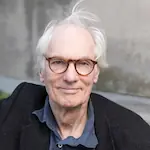
Dr. Stephen Knott recently retired as a Professor of National Security Affairs at the United States Naval War College in Newport, RI. Prior to accepting his position at the Naval War College, Knott was Co-Chair of the Presidential Oral History Program at the Miller Center of Public Affairs at the University of Virginia. He is the author or co-author of eleven books dealing with the American presidency, the early republic, and American foreign policy. His forthcoming book, Conspirator in Chief: The Long Tradition of Conspiracy Theories in the American Presidency, will be published this May.
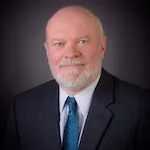
Dean of the Graduate School of Social Sciences and professor of Political Philosophy, Public Philosophy, and Comparative Politics at Chiba University, Japan. He serves as Director of the Japanese Positive Health Psychology Society and head of the Research Center on Public Affairs. Previously a research fellow at the University of Tokyo and a visiting scholar and Bye-Fellow at Cambridge University, his expertise spans political philosophy, positive psychology, public policy, and comparative thought.

Professor of History Emeritus at San Diego State University and the author of The Manly Eunuch, The Making and Unmaking of a Saint, and The History of Sexuality Sourcebook. From 2004 to 2014, he was the editor of the Journal of the History of Sexuality.

Joan Kenney Professor of Economics-Emeritus at Stanford University and the author of The Market Power of Technology: Understanding the Second Gilded Age (Columbia University Press, 2023) and Private Power and Democracy's Decline: How to Make Capitalism Support Democracy (MIT Press, 2026).
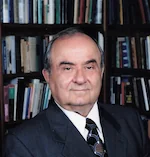
Assistant professor of political science at the University of North Carolina at Charlotte. He studies democratic governance and public opinion with a focus on managing immigration and ethnic tensions in high-income countries.
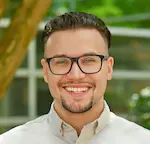
Fulbright Scholar and Chair of Communication Studies at Howard University. He specializes in ICT, intercultural communication, and Afrocentricity. He has authored 18 books and received the NCA Orlando Taylor Distinguished Research Scholar Award (2020). Recent works include Black Lives and Digiculturalism (2021) and Decolonizing Communication Studies (2022).
Research Professor of International Affairs and Political Science at The George Washington University. She is also Director of the Illiberalism Studies Program at GW and has recently edited the Oxford Handbook of Illiberalism (2025).

Faculty Fellow at the University of King’s College, Halifax. She earned her PhD from Queen’s University and has lectured at Carleton University and Heritage CEGEP. She published Ecological Ethics and the Philosophy of Simone Weil: Decreation for the Anthropocene (2024) and co-edited Unprecedented Conversations: The Political Philosophy of Weil and Hannah Arendt with Bloomsbury (2024). She has also published several chapters and peer-reviewed articles on thinkers including Weil, Arendt, Jean-Luc Marion, Edith Stein, Richard Kearney, Plato, Vivekananda, and Hans-Georg Gadamer.

Professor of Philosophy at California State University, Fullerton, she specializes in feminist philosophy, philosophy of race, and phenomenology. Her research has focused on phenomenology and epistemology, particularly concerning the embodiment of women of color. She is the author of A Phenomenology for Women of Color: Merleau-Ponty and Identity-in-Difference (2024) and the editor of Living Alterities: Phenomenology, Embodiment, and Race (2014) and Race as Phenomena: Between Phenomenology and Philosophy of Race (2019).
Ph.D. in Political Philosophy (Université Paris Sciences et Lettres). Associate Researcher at the University of Montreal, specializing in political theory and pluralism. Editor-in-Chief of Politics and Rights Review.
Associate Professor, School of Cybersecurity and Privacy and the Sam Nunn School of International Affairs, Georgia Institute of Technology.
Honorary Fellow at the School of Modern Languages and Cultures, Durham University. He is the author of several academic articles on the use of soft power as a tool of power competition in international relations. He is also the author of Soft Power Competition Between Russia and the West: Contesting Georgian National Identity, 1991–2024.
Assistant Professor of International Business at Georgetown University's McDonough School of Business. She was named a Poets & Quants Top 50 Undergraduate Business Professor in 2021, and her book, From Click to Boom, was recognized by the China-Britain Business Council as one of the Best Books on China for 2024.

Herbert A. Simon University Professor of Economics and Psychology at Carnegie Mellon University. Past president of the Society for Judgment and Decision Making and fellow of the American Academy of Arts and Sciences. His research applies psychology to economics and, more recently, economics to psychology.
Senior lecturer in Modern European History at the University of Amsterdam. Former senior fellow at the Netherlands Institute for Advanced Study (2019-2020) with recent visiting positions in Göttingen and Leuven. Author of Windvanen (2009) and Europe Against Revolution (2023), and editor of several volumes including Antiliberal Internationalism (forthcoming) and Atlantic Monarchisms (2024).
Associate Professor of Political Science at Colgate University. His research focuses on American politics and political psychology. His recent book, The Closed Partisan Mind: A New Psychology of American Polarization, is available from Cornell University Press.
Provost Professor of the Humanities and Board of Trustees Distinguished Professor at the University of Connecticut. His new book is On Truth in Politics: Why Democracy Demands It (Princeton University Press).
Associate Professor at the School of Global Studies, University of Gothenburg. His current research interests concern the history and theory of militarism, the political economy of security, and the history of international thought. He is currently the project leader for the Swedish Research Council-funded project ‘Bringing the Market Back in: The Role of Business in Societal Security in Sweden and Finland’.
Professor of Comparative Historical Sociology at the University College Dublin. He is the author of many award-winning books including Why Humans Fight (2022), Grounded Nationalisms (2019) and The Rise of Organised Brutality (2017). His work has been translated into 15 languages.

Associate Professor of Public Policy and Administration at Penn State Harrisburg.
Professor at George Mason University and Director of its AbuSulayman Center for Global Islamic Studies, he is also Senior Fellow at Georgetown’s Berkley Center and the Atlantic Council. He previously held senior roles at the U.S. State Department and USAID, specializing in religion’s role in U.S. foreign policy.
Researcher, teacher, and practitioner specializing in environmental violence, policy, and peacebuilding. Author of Environmental Violence (2022) and co-editor of Environmental Violence Explored (2024), his work spans five continents, addressing sustainable livelihoods, environmental management, and justice through academic and policy publications.

Professor of Legal History at the University of Valencia. Educated at the University of Cambridge, Harvard, and Max-Planck Institute. Director of the Institute for Social, Political, and Legal Studies. Former president of the European Society for Comparative Legal History. Vice-president of the Universitas Foundation and co-founder of 'Free Thinkers'.

Political science professor at the Université du Québec à Montreal. His research revolves around the debates on multiculturalism in political philosophy and the analysis of public controversies related to identity politics in the public sphere.

Senior Scientist at the University of Innsbruck, Department of Applied Sociology of Law and Criminology (Vienna, Austria). Previously, she was a Senior Social Researcher at the Ludwig Boltzmann Institute of Fundamental and Human Rights in Vienna, Austria. Her research focuses on anti-discrimination and equality, climate change-related migration and displacement, and human rights in the context of climate change.
Associate Professor of Sociology and the director of Queer Mississippi Histories Project at the University of Mississippi. McDowell’s research examines how shifting boundaries between church and state, religion and secularity, challenge and produce inequality in U.S. society. See her website to learn more.
Professor at the Centre for Comparative Politics and Political Theory, Jawaharlal Nehru University, Delhi. An author of several books on feminism and politics, she is active in democratic politics in India. She has translated works across Hindi, Malayalam, and English, receiving the AK Ramanujan Award for translation.

Associate Professor of Criminology at the University of Lincoln, author of Violence and Militants (McGill-Queen’s University Press), Editor of Temple Studies in Criminalization, History, and Society (Temple University Press), and Editor-in-Chief of International Social Science Journal (Wiley). Lives in Lincoln, UK, with his husband, Gioacchino.
Assistant Professor of Philosophy at Purdue University, specializing in moral and political philosophy, ethics of data science, and the history of practical philosophy. He also teaches in the college’s Cornerstone Program. Previously, he held research positions at the University of New Orleans and Wellesley College. He earned his Ph.D. from UC San Diego. His first book, Private Censorship, was recently published by Oxford University Press.

Professor of International Politics at Loughborough University, London where he is the Dean. He is the author of six books including Romaphobia: The Last Acceptable Form of Racism (Bloomsbury, 2017) and Political Voice: Protest, Democracy and Marginalized Groups (Oxford University Press, 2024).
A. C. Reid Professor of Philosophy at Wake Forest University, with research focusing on moral psychology, virtue ethics, and philosophy of religion. He has directed several multi-million-dollar research initiatives funded by the John Templeton Foundation and Templeton Religion Trust. He is the author of six books, more than 140 academic publications, and numerous essays in major international media, and has edited several influential volumes on ethics, character, and moral psychology.
Honorary professor at the University of Essex, clinical faculty at Adelphi University, and supervising analyst at the New School for Existential Psychoanalysis, he has authored over 35 books on philosophy, psychoanalysis, psychology, and cultural studies. His X account is @ProfJonMills.

Associate Professor at the Osaka School of International Public Policy, Osaka University. Author of 'People’s Diplomacy: How Americans and Chinese Transformed U.S.-China Relations during the Cold War' (Cornell University Press, 2024). He earned a Ph.D. in History from the University of Texas at Austin.

Professor Emeritus of Contemporary History at the University of Versailles-Saint-Quentin-en-Yvelines (Paris-Saclay University). He co-founded and directed the Center for Cultural History of Contemporary Societies. Author of numerous books on the history of books, publishing, and reading, he has been translated into many languages.

Lawyer and anthropologist specializing in border technologies. She co-runs the Refugee Law Lab at York University and is a Faculty Associate at Harvard’s Berkman Klein Center for Internet and Society. She is the author of The Walls Have Eyes: Surviving Migration in the Age of Artificial Intelligence, which was a finalist for the 2024 Governor General’s Literary Awards in Nonfiction.

Postdoctoral researcher at Audencia Business School, currently involved in the PODTrust project on digital communication and political trust. Previous research at Sciences Po Paris focused on media narratives around immigration, terrorism, and the Islamic veil in France, comparing traditional media with social platforms across diverse national contexts.
Assistant Professor of Race and Racism and Urban Sociology at the University of Massachusetts Boston. He was a visiting researcher at Malmö University and received a Pipeline Grant from the Russell Sage Foundation to further his research on gentrification, focusing on the experiences of Black Americans and Latinx communities in Boston.
Research Fellow and Lecturer at the Postgraduate Programme in Law at the Federal University of Pará (Brazil), and Research Associate in the Department of Law and Anthropology at the Max Planck Institute for Social Anthropology (Germany).
Distinguished University Professor at the University of Windsor, Canada. He has authored several books, including The Life and Death of Freedom of Expression (2024) and Putting Faith in Hate (2018). He has also edited and co-edited works on law, religion, and constitutional freedoms.

Susan Westerberg Prager Distinguished Professor of Law at UCLA and Faculty Co-Director of its Center for Immigration Law and Policy, he is a leading scholar of immigration law, a Nonresident Scholar at the Carnegie Endowment for International Peace, the author of several influential books, a recipient of major fellowships, and recently published Borders and Belonging (Oxford, 2025).
Professor of Philosophy at the University of Hertfordshire, she focuses on what she calls the “Third Wittgenstein” explored in Understanding Wittgenstein's On Certainty. Her works include Hinge Epistemology, Extending Hinge Epistemology, Certainty in Action, Real Gender, and Wittgenstein on Knowledge and Certainty. She is Founding President of the British Wittgenstein Society.
Award-winning filmmaker and Julian Clarence Levi Professor in the Humanities at Columbia University. She founded the Latino Arts and Activisms collection at Columbia. Her notable works include the books Boricua Pop: Puerto Ricans and the Latinization of American Culture (2004) and The Latino Media Gap (2014). Her films include Brincando el charco (1994) and Valor y Cambio (2019–2024), a project focused on art, storytelling, and social justice in Puerto Rico and New York.
Full professor in the School of Social Work at the University of Ottawa and editor of Beyond Algorithms. Her research, grounded in social representations theory, examines how social groups make sense of public problems and how shared understandings of issues such as addiction, immigration, and artificial intelligence shape relations of power.
Former President of the Parliamentary Assembly of the Council of Europe. Full Professor of Political Philosophy at the University of Trento, Italy, specializing in political theology and the works of Carl Schmitt.

Associate Professor of English language, translation and linguistics at the University of Milan, Italy, where she lectures in linguistic mediation and discursive practices in legal and international settings. She works on LSP theories and applications, knowledge dissemination and popularization dynamics, legal discourse and terminology, especially in multilingual institutional settings, and institutional legal translation.

Researcher at the WODC Research and Data Centre in The Hague and at Erasmus University Rotterdam. His research focuses on prosociality and intergroup relations, including the relations between refugees and receiving societies.
Honorary Professor at the University of Exeter, he has authored over thirty books on World War II, air power, and the dictatorships of Hitler and Stalin. The Bombing War won a Cundill Award in 2014, and Blood and Ruins: The Last Imperial War 1931-1945 received the Duke of Wellington Medal for military history. His latest book, Why War?, is published by Penguin.

Professor of Financial Economics at the University of Surrey, Guildford (UK. Previously, she had taught Economics at the University of Wales at Aberystwyth and Cardiff Business School and subsequently at the Economics and Finance Department Brunel University in London.
Professor of Political Philosophy at Suor Orsola Benincasa University in Naples, Italy, specializing in 20th-century German philosophy and literature.

Senior researcher in political science at the Swedish Institute for European Policy Studies (SIEPS). His main research interests are in policies on migration, asylum and borders in the EU.

Associate professor of Humanities and Comparative World Literature at SF State. He is the author of When Animals Dream: The Hidden World of Animal Associate professor of Humanities and Comparative World Literature at SF State. He is the author of When Animals Dream: The Hidden World of Animal Consciousness and Philosophy and Its Myths, and co-author of Chimpanzee Rights: The Philosophers’ Brief. He co-hosts the philosophy podcast Overthink.
Dean and Professor of Law at Reykjavik University and Visiting Professor at Université Paris (II), Panthéon-Assas. Member of the Financial Supervisory Board at the Icelandic Central Bank and Ad-Hoc Judge at the EFTA Court, Luxembourg. Former Director of the Internal Market Affairs Directorate at the EFTA Surveillance Authority in Brussels.
Principal Lecturer in History at Manchester Metropolitan University, he is the author of Persecution and Genocide: A History (Routledge, 2025) and The Anglo-Scots Wars, 1513–1550 (Boydell, 1999). His research focuses on conflict between nations, religions, and ideologies, including the role of animals such as horses, pigeons, and dogs in war.
Health Sciences Clinical Professor of Psychiatry at the University of California, San Francisco (UCSF). An MIT and UCLA graduate, he has authored over 100 publications on psychosis, delusions, and conspiracy theories.
Assistant professor of U.S. history at the University of Alaska, Fairbanks. He authored The Nature of the Religious Right (Cornell University Press, 2022), the first historical account of white conservative evangelicals' opposition to environmental protection. He is currently researching the intersection of religious faith and consumer culture.

Postdoctoral researcher on religion and security at Utrecht University. His research explores religious leaders' roles in counterterrorism in Nigeria and Kenya. Winner of the 2024 E-International Relations Article Award. His book Towards a New Christian Political Realism (Routledge, 2025) examines religion’s role in international relations.

Associate professor of Hispanic studies at Bates College and the author of Revolutionary Visions: Jewish Life and Politics in Latin American Film (University of Toronto Press, 2020) and Absorption Narratives: Jewishness, Blackness, and Indigeneity in the Cultural Imaginary of the Americas (University of Toronto Press, 2025).

Professor of Political Science at Coventry University. Having originally studied neuroscience, he gained a doctorate in Political Science at Oxford University. His most recent book is The Political Brain: The Emergence of Neuropolitics (CEU Press 2024).
Professor of Sociology at the University of New Mexico. Her latest book, Slow Violence: Confronting Dark Truths in the American Classroom (St. Martin's Press/Macmillan, 2025), was shortlisted for the 2024 Lukas Work-in-Progress Prize and received a 2026 SPE Outstanding Book Award. Her research focuses on race, gender, and education.

Professor of Sociology at Oakland University, former editor of Gender & Society, and author of Gender and Social Movements (2021). Her research focuses on U.S. women’s movements and feminist activism, with recent work exploring music's role in the 1960s-1980s women’s movement.
Lecturer in linguistics at La Trobe University in Australia. He previously edited the Routledge Handbook of Language Revitalization, and has published academic articles in journals such as Annual Review of Anthropology, State Crime Journal, The Political Quarterly, and others. You can also find his writing in The Nation, Jacobin, ROAR Magazine, and elsewhere.
Director of Lex Academic and Visiting Professor of Philosophy at the University of Hertfordshire. His authored books include The Things We Do and Why We Do Them, Character and Causation, From Action to Ethics, Real Gender, and Wittgenstein on Other Minds. He is currently working on a book on understanding oneself and others for Yale University Press.
Associate Professor of International Relations and Program Chair at Leiden University. He focuses on international human rights norms, global security, and U.S. foreign policy. His research has earned the 2023 Cecil B. Currey Book Award. He has held research fellowships at Yale, NIAS, and the Max-Planck-Institute.
Professor of International Relations at the University of South Florida. He recently served as Country Expert of the USAID Democracy, Human Rights, and Governance (DRG) work team in South Sudan.
Professor Emeritus of Anthropology at Utrecht University, the Netherlands, specializing in the study of mass violence, sociocultural trauma, and memory politics. His books include the award-winning Political Violence and Trauma in Argentina (Pennsylvania, 2005) and Argentina Betrayed: Memory, Mourning, and Accountability (Pennsylvania, 2018). Webpage: https://www.uu.nl/staff/trobben.
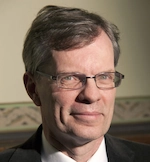
Professor of public policy at the University of Massachusetts Amherst. He received his law degree from the University of Toronto and PhD from Harvard University. He has authored ten books. In 2022, he received the ASPA Riggs Award for Lifetime Achievement in Comparative Public Administration. His website is www.alasdairroberts.ca.

Alfred Cowles Professor of Political Science at Yale University, where he also co-directs the Center for the Study of Representative Institutions. His research focuses on the history of political philosophy, the relation between religion and politics, and theories of representative government. He is the author of several books, including Reading Leo Strauss and Modernity and Its Discontents.
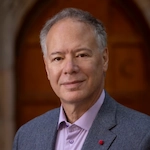
Professor of International Crimes at the University of Groningen, the Netherlands. Her research is both inter- and multidisciplinary, with a focus on international crimes and terrorism. She has published extensively and delivered numerous public lectures. Her most recent book, Perpetrators of Mass Atrocities – Terribly and Terrifyingly Normal? (Routledge, 2024), will soon be published in Dutch. She also hosts a podcast series of the same title.
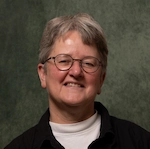
Associate professor in the Department of Politics and International Studies at the University of Regina. His research focuses on explaining the movement and directionality of the politics of diversity (such as multiculturalism and multinational federalism) and on understanding their near- and longer-term prospects.

Professor of Law at the University of Deusto (Bilbao). He has been vice-rector, dean of the Faculty of Social and Human Sciences, and director of the Human Rights Institute. He has advised the Basque Ombudsman, led an NGO for immigrant rights, and participated in Council of Europe missions. His research focuses on integration policies, national conflicts, and minority rights.

Lecturer at the University of Strathclyde and researcher at institutions in Lisbon, São Paulo, Prague, and Vilnius. His work explores law, memory, and cultural heritage. Author of Intersections of Law and Memory (Routledge, 2024), he has presented at over 50 conferences and published more than 30 works.

Ph.D., Harvard University. Lecturer in the Department of Government at Harvard University, her research focuses on political behavior, employing experiments to explore voter reactions to political emphasis on meat consumption, animal rights, and similar subjects. Recognized as Harvard’s South Asian Woman of the Year in 2022, her work contributes to understanding the nuanced interplay between political advocacy and public response.

Senior researcher in Global Development Studies at the University of Helsinki. She authored "Civil Society in China and Taiwan: Agency, Class and Boundaries" (Routledge 2018).
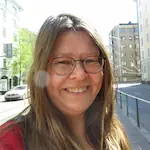
Director of the Center for Judicial Engagement (CJE) at the Institute for Justice and a senior attorney. He is the author of the book Baby Ninth Amendments: How Americans Embraced Unenumerated Rights and Why It Matters, published by University of Michigan Press. He has written extensively on state constitutional law, unenumerated rights, judicial review, economic liberty, property rights, international law, and other subjects.
PhD in Sociology and postdoctoral researcher at the GRABS project, affiliated with the Cresppa and the Institut Convergences MIGRATIONS. She lectures at Sciences Po Paris and specializes in migration, refugees, gender, and survival strategies.
Professor of Political Science at the University of Mainz, specializing in Comparative Politics. Previously affiliated with the University of Münster, University of Osnabrück, and the Max Planck Institute for the Study of Societies in Cologne. Research interests include comparative political economy, democracy, social and political inequality, voter turnout, and political representation. Served as head of the German Political Science Association (DVPW) from 2018 to 2021.

Professor in the Department of Psychological and Brain Sciences at Texas A&M University. Fellow of the American Psychological Association and of the Association for Psychological Science.
Assistant Professor of Political Science at Yale-NUS College in Singapore. His publications include Democracy despite Itself: Liberal Constitutionalism and Militant Democracy (Oxford University Press, 2024) and Carl Schmitt’s State and Constitutional Theory: A Critical Analysis (Oxford University Press, 2018).

Professor of English and Director of the Centre for the Study of Theory and Criticism at Western University. He specializes in environmental literature and existential risk, with recent books including What Is Extinction? (2023) and Calamity Theory (2021), co-authored with Derek Woods.

Selby is Professor of Religion and Culture and Political Science at Memorial University where she also serves as director of the Nexus Centre for Research in the Social Sciences and Humanities.

Professor in Law at North West University, Johannesburg.
Associate Professor and Head of 'Defense and Society' at IRSEM. His research covers military sociology, ethnicity, immigration, and the MENA region. He has authored numerous articles and two books, including Penser la radicalisation djihadiste, winner of the Louis Massignon Prize (2023) and First Book Award from the International Association of French-Speaking Sociologists (2024).

Ph.D. student in the Department of Psychological and Brain Sciences at Texas A&M University. Studies mental effort, decision-making, affect, and the psychological effects of guns.
Stanley Morrison Professor of Law at Stanford University and Faculty Co-Director of the Stanford Criminal Justice Center. A former federal prosecutor, he writes and teaches about criminal law, criminal procedure, and the law of evidence. His most recent book is Criminal Justice in Divided America: Police, Punishment, and the Future of Our Democracy (Harvard University Press 2025).

Associate Professor of History at Wilfrid Laurier University, Canada. His research in business and law explores histories of markets and morality, public and company law, and classical liberal thought. Forthcoming publications by Chan Smith include historical studies of polarization and corruption, and the development of social purpose businesses.

Senior Research Fellow at the Max Planck Institute for Comparative Public Law and International Law. She has been a visiting scholar at Harvard and coordinated the Law and Animals doctoral program at the University of Basel. She serves on the advisory board of the Cambridge Centre for Animal Rights Law and the editorial board of the Journal of Animal Law, Ethics and One Health.

PhD Candidate in Religious Studies at the University of Ottawa, Canada, specializing in Nonreligion.
Executive Director of the Center for a Free Cuba. He was a program officer for Latin America Programs at Freedom House. He has testified on human rights issues in Cuba before the U.S. Congress and the Inter-American Commission on Human Rights in Washington, DC.
Visiting Researcher in Sociology at Boston University. Author of Symbolic Power, Politics, and Intellectuals (2013), co-winner of the ASA's History of Sociology Distinguished Scholarly Book Award, and of the widely cited Culture and Power: The Sociology of Pierre Bourdieu (1997). His research interests include political sociology, intellectuals, and culture.
W. Alton Jones Professor of Philosophy and Political Science at Vanderbilt University, specializing in public discourse, political polarization, political equality, and democratic ethics. Author of over 100 scholarly articles and 16 books, including the trilogy Overdoing Democracy (2019), Sustaining Democracy (2021), and Civic Solitude (2024), all published by Oxford University Press.
Professor of Philosophy of Science and Technology at Universita’ di Napoli Federico II in Italy. His research interests focus on ELSE (Ethical, Legal, and SocioEconomic) issues arising in the context of AI, human-computer, and human-robot interactions.
Associate Professor of Cultural Studies in the Department of Cultural and Religious Studies at The Chinese University of Hong Kong. She is the author of Digital Masquerade: Feminist Rights and Queer Media in China (New York University Press, 2023).

Tier 2 Canada Research Chair in Black Expressive Culture and Creativity in the Diaspora and Associate Professor of Performance at Toronto Metropolitan University. She is the Founder and Director of Mapping Ontario's Black Archives (MOBA) and the Black Creative Lab, as well as a Member of the Royal Society of Canada's College of New Scholars, Artists and Scientists. She is the author of four books, including her most recent, Staging Blackface in Canada: Public Amusements, Variety Shows, and Racial Acts in an Age of Imitation, 1898–1919 (Wilfrid Laurier University Press, 2026). Her research has been supported by more than $5.9 million in competitive funding, including a $600,000 Canada Research Chair and grants from SSHRC, the Ontario Arts Council, and the Canada Foundation for Innovation. She is a TEDx speaker and a frequent media commentator on race, performance, and Black Canadian cultural history.
Professor of Social and Public Policy at the University of Helsinki with a doctorate from Oxford. Her research examines ageing societies, intergenerational relationships, and critiques ageing policy paradigms. She has contributed to the development of Grounded Theory and qualitative research. Currently, she leads the ERC-funded LEGACIES project (101094124) on material and environmental legacies.
Sophie Toupin is a professor at Université Laval, specializing in the intersection of communication studies, information technology, and critical international development.

Assistant Professor in European Politics at Charles University, Institute for International Relations, and Associate Research Fellow at the Czech Academy of Sciences; she specializes in political, economic, and social transformations in Europe. Formerly with the British Embassy and Konrad-Adenauer-Stiftung, her work appears in Comparative European Politics, European Review of International Studies, and in volumes published by Palgrave, Routledge, and Bloomsbury.

Associate Professor at the University of Bristol, specializing in Global Childhoods and Welfare. Her research in Ghana and Nigeria explores childhood constructions and children's rights. She has published widely and serves on editorial boards in childhood studies.

Full Professor of Sociology at the School of Law, National University of Córdoba, and tenured researcher at the National Scientific and Technical Research Council (CONICET), Argentina.
Historian of early American religion, Reverend Priscilla Wood Neaves Distinguished Professor of Religion and Politics, and courtesy Professor of History at Washington University in St. Louis. PhD from Princeton; fellowships at the American Antiquarian Society and Huntington Library. Publications include Heavenly Merchandize (Princeton) and The Opening of the Protestant Mind (Oxford).

Professor at the Graduate School of Public and International Affairs (GSPIA) at the University of Ottawa, specializing in international relations and security studies, with extensive publications on these topics. Srdjan holds a PhD in Political Science from The Ohio State University, having also studied at the University of Toronto and York University.
Permanent Associate Research Professor at Lille University, France. She holds a Ph.D. in Jurilinguistics from Université du Littoral Côte d’Opale (1999) and an "Habilitation in Private Law" from Lille University (2015). Her research focuses on legal semiotics, visual studies, legal culture, translation, and discourse. Wagner serves as Editor-in-Chief of the International Journal for the Semiotics of Law, and co-edits several series on Law and Visual Jurisprudence, gender justice, and legal communication. She is also President of the International Roundtables for the Semiotics of Law (IRSL).

Associate Professor of Political Science at the University at Albany, SUNY. He is author of Inequality, Crime, and Resistance in New York City (Temple University Press, 2025), Blazing the Neoliberal Trail: Urban Political Development in the United States and the United Kingdom (Penn Press, 2016) and coeditor of How Ideas Shape Urban Political Development (Penn Press, 2020).
Walter H. Annenberg Distinguished Professor at Duke University. She specializes in modern Japanese art, design, and visual culture. Her books include Mavo, Imaging Disaster, Gas Mask Nation, The Complete Commercial Artist, and The Fine Art of Persuasion, focusing on aesthetics, politics, and visual media in Japan.
UNESCO Chair in Global Understanding for Sustainability at Friedrich Schiller University Jena, Germany; and Chair of The Jena Declaration, which promotes culturally grounded approaches to global challenges.
Professor of History of Art at The Ohio State University. His teaching and research focus on medieval European art and architecture, particularly issues related to the history of science, gender and sexuality studies, and materiality. He is the author of three books: Body-Worlds: Opicinus de Canistris and the Medieval Cartographic Imagination (2014), Trecento Pictoriality: Diagrammatic Painting in Late Medieval Italy (2023), and Queer Making: On Artists and Desire in Medieval Europe (2025).
Distinguished Professor Emerita at the University of Wisconsin-Milwaukee. She is the author or editor of forty books that have been published in ten European and Asian languages.

Professor in the Graduate School of Public and International Affairs at the University of Ottawa and Leverhulme Visiting Professor at the Queen Mary, University of London. His most recent book is the co-authored World of the Right: Radical Conservatism and Global Order (Cambridge University Press 2024).
Professor at Georgetown University in Communications, Culture, and Technology. Harvard and Johns Hopkins graduate. Author of Measuring Soft Power in International Relations (Rienner 2024), Forging Trust Communities (Johns Hopkins, 2015), and From Iron Fist to Invisible Hand (Stanford, 2009). Dr. Wu’s research reflects solely her views and not those of the US Federal Communications Commission, its members, or staff.

Research Scholar in Geography at the University of Connecticut and Senior Fellow (Arctic Security) at the Institute of the North, specializing in Arctic geopolitics, international relations theory, and the tribal foundations of world order. 2020 Fulbright Scholar at the University of Akureyri in Iceland. Author of 11 published monographs and editor of 3 volumes.

Director of Global Governance at WZB Berlin Social Science Center and Professor of International Relations at Free University Berlin. Founding Dean of the Hertie School of Governance and Co-Founder of the Berlin Graduate School for Transnational Studies.

Professor and Director of the Center for China-US Cooperation at the Josef Korbel School of International Studies, University of Denver. He is the founder and editor of the Journal of Contemporary China and the author or editor of over two dozen books and numerous academic articles. His latest book, The Dragon Roars Back: Transformational Leaders and Dynamics of Chinese Foreign Policy (Stanford University Press, 2023), was named one of Foreign Affairs Best Books of 2024.