From Scholarly Disagreement to Personal Discredit
I was pleased to learn last week that none other than the widely renowned lead of the North American and Arctic Defence and Security Network (NAADSN), P. Whitney Lackenbauer, is a reader of this humble writer’s columns on the Arctic! Moreover, he even devoted an entire NAADSN “Quick Impact” reaction to my recent observations and analyses.
- From Scholarly Disagreement to Personal Discredit
- A Long History of Dissent in the Canadian North
- Confronting Power in the Northern Public Sphere
- Academic Privilege and the Ethics of Northern Scholarship
- Misrepresentation as a Tool of Academic Cancellation
- From Misrepresentation to Moral Evasion
- Narrative Warfare as an Instrument of Cancellation
- Genocide by White Coats: Denmark’s Unfinished Reckoning
- Voices from Greenland: Protest, Memory, and Demographic Loss
It’s not every day I receive a direct response from such a well-connected member of the academic elite, whose work is supported by public research funding and sustained institutional networks.
But my joy was short-lived when I found that Lackenbauer, while a reader of my work, was hardly a sympathetic one, and was further disheartened to see the extent to which his response shifted from substantive critique to personal characterization, in an apparent effort to discredit, and thereby marginalize, my arguments. This was not a case of my being thin-skinned, and unready to meet my critics. I have been in the business of addressing controversial and uncomfortable issues for many decades, I have long understood that advancing such arguments requires a willingness to receive it in return.
A Long History of Dissent in the Canadian North
Confronting Power in the Northern Public Sphere
Indeed, my readers are familiar with my long history of telling truth to power, hard truths of the unvarnished variety, dating all the way back to my time in Yellowknife (1994-98), and before that Inuvik (1990-1993) and before and after that, Whitehorse (1989-90, and back again 1998-99) where I earned the distinct honor of being blacklisted and targeted for cancellation by the Inuvialuit Regional Corporation leadership (until an illicit bonus scandal led to its leadership’s downfall and a necessary generational housecleaning).
The discrepancy between what was written and how it was represented is significant.
This pattern also included the leadership of the Inuit Circumpolar Conference (now Council, but back then just a triannual conference) when they united to block Indigenous rights activist and scholar Dalee Sambo (now Dorough) from running for its International Chair position, an episode I chronicled for the northern press. She would eventually serve as International Chair a quarter century later.
It also included the Steelworkers’ Union (which sought to organize the English-speaking staff at CKLB Radio and NCS-TV where I was executive director) in a manner that would have obstructed efforts to broadcast in Native languages, only to be thwarted by the perseverance of NCS’ leadership and the courage of its Native language staff).
Finally, it involved the management of Television Northern Canada, which broke faith with the northern communities it was meant to serve during the process that led to the creation of APTN, causing the demise of TVNC while shifting jobs and investment to Winnipeg and leaving proposed conflict-of-interest guidelines unenacted, guidelines that I drafted and that my board, during my tenure as general manager of Northern Native Broadcasting, Yukon (NNBY), formally submitted to the TVNC/APTN board but which were ultimately rejected.
Academic Privilege and the Ethics of Northern Scholarship
Lackenbauer must have somehow missed the headline of my life’s work: as a once and forever northerner at heart, I take to heart the motto of the late Whitehorse Star, “Illegitimus non carborundum” (Latin for “Don’t let the bastards get you down”)! That motto has long served as a reminder to remain focused when responding to criticism, including what I regard as unnecessarily personal attacks by Lackenbauer, Canada’s widely cited Canada Research Chair (Tier 1) in the Study of the Canadian North, and Professor at the School for the Study of Canada at Trent University.
The bulk of my writing has focused on Indigenous empowerment.
In highly networked academic environments, senior scholars often operate across multiple institutions and commitments. For those of us for whom northern scholarship remains both a professional responsibility and a long-standing commitment, such arrangements can raise broader questions about the relationship between institutional privilege and scholarly accountability.
Misrepresentation as a Tool of Academic Cancellation
After publishing well over a dozen books (all but three of them monographs) and hundreds of articles, I was surprised to see Lackenbauer begin his critique of my work by professing surprise at my views, despite the consistency of my published work over many years.

My readers, familiar with this record, are rarely surprised by my analytical positions:
“Over my morning coffee, I was shocked to read the latest offering from Barry Scott Zellen, a frequent contributor to the Northern News Service (NNSL) directed at Northern Canadians, under the headline: ‘After Venezuela, could Greenland really be next?’ This is an important question. In the end, as in previous stories that he has published, Dr. Zellen’s answer tries to discredit the Kingdom of Denmark as a weak, negligent, and violent colonial actor which has no right to Greenland. In so doing, Zellen seeks to legitimize the aggressive actions by the Trump Administration seeking to annex our eastern neighbour.”
In reality, my own words as published by NNSL were far more measured than this characterization of them. As I wrote: “Given deep moral injustices in past Danish colonial policies in Greenland, and the continued suffering that has resulted, one could imagine a confluence of humanitarian intervention, commercial interests (particularly rare earths and uranium), and national security once again aligning as we saw this week in Venezuela, providing justification for another implementation of the Trump Doctrine.” At no point did I describe Denmark as a weak, negligent, or violent colonial actor, nor did I claim that it had no right to Greenland.
The discrepancy between what was written and how it was represented is significant. It reflects a broader pattern of interpretive escalation that has accompanied this debatesince at least 2019, when President Trump first proposed buying Greenland and I wrote, in an op-ed in The Globe and Mail, that it “wasn’t necessarily a bad idea.” Since then I’ve continued to study and write about this topic noting both the growing attention it has received and the strong reactions it has generated among those who view any discussion of such possibilities as inherently illegitimate.
From Misrepresentation to Moral Evasion
While I don’t call Denmark, as Lackenbauer inaccurately contends, a weak, negligent, and violent colonial actor,I do speak of Danish genocide against Greenland, and the callousness of Copenhagen’s feigned, half-hearted and inhumanely delayed apologies.
Lackenbauer seems content, in my view, with his silence in the face of this history. He devotes greater attention to early nineteenth-century offenses by the United States against Indigenous peoples than to late twentieth-century Danish policies affecting Greenlanders.
Narrative Warfare as an Instrument of Cancellation
Lackenbauer next turns to the slippery academic slope of what he describes as a “narrative competition,” a framing I characterize instead as “narrative warfare” in an increasingly militarized global context. Such approaches have accompanied past foreign policy failures, including Vietnam and Afghanistan, where the strategic management of narratives substituted for substantive political resolution. A word of the wise: be wary of those who reduce complex events to “narrative competition.” They’re much like those who attribute historical causation to social construction, or empirical truths to discourse analysis, and other trendy but ephemeral academic fads.
As Lackenbauer writes: “Given that much of our work focuses on the role of misinformation and narrative competition, we have seen this discrediting rhetoric before (from Russian and Chinese influencers, we should add) and take it seriously from a writer who is unabashedly seeking to advance US interests.”
The charge of “discrediting rhetoric” however, rests on a reversal of attribution. It is not my analysis that relies on such rhetoric, but rather his response directed at it, which reframes substantive disagreement as strategic malign influence. By invoking external actors and geopolitical adversaries, this move shifts the discussion away from the merits of the argument and toward questions of political alignment, effectively narrowing the space for legitimate scholarly dissent.
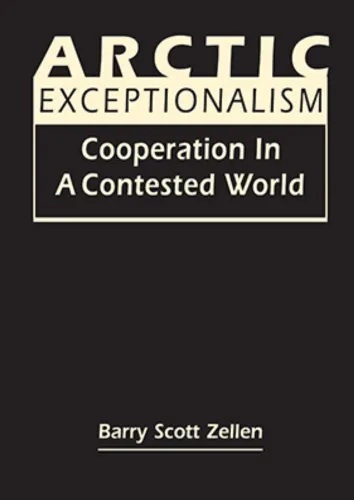
Such conflation is not analytically necessary, nor is it consistent with earlier contributions to the field. Indeed, the same author has previously participated in work that challenged prevailing Western assumptions about Chinese activity in the Arctic, most notably in the report “Cutting Through Narratives on Chinese Arctic Investments,” published by Harvard’s Belfer Center for Science and International Affairs. That report, also discussed favorably by me in the South China Morning Post and The Arctic Institute, offered a measured and evidence-based departure from trope-driven analysis. Its existence underscores that rigorous engagement is possible without resorting to rhetorical escalation or the politicization of scholarly disagreement.
Genocide by White Coats: Denmark’s Unfinished Reckoning
Lackenbauer challenges both my critique of Danish colonial practices in Greenland and my credibility as a northern scholar, suggesting that such criticism constitutes a recurring theme in my work. That characterization is inaccurate. The bulk of my writing has focused on Indigenous empowerment rather than on colonial violence per se, and only a limited number of my recent articles have addressed Denmark’s conduct in Greenland. Those interventions were prompted largely by Denmark’s own long-delayed public apology, which, when it finally arrived, appeared incomplete and insufficient in light of the gravity of the harm involved.
The conduct at issue is not a matter of rhetorical exaggeration. As an Arctic colonial power, Denmark implemented policies that meet the legal definition of genocide. In particular, state-authorized medical practices sought to suppress Greenlandic population growth through the systematic and non-consensual insertion of intrauterine devices in thousands of Greenlandic girls and women. These actions, carried out by medical professionals acting under state authority, constituted a profound abuse of medical power and a violation of fundamental human rights. The demographic consequences of these practices continue to shape Greenland’s social and political future.
This assessment is neither fringe nor outside established legal and ethical frameworks. It rests on documented evidence and on widely recognized definitions of genocide in international law. The thousands of living victims, as well as the many more individuals who were never born as a result of these policies, represent a loss that continues to affect Greenland’s capacity to pursue meaningful self-determination. To minimize or trivialize this history risks normalizing the coercive suppression of Indigenous birth rates and obscuring the role of state-sanctioned medical authority in facilitating what amounted to a silent and systematic form of ethnic destruction.
Voices from Greenland: Protest, Memory, and Demographic Loss
Consider the response by one Greenlandic activistAmarok S. Petersenwho turned her back to the Danish Prime Minister’s in-person apology, as reported widely in the press, including The New York Times: “One woman painted black stripes on her face and stood during the speech with her back turned to Ms. Frederiksen, in protest. ‘I know I cannot take away your pain or give back what you lost,’ Ms. Frederiksen said. ‘But I hope it can stand as recognition that what you went through was wrong, that it was a betrayal, and that the responsibility no longer lies on you but on us.’”
Explore Books Written by Our Contributors
The New York Times further reported: “‘Why didn’t they say sorry 30 years ago or 20 years ago or even 10 years ago?’ asked Qupanuk Olsen, a Greenlandic social media influencer who recently resigned from Greenland’s Parliament. ‘This story is being forced on us because they’re so afraid that we will become independent or a state under the United States.’ … Ms. Olsen, the social media influencer, said that if Danish doctors hadn’t interfered, Greenland would have many more people than the 57,000 it has today, living on the fringes of an icebound island three times the size of Texas. ‘We would be 100,000 people now,’ she said. ‘I would have had so many more cousins. I would have been so much richer in family.’ Outside the hall stood a small memorial of flowers, candles and painted stones. One was decorated with little red hearts and said, ‘For the children we never had.’”
This is the first part of a three-part series.
The views expressed in this article are those of the author and do not necessarily reflect the position of Politics and Rights Review.