
The widespread diffusion of AI tools currently underway has stimulated an enormously increased interest in the nature of information. What is it, what types exist, where does it come from, how is it used, what is real and what is artificial? Artificial is seen as created by software, not by people.
The conversation is intense, occurring in all academic disciplines and around the world. That discussion has raised the question: What about facts that are not obvious, hidden, the accumulation of experience and wisdom over time? That brings us to tacit knowledge.
What Is Tacit Knowledge?
Simply put, tacit knowledge is information that is buried in our subconscious minds and that we are not aware of until needed. For example, that gut feeling we get when something we see or are being told does not seem to make sense to us is one form of tacit knowledge at work.
Tacit knowledge is also experiences that are learned. The most widely recognized example is what we learn by riding a bicycle. You can’t give someone a book to read on learning to ride a bike. You have to mount one, pedal it around, fall down and eventually you know how to ride it. A cook who can sense when a dish is seasoned “just right,” is another example. These are real bodies of knowledge—facts if you will—that shape how we respond to circumstances and take actions.
The world is seen by students of information as filled with facts that are explicit or tacit. Explicit facts are those that can be transferred easily, such as on a piece of paper or spoken: My name is Jim and I was born on September 7th, or Canada borders the USA. Tacit is anything that is not explicit, such as what the mind accumulates in the way of information necessary to ride a bike.
Why Do We Care About Tacit Knowledge?
One of the key attributes of AI is the ability of such software to go out onto the Internet or into digital files, read it all, and draw from it answers to our questions to create text for human use, or to take actions. But what it draws on is, by definition, explicit and through software rules, it draws conclusions and takes actions based on how it analyzes those facts. But there is a problem because philosophers, senior citizens, clerics, brain scientists, and other students of information believe there is more tacit knowledge in the world than explicit.
Tacit knowledge has been the subject of much study by philosophers, psychologists, library information studies experts, historians, and economists for decades.
AI experts believe that, too, and so are trying to get to that body of knowledge. Another problem is that we really don’t know how much there is out there since over 8 billion people have unique collections of such information. Imagine for an AI system trying to learn how to ride a bicycle all on its own or trying to deal with one organization’s unique circumstance, or the reader’s specific issue.
For the rest of us in any profession or academic discipline, therefore, we need to understand the existence, nature and use of tacit knowledge far beyond what we have known before. Humans also know and believe that what they individually understand about their realities and desires is often more profoundly influenced by tacit knowledge than by “the facts.” A prejudice that flies in the face of known explicit knowledge is a good example. That children of immigrants tend to do quite well in a new society is a fact, but if you don’t like immigrants, you will deny that because your gut instinct—prejudice—tells you otherwise.
What Are We Learning?
Tacit knowledge has been the subject of much study by philosophers, psychologists, library information studies experts, historians, and economists for decades. Biologists are living in a golden age of discoveries about human and other animal brains, how they function, what they know, and so forth. Scientists are learning more these days than they have ever done in history. My research on tacit knowledge comes at the issue from history, its use in business and governmental environments, and how society uses it.
I have documented how people need to use it to travel through their workdays and personal lives. They integrate, then combine, explicit and tacit knowledge to make decisions and take action. That combination is part of a larger integration of information in families, neighborhoods, businesses, and society at large. We are learning that human and animal societies develop a wide variety of sources of information into what is increasingly known as information ecosystems, where one collection of facts or tacit understanding affects other collections of information.
How Does Leveraging Connections Occur?
Scholars are, first, identifying connections among bodies of explicit and tacit knowledge. Insights and discoveries in one discipline raise questions in other ones that can be studied to gain new insights, such as how computers—AI—can be shaped by what biologists learn about brain functions. Specialized journals are increasingly willing to publish articles, such as this one, which will accept papers from multiple fields, not just from political scientists.
Academic institutions are exploring and teaching tacit knowledge and data mining practices.
Complex projects increasingly require the skills and knowledge of people from multiple disciplines. These are then studied to see what new information ecosystems emerge and look like.
Experts take their insights—tacit knowledge—to jobs in other fields, too; the days of people spending their entire careers in one job or profession are fading as they move about, bringing tacit knowledge to other jobs, industries, and professions.
“Connecting the dots” is a byproduct of such behavior driven by a pervasive curiosity that one explains and which derives largely from tacit knowledge behavior. Effective performers go where the evidence takes them, such as when a grandparent suggests to their grandchild that they explore doing something different than originally intended, or that a mentor advises a young employee. Such users of tacit and explicit knowledge consciously try to build their own information infrastructures, such as reading journal articles in their profession, other media from different disciplines, asking questions, seeking out advice all over the place. They recognize that they swim in an ocean of unknown information that is interesting and of potential use to them.
Institutions are doing the same. They cross-train people in different areas of information and skills. They assign mentors to employees at all levels of their skills and ranks. Even CEOs and country presidents often rely on mentors and advisors whose “wisdom” (i.e., tacit knowledge, experience) is valued and effective. Academic institutions are exploring and teaching tacit knowledge and data mining practices, such as embedding in their courses how to ask penetrating questions, conducting research, applying instincts, dealing with ambiguity (a tacit knowledge feature) and communicating results of their thinking.
So What?
Humans apply whatever they know to being safe and to nurturing their needs, be they physical or intellectual. Brain scientists—my term for many academic disciplines—and families and co-workers will tell you that all beings are driven by these two necessities. They are required of all living creatures. Their brains have developed to respond to these twin necessities.
To be effective requires a lifelong pursuit of all manner of information about the context in which anything and everything occurs. So far, the vast majority of context lies in the realm of the tacit, although AI is in hot pursuit of explicit and other forms of knowledge to provide a far richer description of the context in which something is known and acted upon.
Right now, explicit knowledge can add richly to our understanding of something, such as a history book about Greece before going there on vacation. It too is useful for understanding when to change jobs or professions. Tacit knowledge can, thus, rely on the role of contextual insights from a mentor.
Another way we can think of the value of tacit knowledge is to apply it yourself. Understand when and how you have applied “gut instinct,” a “hunch” or “intuition”? You may have done that when you thought, “Hmm? Maybe reading this article will be useful.” Becoming aware of tacit knowledge will arm you as you engage with AI.
We are in the early stages of AI development and it is improving (changes) very fast, so one needs to become more knowledgeable about how information works. We no longer have a choice in the matter, because ignorance of that reality is—my gut feeling—detrimental to one’s safety, professional and personal success, and happiness.
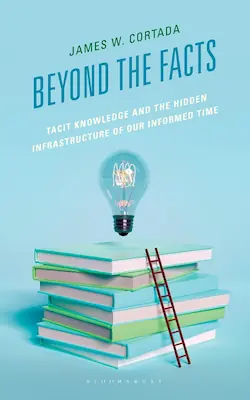
At the risk of appearing to offer up a crass advertisement for my own work, each of the ideas expressed in this article is explored in more detail with examples in my recent book, Beyond the Facts (2025). It documents the context in which explicit and tacit knowledge interact and in which I argue, as I do here, that the two types coexist and that all humans apply both simultaneously. Like any reader, I will need to spend the rest of my life understanding the topic and figuring out how it interacts with AI, because AI software will be doing the same. Welcome to a new world in which the tacit and AI will dominate how we learn and act.