
Introduction
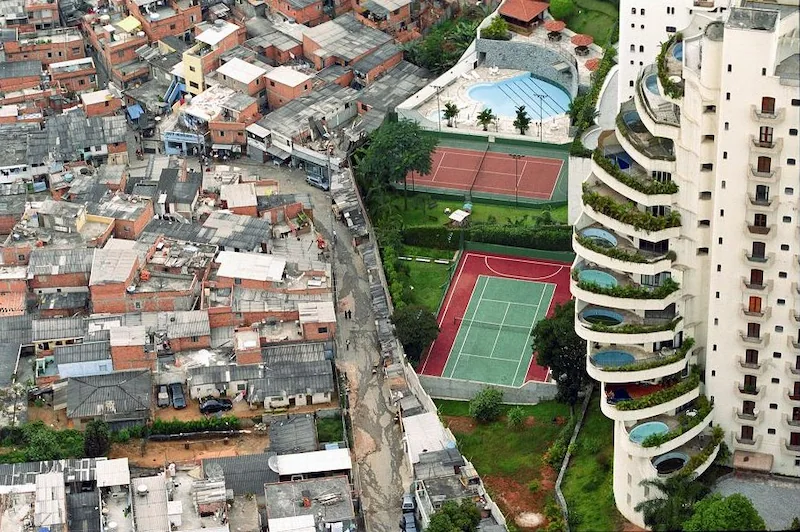
Economic inequality has risen dramatically across much of the developed world over the past half century. Somewhat puzzlingly, democracies of “the many” have elected, and re-elected, governments that deliver inequality for the benefit of the few (Piketty and Saez, 2003; Bartels, 2018). We argue that part of the answer lies in individual psychology.
Our minds, adapted to life in small groups, under-react to the scale of inequality in modern society. Worse, economic elites foster and exploit these under-reactions to sustain inequality. But we also contend that individual psychology can be harnessed to build collective support for inequality reduction.1
Small-Group Social Psychology Meets Large-Scale Inequality
Three habits of thought, each well-suited to life in small communities, cause individuals to overlook the towering degree of inequality in our society.
First, we tend to compare locally. Classic research in psychophysics has repeatedly shown that, when people are shown two lights, they can easily say which is brighter, but are very poor at judging the brightness of either light alone (Miller, 1956). Social judgment works the same way. We gauge our standing against neighbors, colleagues and family, who are mostly like us, and largely ignore the standing of distant elites (Festinger, 1954; Boyce, Brown and Moore, 2010; Hvidberg, Kreiner and Stantcheva, 2023).
Concentrated media ownership, the influence of money in politics and the capture of government by business shape the environments in which our psychology operates.
Compounding the effect is a second psychological tendency, dubbed the “what you see is all there is” (WYSIATI) effect, to assume that examples we think of—or observe—are a good representation of the wider environment (Kahneman, 2011; Enke, 2020). Paying attention to local inequality with our neighbors, consistent with the WYSIATI effect, causes people to underestimate large-scale inequality across society.
Second, we identify with large groups. In small-scale societies, loyalty to one’s group is vital for cooperation and for defense against rivals (Boehm, 1999; Bowles and Gintis, 2011). But in modern societies, groups can extend far beyond one’s immediate neighbors—to one’s nationality, ethnicity, and religion, for example. These identities make salient the prospect of conflict with other large groups, and serve to dampen concern about inequality within our own groups (Tajfel and Turner, 1979; Jost and Banaji, 1994).
The effect is strongest among the disadvantaged, because they rely most on the group for security (Sidanius and Pratto, 1999). Poorer citizens of powerful nations, for example, often identify more with their nation than with their social class, and national identification in turn reduces support for redistribution (Shayo, 2009; Klor and Shayo, 2010; Shayo, 2020).
People judge redistribution as fairer when it equalizes opportunities rather than outcomes.
Third, we blame individuals rather than systems. We call this the “i-frame bias” (Chater and Loewenstein, 2023; Connolly, Chater and Loewenstein, 2026). Individuals differ, and their differences are conspicuous; rules and institutions change slowly and fade into the background (Ross, 1977; Gilbert and Malone, 1995). We thus judge outcomes as fair given whatever rules happen to be in place (Falk, Fehr and Fischbacher, 2003; Trump, 2020), and mistake the visible markers of success, such as expensive clothes or refined accents, for its causes (Ross, Amabile and Steinmetz, 1977; Enke and Zimmermann, 2019).
There is comfort too in believing one lives in a “just world” in which the rules are as they should be (Jost and Banaji, 1994; Sidanius and Pratto, 1999). Unsurprisingly, the i-frame bias is strongest among those who gain most from the system: only 1% of the top 1% of U.S. earners say that coming from a wealthy family is “very important” for getting ahead, compared with 31% of the general public (McCall, 2013).
How Economic Elites Employ Psychology to Hijack Democracy
None of this is inevitable. Powerful interests that benefit from the unequal status quo have both the motive and the means to exploit our psychology (Glaeser, 2005; Jost, Federico and Napier, 2009).
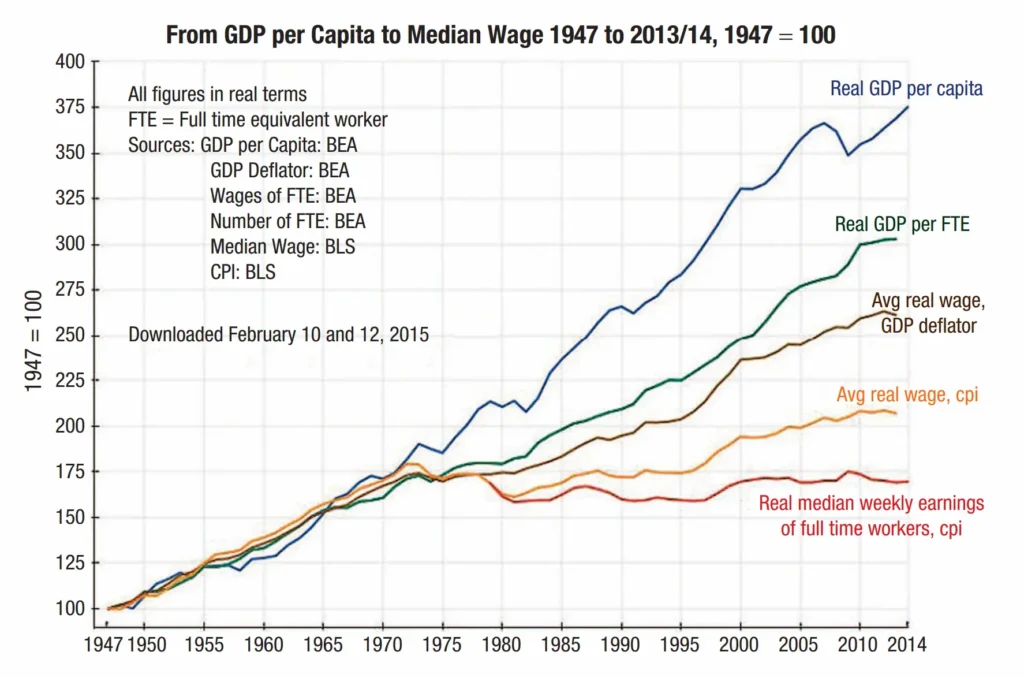
In politics, elites turn economic resources into influence through lobbying and campaign donations (Hacker and Pierson, 2011; Mayer, 2016). Perhaps equally importantly (but less visibly), they also fund think tanks and academic research that advocate for policies, such as against regulation and pro-“free”-markets, that, almost certainly by design, exacerbate inequality (Mayer, 2016; Milanovic, 2023).
Psychology plays a pivotal role in sustaining inequality, but psychological interventions alone cannot reduce it.
As a result, elite preferences are over-represented among the policies seen as “feasible” (Gilens and Page, 2014; Bartels, 2018).
Elites also keep inequality-sustaining policies off the agenda by designing them to be invisible to ordinary citizens (Lukes, 2006; Mettler, 2011).
And populist elites typically blame “outgroups” for economic woes, exploiting our tendency to gloss over disparities within a group that feels threatened from outside (Gilens, 1995).
Economic elites also work to curate what the public sees. Because attention is limited, the issues the media choose to cover, and how they frame them, influence what people consider important (McCombs and Shaw, 1972; King, Schneer and White, 2017). Media ownership is increasingly concentrated (Baker, 2006), and coverage disproportionately reflects elite interests (Jacobs et al., 2021). It also tends to present social problems as failings of individuals, especially in unequal societies (Temmann et al., 2021; Epp and Jennings, 2021). Moreover, because we treat the sample we see as representative of the whole (Kahneman, 2011; Enke, 2020), control over the media is a powerful source of influence over beliefs about inequality.
What Psychology Offers for Inequality Reduction
How can non-elites build coalitions for change? The public usually ranks inequality low among its priorities, but most people dislike it. In the United States, 61% say there is too much economic inequality, and across 36 countries the most widely cited cause is that the rich have too much political influence (Horowitz, Igielnik and Kochhar, 2020; Wike et al., 2025).
Turning that concern into policy will require changing both whether people see inequality as a problem in need of solving and which policies for solving it they see as effective and fair. Such policies must work at the level of systems, changing the rules that govern how resources and opportunities are distributed. These are often resisted at first as threats to the status quo but, once enacted, are soon accepted as the “new normal” (Chater and Loewenstein, 2023; Connolly, Chater and Loewenstein, 2026).
Taxes and transfers are the most direct tool to address inequality. Progressive taxation is widely supported (Stantcheva, 2021), yet tax systems are so complex that citizens often cannot tell whether they are progressive (Mettler, 2011; Bhargava and Connolly, 2026). People respond mainly to the taxes and transfers they notice (Chetty, Looney and Kroft, 2009; Sahm, Shapiro and Slemrod, 2012; Rees-Jones and Taubinsky, 2018); the public overestimates transfers to racial minorities, for example, because elites have deliberately highlighted them (Gilens, 1995). Making clear who pays and who benefits may therefore raise support for redistribution, and shrink the opportunities for elites to manipulate perceptions.
Fairness matters too. People judge redistribution as fairer when it equalizes opportunities rather than outcomes (Roemer, 1998; Alesina, Stantcheva and Teso, 2018). Because the status quo is assumed to be fair, redistributing outcomes can seem arbitrary (Alesina, Glaeser and Sacerdote, 2001; Trump, 2020); framing policies as expanding opportunity, or as social insurance, may broaden support (Moene, Barth and Finseraas, 2024).

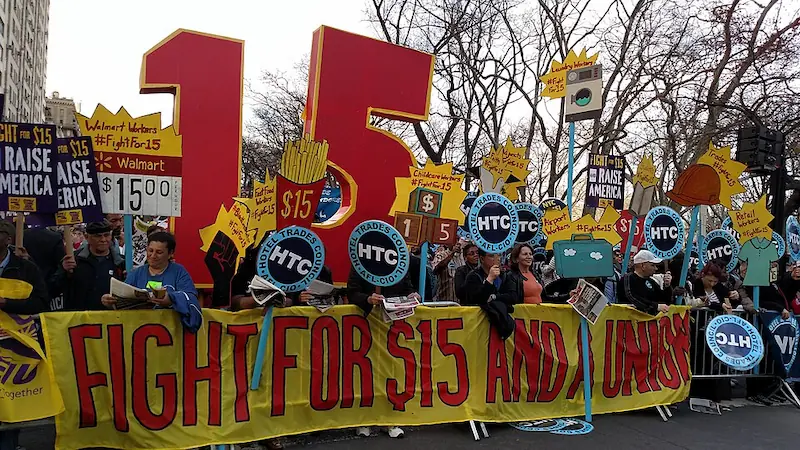
Finally, even well-designed policies will meet resistance from elites, so reducing inequality will also require mobilizing the public in collective action. Psychologists have identified several factors which predict participation: group identification, perceived injustice and a sense of efficacy (van Zomeren, 2013).
But motivation is not enough; success also depends on shared norms and on the institutions that make mobilization feasible (Olson, 1971; Ostrom, 2000; Kitschelt, 1986). Nudging individuals to vote has had limited effects, partly because elections are already saturated with mobilization efforts (Kalla and Broockman, 2018; Tosh et al., 2025). But mobilization matters beyond the ballot box. Protests can change how the media frame issues and how politicians speak about them (Wasow, 2020), and legislators pay more attention to issues discussed on social media (Barberá et al., 2019).
Conclusion
Psychology plays a pivotal role in sustaining inequality, but psychological interventions alone cannot reduce it. Concentrated media ownership, the influence of money in politics and the capture of government by business shape the environments in which our psychology operates (Gilens and Page, 2014; Stiglitz, 2013).
A complete science of inequality must combine an understanding of how power and resources shape incentives and agendas with an understanding of how those forces shape what people notice, believe and accept as fair.
References
Alesina, Alberto, Edward L. Glaeser, and Bruce Sacerdote. 2001. “Why Doesn’t the United States Have a European-Style Welfare State?” Brookings Papers on Economic Activity, 2001(2): 187–254.
Alesina, Alberto, Stefanie Stantcheva, and Edoardo Teso. 2018. “Intergenerational Mobility and Preferences for Redistribution.” American Economic Review, 108(2): 521–554.
Baker, C. Edwin. 2006. Media Concentration and Democracy: Why Ownership Matters. Cambridge University Press.
Barberá, Pablo, Andreu Casas, Jonathan Nagler, Patrick J. Egan, Richard Bonneau, John T. Jost, and Joshua A. Tucker. 2019. “Who Leads? Who Follows? Measuring Issue Attention and Agenda Setting by Legislators and the Mass Public Using Social Media Data.” The American Political Science Review, 113(4): 883–901.
Bartels, Larry M. 2018. Unequal democracy: the political economy of the new Gilded Age. Second edition completely revised and updated. New York: Russell Sage Foundation.
Bhargava, Saurabh, and Daniel J. Connolly. 2026. “Policy Legibility and the Limits of Democratic Accountability: Evidence from Voter Beliefs.” SSRN Working Paper (7156559).
Boehm, Christopher. 1999. Hierarchy in the forest: The evolution of egalitarian behavior. Harvard University Press.
Bowles, Samuel, and Herbert Gintis. 2011. A Cooperative Species: Human Reciprocity and Its Evolution. Princeton, NJ: Princeton University Press.
Boyce, Christopher J., Gordon D. A. Brown, and Simon C. Moore. 2010. “Money and happiness: rank of income, not income, affects life satisfaction.” Psychological Science, 21(4): 471–475.
Chater, Nick, and George Loewenstein. 2023. “The i-frame and the s-frame: How focusing on individual-level solutions has led behavioral public policy astray.” Behavioral and Brain Sciences, 46: e147.
Chetty, Raj, Adam Looney, and Kory Kroft. 2009. “Salience and Taxation: Theory and Evidence.” American Economic Review, 99(4): 1145–1177.
Connolly, Daniel J., Nick Chater, and George Loewenstein. 2026. “The Political Psychology of Economic Inequality.” Psychological Science in the Public Interest, 26(2): 76–126.
Enke, Benjamin. 2020. “What You See Is All There Is*.” The Quarterly Journal of Economics, 135(3): 1363–1398.
Enke, Benjamin, and Florian Zimmermann. 2019. “Correlation Neglect in Belief Formation.” The Review of Economic Studies, 86(1): 313–332.
Epp, Derek A, and Jay T Jennings. 2021. “Inequality, Media Frames, and Public Support for Welfare.” Public Opinion Quarterly, 84(3): 629–653.
Falk, Armin, Ernst Fehr, and Urs Fischbacher. 2003. “On the nature of fair behavior.” Economic Inquiry, 41(1): 20–26.
Festinger, Leon. 1954. “A theory of social comparison processes.” Human Relations, 7(2): 117–140.
Gilbert, Daniel T., and Patrick S. Malone. 1995. “The correspondence bias.” Psychological Bulletin, 117(1): 21–38.
Gilens, Martin. 1995. “Racial Attitudes and Opposition to Welfare.” The Journal of Politics, 57(4): 994–1014.
Gilens, Martin, and Benjamin I Page. 2014. “Testing theories of American politics: Elites, interest groups, and average citizens.” Perspectives on politics, 12(3): 564–581.
Glaeser, Edward L. 2005. “The Political Economy of Hatred.” The Quarterly Journal of Economics, 120(1): 45–86.
Hacker, Jacob S., and Paul Pierson. 2011. Winner-take-all politics: how Washington made the rich richer – and turned its back on the middle class. New York: Simon & Schuster.
Horowitz, Juliana Menasce, Ruth Igielnik, and Rakesh Kochhar. 2020. “Most Americans Say There Is Too Much Economic Inequality in the U.S., but Fewer Than Half Call It a Top Priority.”
Hvidberg, Kristoffer B, Claus T Kreiner, and Stefanie Stantcheva. 2023. “Social Positions and Fairness Views on Inequality.” The Review of Economic Studies, 90(6): 3083–3118.
Jacobs, Alan M., J. Scott Matthews, Timothy Hicks, and Eric Merkley. 2021. “Whose News? Class-Biased Economic Reporting in the United States.” American Political Science Review, 115(3): 1016–1033.
Jost, John T., and Mahzarin R. Banaji. 1994. “The role of stereotyping in system-justification and the production of false consciousness.” British Journal of Social Psychology, 33(1): 1–27.
Jost, John T., Christopher M. Federico, and Jaime L. Napier. 2009. “Political Ideology: Its Structure, Functions, and Elective Affinities.” Annual Review of Psychology, 60: 307–337.
Kahneman, Daniel. 2011. Thinking, fast and slow. New York: Farrar, Straus and Giroux.
Kalla, Joshua L., and David E. Broockman. 2018. “The Minimal Persuasive Effects of Campaign Contact in General Elections: Evidence from 49 Field Experiments.” American Political Science Review, 112(1): 148–166.
King, Gary, Benjamin Schneer, and Ariel White. 2017. “How the news media activate public expression and influence national agendas.” Science, 358(6364): 776–780.
Kitschelt, Herbert P. 1986. “Political Opportunity Structures and Political Protest: Anti-Nuclear Movements in Four Democracies.” British Journal of Political Science, 16(1): 57–85.
Klor, Esteban F, and Moses Shayo. 2010. “Social identity and preferences over redistribution.” Journal of Public Economics, 94(3-4): 269–278.
Lukes, Steven. 2006. Power: a radical view. 2nd ed. Houndmills: Palgrave Macmillan.
Mayer, Jane. 2016. Dark Money: The Hidden History of the Billionaires Behind the Rise of the Radical Right. Westminster: Knopf Doubleday Publishing Group.
McCall, Leslie. 2013. The Undeserving Rich: American Beliefs about Inequality, Opportunity, and Redistribution. Cambridge University Press.
McCombs, Maxwell E., and Donald L. Shaw. 1972. “The Agenda-Setting Function of Mass Media.” The Public Opinion Quarterly, 36(2): 176–187.
Mettler, Suzanne. 2011. The submerged state: how invisible government policies undermine American democracy. Chicago studies in American politics, Chicago: University of Chicago Press.
Milanovic, Branko. 2023. Visions of inequality: From the French Revolution to the end of the Cold War. Harvard University Press.
Miller, G. A. 1956. “The Magical Number Seven, plus or Minus Two: Some Limits on Our Capacity for Processing Information.”
Moene, Karl O., Erling Barth, and Henning Finseraas. 2024. “Rank vs Income.” SSRN Working Paper. https://papers.ssrn.com/abstract=4751554.
Olson, Mancur. 1971. The logic of collective action: public goods and the theory of groups. Harvard Economic Studies, Cambridge (Mass.) London: Harvard university press.
Ostrom, Elinor. 2000. “Collective Action and the Evolution of Social Norms.” Journal of Economic Perspectives, 14(3): 137–158.
Piketty, Thomas, and Emmanuel Saez. 2003. “Income inequality in the United States, 1913–1998.” The Quarterly Journal of Economics, 118(1): 1–41.
Rees-Jones, Alex, and Dmitry Taubinsky. 2018. “Taxing Humans: Pitfalls of the Mechanism Design Approach and Potential Resolutions.” Tax Policy and the Economy, 32(1): 107–133.
Roemer, John E. 1998. Equality of Opportunity. Cambridge, MA: Harvard University Press.
Ross, Lee. 1977. “The Intuitive Psychologist And His Shortcomings: Distortions in the Attribution Process.” In Advances in Experimental Social Psychology. Vol. 10, ed. Leonard Berkowitz, 173–220. Academic Press.
Ross, Lee D., Teresa M. Amabile, and Julia L. Steinmetz. 1977. “Social roles, social control, and biases in social-perception processes.” Journal of Personality and Social Psychology, 35(7): 485–494.
Sahm, Claudia R, Matthew D Shapiro, and Joel Slemrod. 2012. “Check in the Mail or More in the Paycheck: Does the Effectiveness of Fiscal Stimulus Depend on How It Is Delivered?” American Economic Journal: Economic Policy, 4(3): 216–250.
Shayo, Moses. 2009. “A Model of Social Identity with an Application to Political Economy: Nation, Class, and Redistribution.” American Political Science Review, 103(2): 147–174.
Shayo, Moses. 2020. “Social Identity and Economic Policy.” Annual Review of Economics, 12(1): 355–389.
Sidanius, Jim, and Felicia Pratto. 1999. Social Dominance: An Intergroup Theory of Social Hierarchy and Oppression. Cambridge: Cambridge University Press.
Stantcheva, Stefanie. 2021. “Understanding Tax Policy: How do People Reason?” The Quarterly Journal of Economics, 136(4): 2309–2369.
Stiglitz, Joseph E. 2013. The Price of Inequality: How Today’s Divided Society Endangers Our Future. 1st ed. W. W. Norton & Company, Incorporated.
Tajfel, Henri, and John Turner. 1979. “An integrative theory of intergroup conflict.” In The social psychology of intergroup relations, ed. Stephen Worchel and William G. Austin, 33–47. Brooks/Cole.
Temmann, Linn Julia, Annemarie Wiedicke, Sophia Schaller, Sebastian Scherr, and Doreen Reifegerste. 2021. “A Systematic Review of Responsibility Frames and Their Effects in the Health Context.” Journal of Health Communication, 26(12): 828–838. https://doi.org/10.1080/10810730.2021.2020381.
Tosh, Christopher, Philip Greengard, Ben Goodrich, Andrew Gelman, Aki Vehtari, and Daniel Hsu. 2025. “The Piranha Problem: Large Effects Swimming in a Small Pond.” Notices of the American Mathematical Society, 72(01): 1.
Trump, Kris-Stella. 2020. “When and why is economic inequality seen as fair.” Current Opinion in Behavioral Sciences, 34: 46–51.
van Zomeren, Martijn. 2013. “Four Core Social-Psychological Motivations to Undertake Collective Action.” Social and Personality Psychology Compass, 7(6): 378–388. https://doi.org/10.1111/spc3.12031.
Wasow, Omar. 2020. “Agenda Seeding: How 1960s Black Protests Moved Elites, Public Opinion and Voting.” American Political Science Review, 114(3): 638–659.
Wike, Richard, Moira Fagan, Christine Huang, Laura Clancy, and Jordan Lippert. 2025. “Economic Inequality Seen as Major Challenge Around the World.”
- The ideas in this paper are outlined in more detail in Connolly, Chater and Loewenstein (2026). ↩︎