The City, Expanded “Strong Democracy,” and Rightful Presence
Urban spaces open the possibility to create new fronts of political contestation where those who traditionally lack power can carve out places within the city and make room for new political actors. Particularly relevant here is the political conception of the “right to the city” as both a rebuke to restrictive conceptions of national citizenship and a form of active participation in political life, of lived civil society in the city. The theoretical concern here is with the “political potential” of presence (Darling 2019, 256), attributed in my work to grassroots sanctuary activism in New York.
- The City, Expanded “Strong Democracy,” and Rightful Presence
- Sanctuary, Human Dignity, and Rights
- Dialogue with the Recent Sanctuary Literature
- Ethnographic Fieldwork
- Findings: Enforcing Immigrant Rights
- The Limits of Sanctuary Practices
- Shortcomings of Sanctuary Policies
- Grounded Cosmopolitanism and Urban Inequality
- Explore Books Written by Our Contributors
This potential can further be seen as the embodiment of an expanded “strong democracy” that enfranchises both citizens and noncitizens who participate in sanctuary practices. Expanded “strong democracy”—an homage to my former research supervisor and political theorist, the late Ben Barber—is, as in Barber’s (1984/2003, 137) account, dependent on the “active consent of participating citizens who have imaginatively reconstructed their own values as public norms through the process of identifying and empathizing with the values of others.”
It is the support of immigrants by social movements and local political activism that has been key to creating participatory sanctuaries.
The urban environment presents a complex arena of community building for the purpose of creating common goods, and this demands active citizens and noncitizens presenting claims on the city. (The book anticipated the militarization of urban space but did not foresee that some citizens engaged in this active, participatory role and civil disobedience would lose their lives, as happened recently in Minneapolis.)
So, what can be learned from urban sanctuary organizing during President Trump’s first term? What has the study found regarding the sanctuary movement amidst the conditions of the restrictive state and given the new conceptualization of the city as a site of rights claiming?
Sanctuary, Human Dignity, and Rights
Elie Wiesel, in his essay titled “The Refugee” (1984–85, 390), conceived of sanctuary as “a small gesture toward alleviating human suffering and preventing humiliation”—a gesture signaling reciprocity and copresence of human beings vis-à-vis one another.
Rejecting the notion of sanctuary as a place, Wiesel argued instead for “a living sanctuary [of a human being] whom nobody has a right to invade” (387).
My book shares Wiesel’s humane, sheltering meaning of sanctuary, and proposes to define it in modest ways as a set of social practices and networks of solidarity that affirm the human dignity of asylum seekers, refugees, and the undocumented.
But the book also endorses a place-based, if not solely place-defined, understanding of sanctuary by examining migrants’ claims for rightful presence in the city and indeed their attempts at attaining the “right to the city.”
Beyond the non-cooperation with ICE in the case of sanctuary cities, the book also offers a broader definition of sanctuary: it is seen as a resistance struggle and a means of interrupting the violence of the deportation machinery and its regimes of fear, emphasizing the role of radical solidarity of “co-citizens” (that is, citizens who partake in sanctuary practices with noncitizens).
The following two understandings of sanctuary from my fieldwork allow us to further contemplate these definitions:
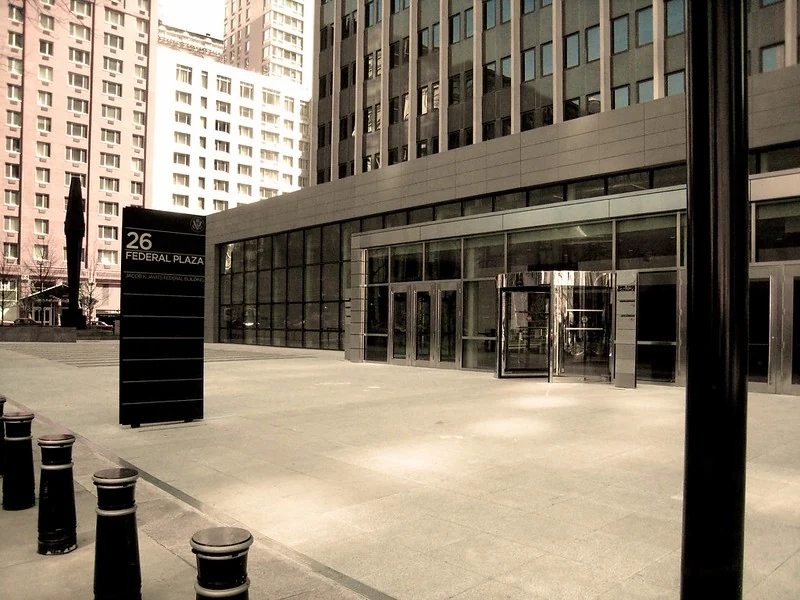
The New Sanctuary Coalition (NSC) in New York provides accompaniment assistance that extends sanctuary to places where the immigrants are being targeted for deportation —for example, 26 Federal Plaza downtown:
“Volunteers go with Friends to court dates and bear witness to what is happening. We do not care about the circumstances of immigration. We recognize their humanity and we defend them. The amount of anxiety that people feel who go to the courtroom without a lawyer is enormous. Additionally, you realize that this is sanctuary. You are providing a space—an internal peace to go through something that is difficult. We emotionally and physically accompany people to go through that process so that they don’t have to do it alone… We don’t participate in the demonization of immigrants [that] dehumanizes people (fieldwork notes, July 12, 2017).”
One of the key activities of the NSC that demonstrates the scope of the organization is the legal clinic. As one volunteer described, “In the legal clinic, we help people who have someone in detention, negotiate legal fees and reveal unfair legal practices, we assist family reunification, help victims of crimes. We can stop or slow down the deportation process. We don’t just support the undocumented; we keep the system accountable. The judges know us, ICE knows us. They fear us. They have blocked us [from accompaniments], but we will keep going. We show up to doctors’ appointments, to family court, to lawyers’ appointments, to Varick Street [immigration court]” (fieldwork notes, August 10, 2017).
Dialogue with the Recent Sanctuary Literature
The book contests the findings of numerous scholars of sanctuary: most prominently of these, Jennifer Bagelman argued forcefully that sanctuary cities extend the unbearable wait asylum seekers endure—what she calls the “suspended state” (2016, 5).
Public efforts must confront insufficient resources and inadequate civic infrastructure.
The suspended state highlights the experience of having to wait within the charitable zone of sanctuary. Immigrants are embroiled in a process akin to pseudo-incorporation into the margins of society.
Those who have had their refugee status rejected find themselves cast to the peripheries with no access to critical rights, benefits, and services.
I commenced fieldwork trying to test my initial argument that, contrary to Bagelman’s claims, sanctuary practices, even if symbolic, may hold the potential to challenge the exclusion, marginalization, and dehumanization of the undocumented, asylum seekers, and refugees, overcoming their social isolation and even providing a critical link toward incorporation through empowerment and political participation in social movements.
Ethnographic Fieldwork
My 2017-2018 participant observation fieldwork was conducted with the New Sanctuary Coalition (NSC) in New York, selected because of its significance, prominence, and diligence with sanctuary work.
This solidarity enfranchised “co-citizens” by reclaiming the “right to have rights,” countering the assumptions that migrants diminish a polity, weaken cohesion, and merely seek economic incorporation.
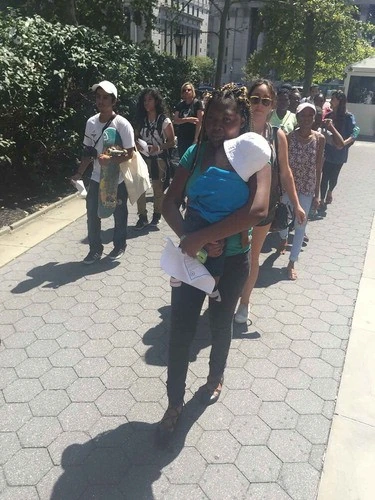
During the fieldwork conducted during the first Trump administration, I attended dozens of weekly community meetings known as the Assembly and dozens of vigils at the Varick Immigration Court and Jericho Walks (a symbolic prayer walk) in front of 26 Federal Plaza (location of the U.S. Citizenship and Immigration district office), participated in Sanctuary Hood efforts and accompaniments, and conducted numerous unstructured discussions with the participants of the sanctuary movement.
Findings: Enforcing Immigrant Rights
The NSC set out to actively oppose what it saw as the unfair, unjust, gratuitously cruel actions of a restrictive national regime that criminalizes undocumented immigrants. It proposed a different type of governmentality for such immigrants, regarding them as effectively citizens of the city with rights of protection, including going as far as to argue for immunity that “no one should be deported.”
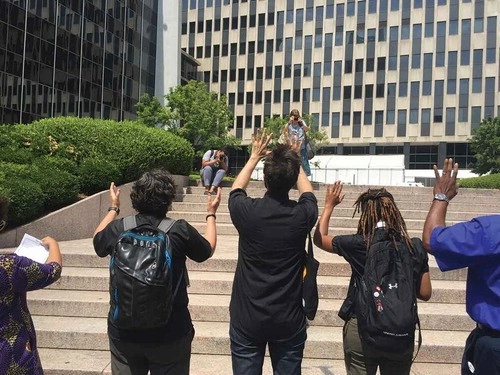
The NSC thus sought to counter the criminalization of migration and upend the binary of deserving/undeserving migrants through tactical, inclusive efforts such as accompaniment and a variety of sanctuary practices that build solidarity networks. As the fieldwork was being completed, I witnessed the NSC struggling toward abolitionist practices, embracing the notion of expanded sanctuary, which would involve a broader range of individuals who encounter the criminal justice system and would include an emphasis on not just immigrants but women, the LGBTQ community, Muslims, and people of color and an expansion of sanctuary beyond houses of worship, to include schools, hospitals, and entire communities (fieldwork notes, March 8, 2018).
The research findings uphold Rebecca Sharpless’s (2016) conclusions regarding the intertwining of the immigration enforcement regime and the incarceration regime (718) and show how sanctuary efforts contributed to the undoing of the deserving/undeserving immigrant or, more broadly, the deviant/respectable narrative as a racialized system of control of Blacks and marginalized groups (735).
This is further a critique of the racialized incarceration regime in a society that seemingly rejects otherwise present racism, although not necessarily an overt anti-immigrant sentiment but encourages hatred of criminals (Sharpless 2016, 732). In the context of the criminal justice system, racism and anti-immigrant sentiment are linked (737).
What I found further in fieldwork was on the one hand profound distrust of the state and, on the other, linkages with local political leadership as well as an ambiguity regarding the role of Democratic political leadership who appears as an eager supporter of the sanctuary movement once the media places provocative aspects of sanctuary into the limelight.
Moreover, fieldwork results show the effectiveness of the NSC accompaniment program strategy. According to organizers, numerous observed cases resulted in the slowing down of the deportation process.
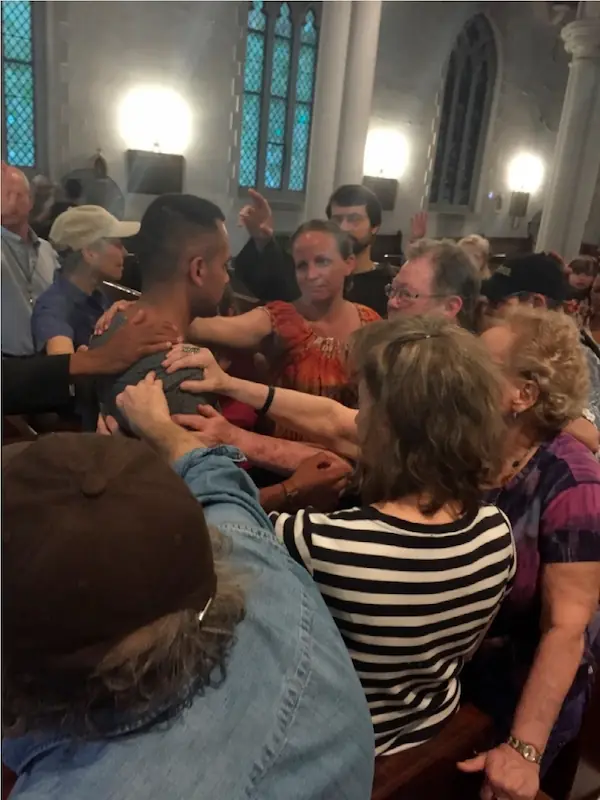
The presence of the mostly native-born and overwhelmingly white, female, and middle-aged to senior New Yorkers was critical for the success of cases. They strongly supported undocumented Friends through their, at times, silent presence at ICE check-ins and case hearings and at times vocal advocacy at the Assembly.
This is suggestive of the NSC’s successful attempts to disrupt the state monopoly on the legal, which an organizer referred to as enforcing the line of rights, stating, “We are literally standing at that line and making sure that we hold that line and enforce [immigrant] rights” (fieldwork notes, October 19, 2017).
The Limits of Sanctuary Practices
I outline four trajectories—toward legality, publicness, visibility, and secularization—that expose the limitations of the movement. The emphasis on legal challenges faces the obstacle of restrictive immigration law and emphasizes individual cases.
Public efforts, such as Sanctuary Hood, must confront insufficient resources and inadequate civic infrastructure. Visibility places in the foreground the faces of the “Dreamers” (DACA recipients) and individuals in physical sanctuaries and relies on selective media coverage. Secularization is, however, indicative of the increasing strength of the movement to resist pressures of religious organizations to select “worthy” cases to support—yet support of churches still appears critical in cases of physical sanctuaries.
What is left of the relevance of sanctuary speaks to the empowered subjectivities of migrants who are offered more than just simple hope that they will not be deported. And they are offered concrete assistance by the sanctuary movement to achieve the goal of nondeportation, if not assistance toward resettlement (absent federal, state, and city investments).
Shortcomings of Sanctuary Policies
Distancing the NSC from the official New York City administration sanctuary proclamations, a volunteer with the NSC claimed that the label of sanctuary meant nothing, that it was merely a brand.
The city claims it will not detain refugees (based on their status), but by the very criminalization of the simplest infraction (such as jumping turnstiles), the city has tools to target individuals for deportation based on their race, ethnicity, or linguistic skill on the grounds that they broke the law (fieldwork notes, July 12, 2017). According to activists, this creates a contradiction between the meaning of sanctuary city and the grassroots practice that renders the label “sanctuary city” largely vacuous.
But it should be noted as well that sanctuary ordinances are not always the empty proclamations that grassroots activists sometimes purport them to be: They can offer important institutional openings for an expanded sanctuary struggle (such as sanctuary campuses that protect undocumented students; police reform policies that involve noncooperation with ICE; health care programs for all urban residents, including noncitizens; and civil bureaucratic initiatives such as municipal IDs, which can help immigrants open bank accounts and access services).
Except in the case of mass protests, however, rebel sanctuary cities do not answer David Harvey’s (2013) radical and revolutionary call stated in his book Rebel Cities. Rebel cities, it is true, have stood up to a hostile sovereign by contesting defunding in court (San Francisco) and by trying to forge global networks of mayors (Global Parliament of Mayors). Yet while lofty mayoral rhetoric during the first Trump administration signaled inclusivity (as a form of “right to difference”), sanctuary policies in practice fell short.
With the exception of Philadelphia, municipal ordinances and resolutions failed to involve immigrants in the sanctuary process, tended to highlight mostly immigrants’ economic contributions, and more often than not had a weak record of shielding immigrants from abuses of due process. Rather, it is the support of immigrants by social movements and local political activism that has been key to creating participatory sanctuaries.
Grounded Cosmopolitanism and Urban Inequality
Although this point is made only implicitly, the fieldwork endorsed the grounded urban cosmopolitanism of immigrants from Mexico, Honduras, Guatemala, Venezuela and other countries whose ethnic belonging went so often unnamed and unuttered in the meetings, vigils, or walks that I attended. And indeed, migrants did not make claims based on the ethnic particularisms that critics of multiethnic societies feared; rather, migrants of different groups acted collectively, partaking in sanctuary practices with the citizens and permanent residents who joined them in accompaniments, legal clinics, assemblies, Jericho Walks, and Sanctuary Hood efforts.
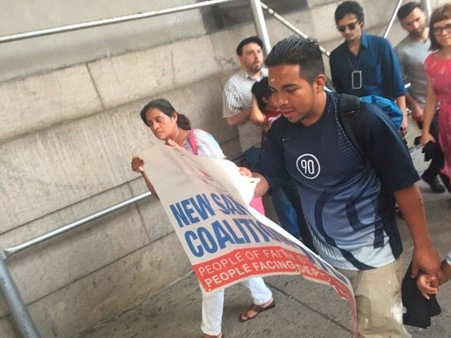
Demonstrating togetherness in struggles to fight deportations, apply for asylum, resolve legal liminality, or simply aid others, these “co-citizens” acted despite their differences amidst conditions of racialization, pressing an increasingly exclusionary state to uphold human dignity and defend human rights.
The New York City of the sanctuary movement during the first Trump administration thus affords a reflection of a deeper solidarity which has indeed arrived but perhaps yet needs to be recognized.
This solidarity enfranchised “co-citizens” by reclaiming the “right to have rights,” countering the assumptions that migrants diminish a polity, weaken cohesion, and merely seek economic incorporation.
Perhaps I can end with the fieldwork starting point that sanctuary practices oppose a hostile state, but now this needs to be placed in the context that during fieldwork, many sanctuary participants did not necessarily oppose an unjust city even if this remained an implicit point. Outraged at the federal regime, fearing the threat of stepped-up deportation and the targeting of their leadership, during fieldwork, sanctuary participants rarely aimed at expressing discontent with urban inequalities and focused instead on opposition to the federal government.
The endorsement of sanctuary in my book comes with a warning. Indeed, as we have seen, sanctuary declarations hold out offers of protection for immigrants that can prove illusory. At the same time, one cannot argue that grassroots practices are sufficient either–I outline four trajectories —toward legality, publicness, visibility, and secularization—that expose the limitations of the movement. For however much grassroots practices might have succeeded in creating emancipatory sanctuary spaces through empowered subjectivities and the grassroots rhetoric of social justice, these practices nevertheless were not sufficient to compel institutional responses to addressing urban inequalities. Sanctuary, I am afraid, is not enough on its own.
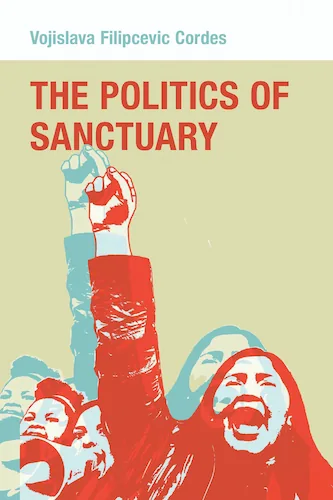
This article includes material adapted from The Politics of Sanctuary by Vojislava Filipcevic Cordes, published by Cornell University Press. Copyright © 2025 Cornell University. Reproduced with permission.