Underexamined Signals in Arctic Political Discourse
I think Greenlandic activist Amarok S. Petersen’s brave protest and Greenlandic social media influencer Qupanuk Olsen’s eloquent message (noted at the end of part 1) are worthy of mention, and should be discussed much more than they are among Arctic scholars. But they do not appear to be discussed by Lackenbauer at all.
- Underexamined Signals in Arctic Political Discourse
- Situating the Argument Within a Broader Analytical Framework
- Selective Engagement and the Limits of Scholarly Critique
- Credibility, Experience, and Standards of Scholarly Attribution
- Editorial Practice and the Relevance of Biographical Context
- Biographical Scrutiny and the Displacement of Argument
- Non-Linear Academic Trajectories and Scholarly Legitimacy
- Explore Books Written by Our Contributors
- Selective Reading and the Misinterpretation of Genre
- Interpretive Standards and the Consequences of Decontextualized Reading
This absence is notable, given their relevance to ongoing debates about historical responsibility and contemporary political discourse in the Arctic. I’ve discussed my concerns with Denmark’s policies toward Greenland in several different publications, including The Arctic Institute, Washington Times, American Thinker, Arctic Today, The Yellowknifer, and Politics and Rights Review, to which I received positive feedback.
Debates over interpretation should focus on arguments and evidence, not on attempts to delegitimize biographical facts that are neither contested nor peripheral to the subject matter at hand.
If anything, what Lackenbauer characterizes as my “common refrain” reflects a sustained line of inquiry that has been repeatedly validated by editorial engagement, and arguably warrants more systematic discussion rather than dismissal.
A look at my many, many recent works in their collective wholeness gives a much fuller sense of what I am describing and the nuance of my own, evolving and complex views and should, I strongly believe, be shared by Lackenbauer with the entirety of the NAADSN community.
Situating the Argument Within a Broader Analytical Framework
Taken together, this body of work provides the necessary context for understanding the analytical framework within which my arguments are developed.
The broader issue is not disagreement over style, but the consequences of selective and decontextualized reading.
The trends I observe and report on in writings have, in recent months, felt like a rapid and destabilizing erosion of established international norms, reminiscent of the days, weeks and months that preceded the trauma and tragedy of World War I, a theme that also manifests in my coverage last spring of Greenlandic electoral and diplomatic events as a tribute to Barbara Tuchman’s March of Folly.
These works include my newest book, Battle for the Arctic, and my 60-page article, “As Washington and Copenhagen Duel Over Greenland’s Future, Greenland Keeps Its Eye on Independence: Collaborative Models of Indigenous Empowerment and Multilevel Governance from Alaska and Canada Could Offer an Alternative Path Forward,” published by Isonomia Quarterly (volume 3, no. 4, Winter 2025/26, 163–224), which offers a comprehensive synthesis of these arguments, and which concludes with these words:
“How might such a conversation between Greenland and the United States unfold? Perhaps the conversation with Trump will start with his initial territorial acquisition vision, and evolve from there toward genuine support for Greenland’s independence as America’s renewed relationship with Greenlanders grows, along with his desire to extend more robust American protection to Greenland in its struggle to be free. This conversation is only just getting started, and we have at least three more years to watch it unfold. During this time, there will be many new opportunities for Greenlanders to win the confidence of President Trump, and, through spirited negotiation, persuade him to embrace their vision of sovereign restoration and collaborative diplomacy with the United States and its other NATO partners, as articulated in its innovative, collaborative and visionary 2024 Arctic strategy, Greenland in the World – Nothing About Us Without Us.
New and unexpected alignments of interest can emerge from talks between parties initially opposed to one another on such contentious matters as sovereignty and the national interest – indeed, we have seen just such a phenomenon in recent negotiations between Ukraine and the United States over mineral rights, which started off as what Ukraine perceived to be imperious resource grab by a great power but which evolved into a more collaborative, balanced and reciprocal co-management and joint investment agreement reminiscent of the modern land claims treaties that have helped transform the mainland of Arctic North America into a collaborative, balanced and reciprocal region where tribal and state interests have found a sustainable equilibrium.
It could happen again. Indeed, in time, after this novel but in so many ways unwanted courtship by America of Greenland comes to its inevitable conclusion, we may witness not the outright and naked annexation of a self-governing, predominantly Indigenous island nation as so many fear, but instead a sovereign restoration of Arctic North America’s first and only truly Indigenous state, affirming rather than subverting the continued alignment of Indigenous and state interests at the top of the world. Instead of the much feared conquest of Greenland, we may thus bear witness to its liberation, a scenario largely unimagined today.”
Selective Engagement and the Limits of Scholarly Critique
The argument outlined above is precisely the one that, in his role as NAADSN lead, Lackenbauer appears to marginalize rather than engage substantively. Rather than addressing its analytical premises, his intervention reframes the discussion in ways that narrow its scope and flatten its nuance. The result is not a refutation of the argument, but an avoidance of the broader conversation it invites within northern scholarly communities.
Lackenbauer aims to reduce my views; key distinctions and contextual elements are omitted. Given his position of prominence within NAADSN, a network supported by significant institutional resources, a higher standard of intellectual engagement is warranted. A substantive response would require situating individual columns within the wider corpus of my work, rather than isolating select excerpts.
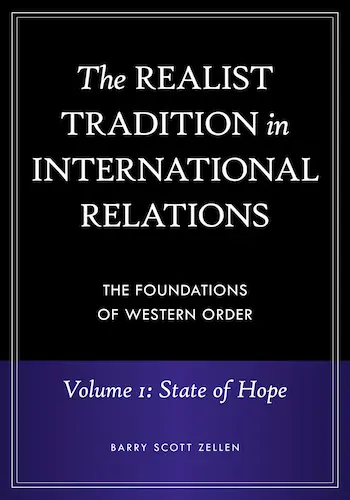
Such engagement would involve consideration of my broader publication record, including not only recent columns but also a long-standing body of scholarly and analytical work spanning several decades and more than a dozen books, most of them monographs. This wider context is essential for a fair assessment of the arguments at stake. Indeed, fifteen years ago, Lackenbauer endorsed my four-volume treatise on realism, The Realist Tradition in International Relations: The Foundations of Western Order, describing it as:
“This sweeping and perceptive analysis of strategic thought in the Western world, from classical wars between Greece and Persia to the War of Terror, is sure to stimulate discussion. Zellen’s constructive realism sees strategy as action, resurrecting realism from the realm of tragedy to heroic idealism. Theorists, historians, and strategists will find rich food for thought in this search to find theoretical order in humanity’s quest for peace and security through the chaos of the last two millennia.”
And he included my chapter on Indigenous borderlands, “Crossborder Indigenous Collaboration and the Western Arctic Borderland,” in his 2017 co-edited volume, The Networked North, published jointly by Borders in Globalization (BiG) and the Centre on Foreign Policy and Federalism. These prior instances of scholarly collaboration indicate familiarity with (and earlier endorsement of) the substance of my research.
Credibility, Experience, and Standards of Scholarly Attribution
Lackenbauer has, I know, read my books, and recommended that I serve as a peer reviewer for his 2013 volume, Canadian Rangers, a Living History, which I reviewed positively.
Against this background, the omission of this shared scholarly history in his NAADSN “Quick Impact” piece is difficult to reconcile with norms of academic transparency. Such omissions materially shape how readers understand both the provenance and the scope of the arguments under discussion.
Beyond minimizing my discussion of Danish policies toward Greenland, Lackenbauer also questions the relevance of my long-term residence in northern Canada.
My time in the Canadian North constituted a core period of my life and research formation.
He writes: “Zellen, who continues to pitch himself as a former Yellowknife resident in his bylines.” This characterization is factually inaccurate. I am, indeed, a former Yellowknife resident, having lived on a houseboat in Yellowknife Bay, a trailer on Yellowknife’s industrial west side, a basement apartment downtown, and a tent on Joliffe Island. I am also a former resident of Whitehorse and Inuvik, and these periods of residence are well documented and widely known within northern journalistic and academic circles.
Such biographical details are not offered as rhetorical credentials, but as relevant context for understanding the formative grounding of my Arctic research and writing. I have been a frequent contributor to the northern press since 1989—always voluntarily and as part of a sustained engagement with the region that shaped both my journalistic and scholarly trajectory.
And the byline used by Northern News Services Ltd. was not my own formulation; rather, it was prepared by its editors, reflecting common editorial practice in northern media outlets that acknowledge contributors’ regional ties. When I describe my current professional affiliation, I do so accurately and consistently, identifying myself as “research scholar in the Department of Geography at the University of Connecticut and senior fellow (Arctic Security) at the Institute of the North,” as well as “author, most recently of Arctic Exceptionalism: Cooperation in a Contested World (2024),” a work in which I explicitly cite Lackenbauer’s own scholarship.
Editorial Practice and the Relevance of Biographical Context
When the Fairbanks News-Miner publishes my work, it describes me as: “He lived in Whitehorse in 1989-90 as an aspiring freelance writer and again in 1998-99 as general manager of Northern Native Broadcasting–Yukon (NNBY).”
When it is the Juneau Empire, it references me as “Barry Scott Zellen is a former resident of Inuvik, Yellowknife, and Whitehorse where he was editor of the Tusaayaksat newspaper (1990-93), executive director of the Native Communications Society of the NWT (1995-98), and general manager of Northern Native Broadcasting, Yukon (1998-2000).”
When it was the former Inuvik Drum, it mentioned my residence in Yellowknife (“Barry Zellen is a former Yellowknife resident who is now an independent scholar specializing in Arctic geopolitics.”) These descriptions reflect editorial conventions, not personal self-promotion, and accurately situate my past within the northern contexts to which my work continues to speak.
To question or diminish this history is to misunderstand its relevance. My time in the Canadian North constituted a core period of my life and research formation: it informed the empirical grounding of my Arctic scholarship and the origins of my long-standing engagement with northern political, Indigenous, and governance issues.
Debates over interpretation should focus on arguments and evidence, not on attempts to delegitimize biographical facts that are neither contested nor peripheral to the subject matter at hand.
Biographical Scrutiny and the Displacement of Argument
Lackenbauer further shifts the discussion from my arguments to a selective and problematic reading of my academic biography. He writes, in response to his own framing question about my background: “He is an American who began his PhD studies at Harvard University much earlier in his career than he discloses on his website, and that he has previously worked as ‘Web Commando’ for the US Naval Postgraduate School from 2004-2012 and as the 1965 Arctic Scholar Chair at the US Coast Guard Academy.”
This statement conflates undergraduate study, later doctoral training, and subsequent professional appointments, and introduces inaccuracies that require clarification. I am an American, and I worked for many years with two U.S. military academies in academic and research capacities. These roles were openly acknowledged and reflected a period during which I sought to contribute scholarly expertise to public service and national security debates.
I also studied at Harvard University, entering in 1981 and graduating in 1984 with an A.B. (magna cum laude), as clearly indicated on my website. My earlier graduation reflected advanced placement credit, a common institutional practice, and my subsequent affiliation with the Class of 1985 for reunions, to maintain ties with freshman year friends, has likewise been publicly documented.
Non-Linear Academic Trajectories and Scholarly Legitimacy
During my undergraduate years, I also pursued graduate-level coursework and research opportunities, including graduate seminars in the social psychology of conflict with Herb Kelman, realist political theory with Michael Smith, and national security decision-making with veteran diplomat Bob Blackwill at the Kennedy School, and research assistance on land reform with Jack Montgomery and strategic nonviolence with Gene Sharp. These experiences, while I was fresh out of high school, informed my early intellectual development, particularly my later work on realism, land claims, and Indigenous–state relations. They are neither concealed nor misrepresented in my professional record.
Explore Books Written by Our Contributors
The suggestion that these details amount to non-disclosure or misrepresentation misconstrues both their significance and their transparency. Like many scholars, my academic path was non-linear. Following my undergraduate studies, I spent a substantial period outside formal academia, working as a writer, editor, and advocate in the Western Arctic—a period that proved foundational for my later scholarship. I returned to doctoral studies much later in life, completing my PhD at age 51. This trajectory reflects a deliberate professional choice rather than an omission or inconsistency.
Disagreement over ideas does not justify reframing biographical complexity as evidence of impropriety. Academic debate is best served by addressing arguments on their merits, not by recasting standard elements of an academic biography as grounds for suspicion or delegitimation.
Selective Reading and the Misinterpretation of Genre
After questioning my biography, Lackenbauer turns to a narrow selection of my published writings. As noted above, I published more than eighty articles last year across a wide range of venues, including The Arctic Institute and Politics and Rights Review. None of this broader body of work is addressed. Instead, attention is focused on a small subset of columns from the northern press, which are treated in isolation and without reference to their genre, context, or intended rhetorical register.
As Lackenbauer writes: ““In another piece last year, he offered his ‘two cents on how to proceed and add a 51st star to the American flag! God bless Greenland. Let’s Make the Arctic Great Again!’ In it, he lays out his ideas on ‘how to win the heart of feisty but outgunned Greenland’ by offering them a ‘better deal’ than the Danes that ‘they just can’t refuse’ (explicitly invoking the words of fictious [sic!] mob boss Don Vito Corleone). His proposal is that Greenlanders should actually pay for the United States’ purchase of Greenland out of their own future resource revenues – meaning that the transaction ‘won’t cost the American taxpayer a single cent.’ This leaves little doubt about where Zellen stands on this issue – have Greenlanders pay for their own absorption by the US. This is even worse than having Mexicans pay for a wall that they did not ask for or want.”
He goes on to interpret this article as a serious proposal advocating that Greenlanders finance their own absorption into the United States. This reading is fundamentally mistaken. The article in question, “An Indecent Proposal: Let’s Make Greenland an Offer They Can’t Refuse,” published in Nordicum Mediterraneum—was written as satire. Its title, framing, and rhetorical devices explicitly signal parody, drawing on exaggeration and irony to critique transactional approaches to sovereignty rather than to endorse them. Interpreting the piece as a literal policy proposal therefore misrepresents both its intent and its argumentative function.
Interpretive Standards and the Consequences of Decontextualized Reading
Satire has a long and established place in political commentary, including within Arctic and international affairs discourse. Treating such a text as straightforward advocacy collapses distinctions between genre and argument, and risks attributing positions to an author that the text itself does not sustain. A fair engagement would require acknowledging the satirical nature of the piece and assessing it accordingly, rather than construing it as evidence of a substantive policy stance.
The broader issue is not disagreement over style, but the consequences of selective and decontextualized reading. When satire is stripped of its genre and presented as literal intent, the resulting critique addresses a position that was never advanced. This, in turn, diverts attention from the substantive arguments that animate my work on Greenlandic self-determination, sovereignty, and Indigenous–state relations—arguments that are developed at length in my scholarly publications and are fully distinct from the satirical intervention cited here.
This is the second part of a three-part series.
The views expressed in this article are those of the author and do not necessarily reflect the position of Politics and Rights Review.