
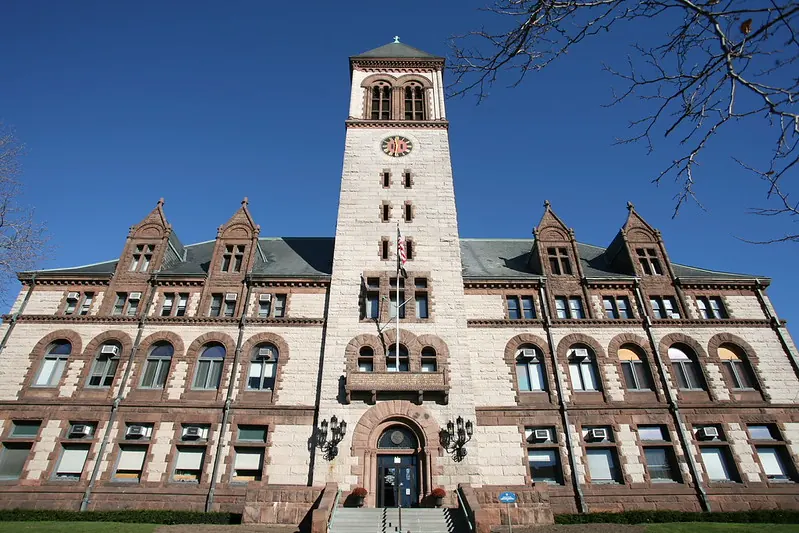
In 2020, the City Council of Cambridge, Massachusetts, where I live, passed a Cycling Safety Ordinance that required the construction of 22.6 miles of bike lanes across the city, including on its busiest commercial street, Massachusetts Avenue, by 2026. The law had been spearheaded by cyclists, who were upset about the recent deaths of two cyclists in collisions with motor vehicles.
While many Cambridge residents supported the law, it also attracted significant opposition, including from pedestrians fearful of being hit by bicycles, business owners who would lose parking spaces in front of their stores, and disabled residents and senior citizens concerned about parking and curbside access.
These opponents mobilized to protest that the Council had pushed through the project without input from non-cyclists. Groups opposed to the project filed two lawsuits to try to block it; both were dismissed. The Council vacillated between delaying completion and staying on track as conflicts continued between bike safety advocates and project opponents.
In my negotiation classes, I suggest that students can usually reach better agreements by exploring the interests underlying their counterpart’s stated positions.
The controversy in Cambridge is relatively minor compared with the violent conflicts and expensive legal battles we see in the national and international media, but these conflicts actually have much in common: the parties involved are angry, frustrated, and see no end in sight.
Parties often have very different perspectives and opinions about both their dispute and how it should be resolved. At the same time, they may be forced to deal with each other or live side by side. They feel trapped, with no easy way out. This sense of entrapment can lead the parties to demonize each other and escalate the dispute. The result is expensive lawsuits, time and expense spent organizing and protesting, and destructive retaliatory behavior.
Three Lenses for Resolving Disputes
Fortunately, sound dispute resolution processes are within reach. A better understanding of the various lenses we can apply to understanding and resolving our disputes can help us spend less time fighting each other and more time on enjoyable and productive activities, such as riding our bikes or running a business.
In their classic 1988 book, Getting Disputes Resolved: Designing Systems to Cut the Costs of Conflict [1], negotiation scholars William Ury, Jeanne Brett, and Stephen Goldberg assert that people tend to take one of three main approaches to resolving a conflict: either asserting their rights, asserting their power, or asserting their interests.
Taking a rights lens to a dispute involves trying to determine which side is “right” and which is “wrong” by applying some standard of contract, law, or norm. When people think their rights have been violated, they often take legal action, as in the case of the lawsuits filed by opponents of the Cambridge bike lane project.
Asserting one’s rights is the most common lens people apply to disputes, and we lean on it especially heavily when our rights correspond with our preferred outcomes. Rights tend to sound objective yet can be subject to interpretation and can conflict with other rights. For example, the right to safely ride an environmentally friendly bike may be in conflict with the rights of consumers to park their cars near local businesses.
Approaching dispute resolution through a power lens involves assessing each party’s relative power, particularly concerning how dependent you are on them and how dependent they are on you. If you need the other side’s cooperation more than they need yours, they generally have more power than you do.
You can then work to increase your power—for example, by forming a coalition with others who believe their rights have been violated, taking your concerns public, or finding an influential party who will advocate on your behalf. In the Cambridge bike lane controversy, residents increased their limited power as individual citizens by organizing into groups. Organizations on both sides of the debate lobbied politicians and the public, raised funds to influence political campaigns, protested, and wrote op-eds, with varying success.
We found that people made more impartial, societally beneficial—that is, fairer—decisions when they set aside biasing information, such as knowledge of their age, gender, race, religion, and nationality.
Appeals to rights and power can overlap, as when having legal rights provides the power to one party to get what they want. But people’s rights and power often conflict. Parties may lack the power to assert their rights, as in the case of a freelancer who can’t afford to sue a former client for nonpayment or a tenant whose landlord ignores requests for much-needed repairs.
Both the rights lens and power lens to dispute resolution focus on competing to win or to claim more value than the other party. By contrast, the third lens identified by Ury, Brett, and Goldberg, the interests approach, involves collaborating to ensure both (or all) parties are satisfied with the outcome of their dispute.
When a party adopts an interest-based lens, they attempt to understand the needs, desires, preferences, and concerns of all interested parties and find a resolution that is viable for all. Typically, parties start off by believing that their interests are incompatible. The desire of Cambridge cycling advocates to quickly implement bike lanes across the city seemed to conflict with the desire of business owners to ensure that customers could easily access their storefronts.
The assumption that our interests are incompatible motivates us to assert our rights—for example, by taking legal action, as happened here in Cambridge. Unfortunately, we often overlook the fact that we share certain key interests with our presumed opponent. For example, most Cantabridgians (as we call ourselves) share the goals of improving the environment, reducing traffic injuries and fatalities, and having a vibrant local business community. My view is that a healthy, early set of discussions could have found solutions that were better for the environment, safety, and the local economy.
Fortunately, there are numerous standards you can draw on to reach the solution that is fairest to all.
Ury, Brett, and Goldberg assert that an interest-based approach to dispute resolution yields better results than a rights- or power-based approach.
Because an interest-based approach incorporates the concerns of all parties, they note, it reduces the costs of conflict, increases parties’ satisfaction with their outcomes, builds strong relationships, and heads off further disputes.
Not to mention, for most of us, sitting down to talk through differences and collaborate on solutions is a much more pleasant process than filing a lawsuit.
In my negotiation classes, I suggest that students can usually reach better agreements by exploring the interests underlying their counterpart’s stated positions. Suppose a client is insisting on a short-term contract. Instead of saying you simply can’t meet their terms, you might ask questions to probe their interests. If they reveal they are afraid you won’t deliver what they need, you might be able to meet this interest by proposing a long-term deal with a 60-day cancellation clause.
I believe an interest-based approach can be very useful in dispute resolution, but that disputants also need to consider the rights and power of the various parties as they seek creative, interest-based solutions. People with legitimate rights will continue to assert them even as we develop more creative, interest-based solutions.
A Fourth Lens: Fairness
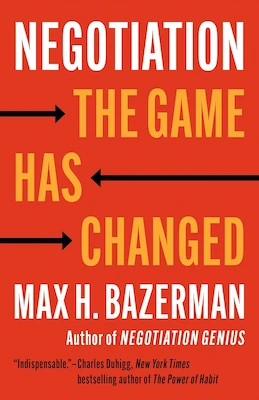
In my recent book, Negotiation: The Game Has Changed, I propose adding a fourth lens to Ury, Brett, and Goldberg’s dispute resolution framework: fairness. While the city council may have had the right to enact legislation creating new bicycle lanes, more transparency would have been perceived as fairer and could have reduced the costs of the conflicts that followed. But parties can have self-serving views of what constitutes the fairest choice.

In April 2024, for example, the Cambridge City Council attempted to implement a fair compromise by delaying completion of the bike lane project by over a year, until November 2027.
Their goal was to build in more time to address the business and parking impact of new bike lanes. But after three more cyclists died that summer, Cambridge residents packed a Council meeting and begged members to reverse course. They agreed and moved the project deadline back to 2026. The goalpost had shifted at least twice based on what the various parties perceived to be a fair solution.
Fortunately, there are numerous standards you can draw on to reach the solution that is fairest to all. First, you could adopt the view from utilitarian philosophy that the fairest, most ethical outcome is the one that maximizes the total value received by all affected parties—or, if the dispute is concerned with losses, the one that minimizes losses as much as possible. In the Cambridge bike lane dispute, this might include studying the likely effect of different bicycle routes on cyclists, pedestrians, car drivers, and local businesses.
Second, you could follow the lead of philosopher John Rawls, who believed that a just society would be one in which we make decisions free of the bias created by aspects of our identity, such as how much money we have, where we live, and so on. Rawls asked people to try to adopt a “veil of ignorance” when making societal decisions—that is, to try to look beyond their own personal incentives and risks.
In our research, my colleagues Joshua Greene, Karen Huang, and I tested the effectiveness of Rawls’s veil-of-ignorance advice in helping people reach fairer societal decisions, such as how to allocate scarce ventilators to those who needed them during the Covid-19 pandemic.[2] We found that people made more impartial, societally beneficial—that is, fairer—decisions when they set aside biasing information, such as knowledge of their age, gender, race, religion, and nationality.

Fairness Through Dialogue
Third, you could engage your opponents in a discussion about fairness. It is common for disputants never to have met or conversed with their perceived “enemy.” Face-to-face conversations often lead to solutions that both sides view as fair.
From the start, the Cambridge City Council would have been wise to solicit input from a wide swath of residents, including not only proponents and opponents of the bike lanes, but people who lacked strong opinions on the issue. Because they are less biased, disinterested parties are typically the most capable of seeing the situation broadly and identifying fair solutions that bridge interests and rights, and rebalance power.
[1] Ury, W., Brett, J., & Goldberg, S. Getting Disputes Resolved, Jossey-Bass, 1988.
[2] Huang, K., Greene, J., & Bazerman, M. Veil-of-Ignorance Reasoning Favors the Greater Good. Proceedings of the National Academy of Sciences, 2019, 116(48), 23989-23995.