Lackenbauer’s Critique of My Greenland Column
After his decontextualized misrepresentation of my satirical 2025 NoMe article, Lackenbauer next targets my recent column, “Barry Zellen: Could Greenland Really Be Next?,” which appeared in the January 12, 2026 edition of The Hay River Hub (in addition to The Yellowknifer and Nunavut News.)
- Lackenbauer’s Critique of My Greenland Column
- An Empty Charge of Omission that Ignores the Fullness of My Life’s Work
- My Published Work and My Life-long Commitment to Indigenous Rights
- Resilience, Colonial History, and Arctic Displacements
- Debating Arctic History and Inuit Self-Government
- Mischaracterization and Oversimplification of My Position on Greenland
- Context, Reporting, and the Debate over Greenland’s Future
“In Zellen’s latest piece in the Hay River Hub, he questions the idea that a ‘second assertion of the Trump Doctrine in Greenland must automatically be catastrophic.’ Instead, he suggests it might be liberating, akin to the US military action in Venezuela, given ‘deep moral injustices in past Danish colonial policies in Greenland, and the continued suffering that has resulted.’ He envisages ‘a confluence of humanitarian intervention, commercial interests (particularly rare earths and uranium), and national security once again aligning’ and providing justification for another implementation of the Trump Doctrine.”
The Canadians and Americans have also sinned, but they both started to atone for their crimes against the people of the North much sooner.
I stand by these words, as I do indeed envision “a confluence of humanitarian intervention, commercial interests (particularly rare earths and uranium), and national security once again aligning,” and that this could quite possibly overcome the “deep moral injustices in past Danish colonial policies in Greenland, and the continued suffering that has resulted.”
Is it so wrong to see a light where others only see darkness, and find hope where others only see despair? Is there only one truth in our world, that according to NAADSN? But I must also add my thanks to Lackenbauer, as I was completely unaware that The Hay River Hub had also published my article. (I saw it in The Yellowknifer, and in Nunavut News.) I first published in the Hub back in 1992, and am proud to be in its pages whenever the opportunity arises.
An Empty Charge of Omission that Ignores the Fullness of My Life’s Work
Lackenbauer next takes me to task for what he describes as my sins of “omission” – and yet, as I have noted earlier in this defense of my humble craft of telling truth to power, I published 80 articles last year. 80. In one year. While battling several health crises, and confronting continuing poverty caused in large part from these sorts of cancel-culture campaigns against me, and their disdain for truth (and subtlety and wit and complexity).
I talk about moving beyond our darkest historical memories in the North in my conclusion to my second book
Many, indeed, most of the articles I wrote address issues of indigenous rights, culture and justice.
The issues and perspectives Lackenbauer raises here are not issues that I either ignore or omit; indeed, I have been writing about these issues prolifically for over 40 years.
Lackenbauer knows all this. This is thus Lackenbauer’s omission, not mine!
My Published Work and My Life-long Commitment to Indigenous Rights
When we first met in 2009, I gave Lackenbauer a copy of my first book, Breaking the Ice: From Land Claims to Tribal Sovereignty in the Arctic.
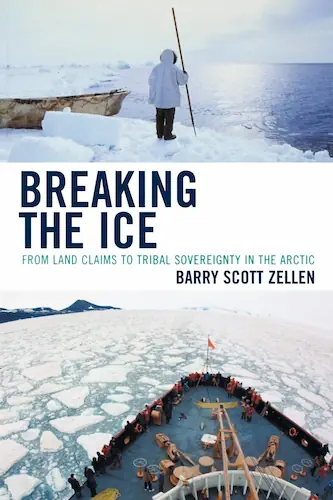
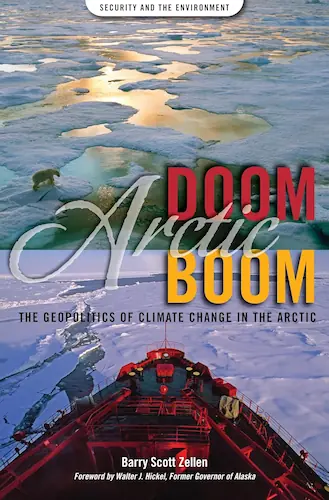
This work, along with its sequel On Thin Ice: The Inuit, the State and the Challenge of Arctic Sovereignty, and Arctic Doom, Arctic Boom: The Geopolitics of Climate Change in the Arctic, address many of the themes that Lackenbauer suggests are absent from my work.
Even my chapter in The Networked North, which Lackenbauer himself published in 2017 (and which he praised for my theoretical rigor), examined these issues.
Lackenbauer writes, in judgment of my work: “The acts of omission in Zellen’s work are telling. Why not cast light on Trump’s dismissive stance on Indigenous rights?”
My reply: President Trump’s desire to galvanize growth, foster investment, and create wealth in the Arctic will uplift northerners from endemic poverty, as I have written in many of my recent columns.
Wanting northerners to become more self-reliant and enjoy the fruits of wealth creation is not a dismissive stance on Indigenous rights, in America, Canada, or in Greenland. It’s a core pillar of Arctic land claims history, and the economic engine for northern prosperity and autonomy.
I have written about Trump’s curious if little discussed support for Indigenous empowerment and enrichment often in my past columns, but Lackenbauer either has not read these columns – or chooses to ignore them.
As Lackenbauer writes: “After all, the US President completely wrote Indigenous Peoples out of his triumphalist narrative of American expansionism in his inaugural speech to Congress last year, and one of his first acts in office was to rename Denali as Mount McKinley. There is no talk of the US “trail of tears,” or colonial trauma amongst Native Alaskans.”
Perhaps not, but I am quite sure many Native Americans are relieved that we can stop dwelling upon the past, and stop apologizing for history, and stop perpetuating poverty by imposing anti-development narratives on First Nations who like us live in the 21st century, and not the 19th.
Some Arctic scholars tend to talk almost exclusively about the North’s historical traumas, but doing so to the exclusion of the North’s optimism and hope for the future only helps to perpetuate those traumas, forcing new generations to continually relive past injustices.
Resilience, Colonial History, and Arctic Displacements
I talk about moving beyond our darkest historical memories in the North in my conclusion to my second book, On Thin Ice: The Inuit, the State and the Challenge of Arctic Sovereignty, with my proposed “Thank You, Inuit” campaign hoping to slow the epidemic of suicide among young people of the Arctic, who too often lose faith in a future defined by doom and gloom. My intention in this work has been to emphasize resilience and future possibilities alongside historical awareness. As a Jew, I have grown up understanding how communities survive genocide: by continuing to live and rebuild their societies, despite trauma.
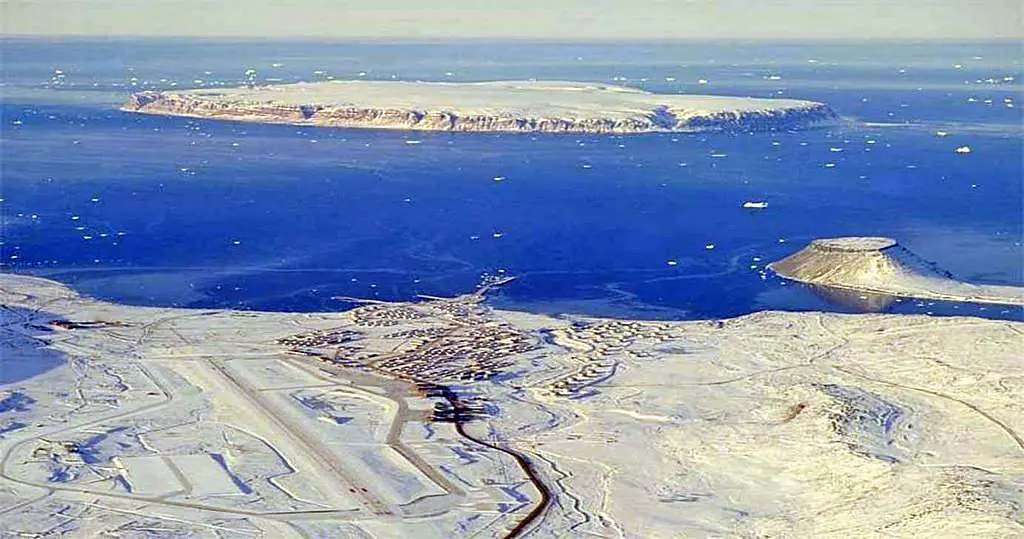
Lackenbauer continues: “Zellen never refers to the American displacement of Greenlanders living at Thule, now Pituffik Space Base, in the 1950s, and the ongoing trauma that this caused. Instead, he only targets the Danes.” But I do indeed talk about Native displacements in my many other works, including my books. Whether in Greenland, or Canada’s own High Arctic exiles, or some of the planned but ultimately thwarted Alaskan displacements proposed by Project Chariot and the Rampart Canyon Dam project, which were stopped by a powerful and determined alliance between environmental activists and Native rights activists.
It would therefore be inaccurate to suggest “that Zellen only targets the Danes.” The Canadians and Americans have also sinned, but they both started to atone for their crimes against the people of the North much sooner. The Danes are only just getting started. And they have much ground to cover, having fumbled from the start. I have written about colonial excesses from one side of the Arctic to the other, and will continue to do so.
Debating Arctic History and Inuit Self-Government
Lackenbauer knows all this. In 2017, he published my chapter on the Western Arctic borderland, and in 2016 he and I brainstormed over dinner in Whitehorse at the BiG Summer Institute on how I believe that the Inuit have used the state to expand their political and institutional presence in the North, rewriting history along the way as they expand their future political footprint in a manner that some observers might see as reflecting assertive state-building strategies – with an eye to the possibility that Arctic borders could one day be reconsidered in the context of evolving forms of Inuit self-government.
How best may we truly help to liberate Greenlanders from their colonial past and present, so that their future is one of freedom and hope?
It was Lackenbauer who recommended that I read Arctic Smoke and Mirrors, which questions some widely held assumptions about the Inuit narrative on Arctic history, which in turn inspired my own 2015 chapter examining this history more closely, “From Counter-Mapping to Co-Management: The Inuit, the State and the Quest for Collaborative Arctic Sovereignty.”
I celebrate the achievement by Inuit in self-governance and autonomy, but I am also aware of criticisms that have been raised in some media, scholarly and policy discussions regarding governance challenges and accountability in certain northern institutions. We must never turn a blind eye to debates over ethics, accountability and transparency, no matter who the perpetrator.
Mischaracterization and Oversimplification of My Position on Greenland
Lackenbauer concludes by writing: “Zellen is entitled to his opinions. It is important, however, that Northern Canadian audiences are aware of his political stance as a champion of Trump’s quest to annex Greenland. Greenlanders have spoken unequivocally on this issue: Greenland is ‘not for sale.’ Greenlandic Prime Minister Jens-Frederik Nielsen stated last week in a joint news conference with Prime Minister Mette Frederiksen of Denmark that ‘If we have to choose between the United States and Denmark here and now, we choose Denmark. We choose NATO, the Kingdom of Denmark and the European Union.’ Zellen should respect the will of the Greenlandic people and not try to weaponize their colonial past to rationalize an American conquest.”
As for his first sentence, I would emphasize that scholarly debate benefits from the open exchange of differing interpretations. Besides, my views are more than mere opinions. They are analyses that draw on decades of research and experience, including more than ten years living in the North. Then comes his next statement: “It is important, however, that Northern Canadian audiences are aware of his political stance as a champion of Trump’s quest to annex Greenland.”
This characterization, in my view, simplifies a more complex argument. I see in Trump’s sustained interest in the Arctic and in Greenland an unprecedented opportunity for positive change, one unseen since 1867. If you read my longer works such as those in Isonomia Quarterly, described above, you will see my own reasoned stance clearly. In it, I argue that Greenland may well benefit from becoming part of America (or another state, perhaps even Canada, as I have been writing about since 2019, including in The Globe and Mail and in 2021 in NoMe.)
Context, Reporting, and the Debate over Greenland’s Future
Lackenbauer writes that: “Greenlanders have spoken unequivocally on this issue: Greenland is ‘not for sale.’ Greenlandic Prime Minister Jens-Frederik Nielsen stated last week in a joint news conference with Prime Minister Mette Frederiksen of Denmark that ‘If we have to choose between the United States and Denmark here and now, we choose Denmark. We choose NATO, the Kingdom of Denmark and the European Union.’ Zellen should respect the will of the Greenlandic people and not try to weaponize their colonial past to rationalize an American conquest.”
But he omits to mention that in the second part of my column in The Yellowknifer, this is precisely what I wrote:
“Jens-Frederik Nielsen, Greenland’s Prime Minister, declared that he felt ‘sad’ that the American president once more ‘reduced our country to a question of security and power,’ as reported by Deutsche Welle. The Guardian reported that the ‘prime ministers of Denmark and Greenland have demanded respect for their borders after Donald Trump appointed a special envoy to the largely self-governing Danish territory, which he has said repeatedly should be under US control. “We have said it very clearly before. Now we say it again. National borders and the sovereignty of states are rooted in international law … You cannot annex other countries,” stated Danish Prime Minister Mette Frederiksen and Greenlandic Prime Minister Jens-Frederik Nielsen in a joint statement. The two leaders added that “fundamental principles” were at stake.’”
Lackenbauer’s final sentence takes one last shot at me: “Zellen should respect the will of the Greenlandic people and not try to weaponize their colonial past to rationalize an American conquest.”
But I really do think there is a debate here worth having on how we can determine the true political will of Greenlanders. But how best may we truly help to liberate Greenlanders from their colonial past and present, so that their future is one of freedom and hope?
Will Lackenbauer rise to this important challenge, and step back from his impulse to cancel, and instead embrace just such a debate in a spirit of scholarly exchange? Will he share my words and their many insights, rather than seek to distort, disparage or diminish them – and instead engage with them in full context? Or, will he continue down the path of disagreement without such engagement, and surrender to the tyranny of cancel culture?
I remain ready to participate in such a debate, and humbly hope it will take place in a constructive (and not destructive), and collegial (and not censorious) spirit.
The views expressed in this article are those of the author and do not necessarily reflect the position of Politics and Rights Review.