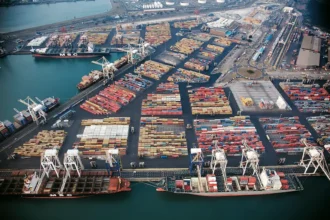
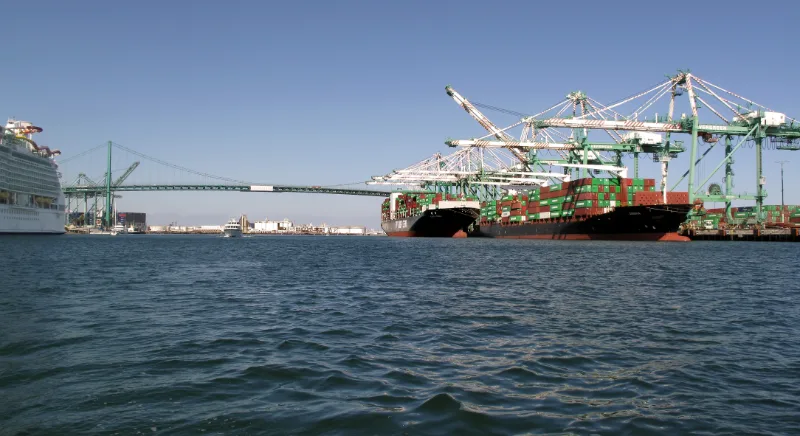
Globalization once promised mutual benefit through dense networks of trade, finance, and communication. Yet these very networks increasingly function as instruments of geopolitical leverage. Governments now routinely use control over critical nodes in global systems—financial clearing, technology supply chains, energy flows—to exert pressure on rivals. The concept that captures this shift is weaponized interdependence.
Rather than reducing conflict, economic integration can create asymmetric dependencies that powerful states exploit. The growing use of sanctions, export controls, and financial restrictions suggests that interdependence is no longer merely an economic condition. It has become a strategic domain of power.
Understanding Weaponized Interdependence
The theory of weaponized interdependence emerged in international political economy to explain how states embedded in global networks can transform economic connectivity into coercive influence. In highly centralized systems, certain countries occupy structural positions that allow them to monitor transactions and restrict access.
Financial networks offer a clear example. Because much global finance flows through institutions linked to the United States, access to the dollar-based system can be restricted as a foreign policy tool. Measures implemented through organizations such as SWIFT demonstrate how control over infrastructure can translate into geopolitical leverage.
The mechanism operates through two main forms of power. First is panopticon power—the ability to gather information from network hubs. Second is chokepoint power—the ability to deny access or disrupt flows. When both capabilities are present, states can exert influence without direct military force.
Weaponized Interdependence in Practice
Recent geopolitical developments illustrate the growing reliance on network-based coercion. Financial sanctions, technology export restrictions, and restrictions on critical minerals all reflect attempts to exploit structural advantages within global systems.
Sanctions regimes targeting rival states have expanded dramatically over the past two decades. Financial institutions must comply with complex regulatory frameworks that extend the jurisdiction of sanctioning countries far beyond their borders. As a result, firms and banks worldwide often adhere to restrictions imposed by major financial powers to avoid losing market access.
Technology supply chains present another arena of strategic competition. Advanced semiconductor production, for example, depends on highly specialized manufacturing equipment and intellectual property concentrated in a few countries. Limiting access to these technologies has become a central tool in strategic rivalry.
These policies reflect a broader transformation in geopolitical strategy. Rather than relying solely on military deterrence, states increasingly compete through economic networks that structure global production and information flows.
The Weaponized Interdependence Dilemma
Weaponized interdependence presents a paradox for globalization. The more integrated the global economy becomes, the more opportunities arise for network-based coercion. Yet the use of such tools risks undermining the very networks that make them effective.
When states perceive economic systems as potential instruments of coercion, they may attempt to reduce vulnerability through diversification or technological autonomy. Efforts to build alternative payment systems, regional supply chains, or domestic manufacturing capacity reflect attempts to mitigate dependence on external nodes.
This dynamic can gradually fragment global systems into partially overlapping networks. Instead of a single integrated infrastructure, multiple parallel arrangements may emerge—financial, technological, and logistical. Such fragmentation would reduce efficiency but increase perceived strategic resilience.
Economic Statecraft and the Future of Globalization
Weaponized interdependence also signals the revival of economic statecraft. Trade, finance, and industrial policy are increasingly integrated into national security strategies. Governments now evaluate supply chains not only in terms of efficiency but also vulnerability and leverage.
This shift challenges assumptions that economic and geopolitical domains can remain separate. Firms operating in global markets must navigate regulatory regimes shaped by strategic rivalry. Compliance decisions increasingly reflect geopolitical alignment rather than purely commercial calculation.
For policymakers, balancing economic openness with strategic autonomy has become a central dilemma. Excessive reliance on coercive economic tools may provoke countermeasures and accelerate systemic fragmentation. Conversely, failure to address asymmetric dependencies may expose states to strategic vulnerability.
Implications for Smaller States
The dynamics of weaponized interdependence pose particular challenges for smaller and middle powers. Countries deeply integrated into global networks often lack the structural leverage enjoyed by major powers but remain vulnerable to disruptions within those networks.
Their strategic response typically involves diversification. By spreading economic relationships across multiple partners, states attempt to reduce exposure to any single source of coercion. Multilateral institutions and regional agreements can also provide buffers against unilateral pressure.
However, navigating great-power competition within economic networks is increasingly complex. Aligning too closely with one bloc may restrict access to another, forcing difficult trade-offs between economic opportunity and geopolitical positioning.
A New Logic of Power
Weaponized interdependence reflects a broader transformation in how power operates in an interconnected world. Control over infrastructure, standards, and financial systems now shapes geopolitical influence as much as territorial dominance once did.
Importantly, this transformation does not signal the end of globalization. Instead, it reveals its political character. Global networks are not neutral spaces of exchange; they are structured by institutions, rules, and asymmetries that states can exploit.
The future trajectory of globalization will depend on how governments manage these tensions. If weaponized interdependence becomes the dominant mode of competition, fragmentation and systemic rivalry may intensify. If states develop cooperative frameworks to manage vulnerabilities, networked interdependence could remain a stabilizing force.
Either way, the era in which globalization was treated as purely economic has ended. Interdependence has become a field of strategic contestation—and the infrastructure of global connectivity is now one of the central arenas where geopolitical power is exercised.