Hokkaido and the Northern Reorientation of Japan’s Strategic Focus
Hokkaido and the Kuril Islands, with their long-contested but fortuitously situated geography, remain critical to the future stability of the Arctic, putting pressure on Tokyo to shift its attention away from its south, where its attention has been focused on the threat to Taiwan from China and on Beijing’s frequent maritime probes of its contested southern islands, as reported in 2022 by Deutsche Welle, 2024 by CNN and Kyodo News, and 2025 by the South China Morning Post. Instead, Tokyo needs to pivot to the north, where Beijing, in conjunction with Moscow, are probing Japan’s frontiers with increasing frequency and intensity.
- Hokkaido and the Northern Reorientation of Japan’s Strategic Focus
- Hokkaido as a Persistent Northern Military Bulwark
- From Forward Geography to Arctic Security Reassessment
- Japan Between China, Russia, and a Fragmenting Arctic Order
- Ainu Rights, Historical Reckoning, and Japan’s Inherent Arcticness
- Whaling and Dealing: The Delicate Diplomacy of Japan’s Contemporary Whale Trade
- Explore Books Written by Our Contributors
- A Frontier at the Center of the Globally Networked World
- Toward a Co-Managed and Sustainable Model of Arctic Development
Indeed, according to Alec Rice, writing in the U.S. Military Academy (West Point)’s Modern War Institute blog, “Japan is an ideal archipelagic staging area in the western Pacific” and its “geographic location as the backbone of the first and second island chains indeed makes it a critical strategic location,” particularly Hokkaido, which offers “advantages for the US-Japan military alliance are as bountiful as they are unrecognized. For instance, Hokkaido has ample open space, low population density, and dispersed JGSDF bases that could be jointly used by the US military.”
Hokkaido’s geographical remoteness proffers strategic centrality in a world where the Arctic is emerging as a geostrategic center.
Hokkaido’s strategic advantages have long been recognized by Japan, however. As Rice observes, since “the early nineteenth century, the increasing encroachment of the West and Russia sounded an alarm within then-shuttered Japan of the necessity to secure its northern border. With the fall of the shogunate in the 1860s and the advent of the Meiji Restoration, organized settlement of Hokkaido and beyond began in earnest in conjunction with Japan’s rapid industrial modernization.”
Rice further describes: “A core endeavor of the settlement of Hokkaido was the tondenhei, or ‘colonial troops,’ system … a homesteading/military program in which former families of the now-disbanded samurai class were provisioned, housed, and received land in exchange for emigration to Hokkaido from other areas of Japan. For the government, the benefits were multifold, as these tondenhei not only helped settle Japan’s undeveloped northern frontier, but also served as a military bulwark against Russian encroachment from the north.”
Hokkaido as a Persistent Northern Military Bulwark
Hokkaido continued to serve as an important bulwark against southward encroachment by Soviet Russia (and later, post-Soviet Russia) after World War II, through the Cold War, and into the post-Cold War era.
Moreover, while it is distant from Taiwan and thus widely perceived to be peripheral to recent efforts to contain China’s rise, for today’s emergent Arctic cold war with its intensifying strategic alignment between Beijing and Moscow, Hokkaido proffers a “geographic location that is strategically consequential when considering the current global atmosphere of renewed great power competition … Since forcibly taking the Japanese territories of southern Sakhalin (known in Japanese as Minami Karafuto) and the Kuril Islands at the close of World War II, the Soviet Union – and, since its collapse, Russia – has maintained military forces there as a protective gateway for Pacific access from its Far East port of Vladivostok.”
From Forward Geography to Arctic Security Reassessment
This contested but well-positioned forward geography that Japan holds with its continuing possession of Hokkaido and its former possession of the Kurils, Sakhalin, and (briefly) the outer Aleutians informs Japan’s perspective on Arctic security in a warming and increasingly contested world.
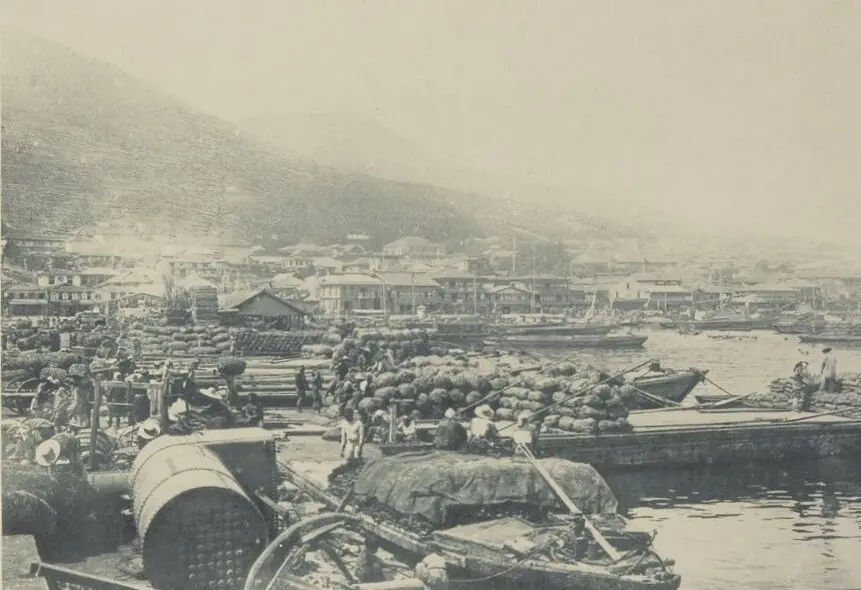
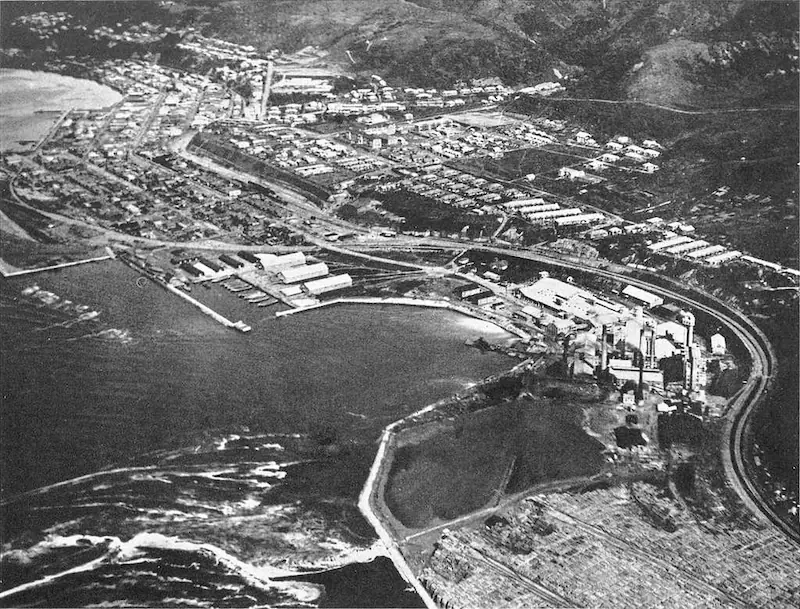
Ogawa Kazumasa (1860–1929).
Khan Pham, writing on The Arctic Institute’s website, describes how, in “an age of climate crisis and growing great power competition, Japan faces increasing incentives to engage itself across the Arctic region’s research, governance, and emerging commerce landscape” and “asserts itself as an essential partner in stewarding and studying this vital region alongside fellow concerned nations. Both international collaboration and domestic coordination are key vehicles for Japan to match its ambitions with its capabilities in an increasingly busy Polar North.”
As the Arctic remilitarizes and old Cold War fault lines between East and West re-remerge as salient boundaries defining new blocs of increasing mutually exclusive cooperation, Japan is not alone in rethinking the foundations of Arctic security, keeping pace with a fundamental geopolitical transformation of the region that is under way.
Japan Between China, Russia, and a Fragmenting Arctic Order
Japan, as a neighbor of China with a mutual interest in increasing Arctic engagement, a neighbor of Russia with an unresolved sovereignty dispute over Russia’s continued occupation of the southern Kurils since they fell to Moscow during the final days of World War II, and the northernmost Asian ally of the West, has had to walk a delicate path.
Since Russia’s full-scale invasion of Ukraine began in 2022, the strategic alignment between Beijing and Moscow has tightened considerably.
As a result, Japan, along with its neighbors and fellow stakeholders at the Arctic Council, has been forced by necessity to acknowledge that the Arctic has become increasingly divided as great power competition (GPC) displaces circumpolar cooperation as the predominant paradigm in Arctic diplomacy.
Ainu Rights, Historical Reckoning, and Japan’s Inherent Arcticness
Ever since Japan’s northward expansion absorbed Hokkaido in the latter half of the 19th century, its sovereign possession has imbued Japan with what can be described as an inherent Arcticness.
This Arcticness ranges from Hokkaido’s important cultural role as the homeland of the indigenous Ainu people, to its historic role as an essential frontier buffer to contain Russian expansion, to its emergent role as an exemplar of Japan’s recent efforts to confront its complex history of expansion onto indigenously self-governing lands and its willingness to increasingly recognize Ainu indigenous rights.
This process was catalyzed by land losses and large-scale megaprojects such as the contentious Nibutani dam project, completed in 1997, that expropriated and then flooded Ainu lands along the Saru River.
While it has been slow and incremental process facing persistent bureaucratic resistance from Japan’s national government, the years since have witnessed further progress on the restoration of Ainu rights, starting in 1997 with the Act for the Promotion of Ainu Culture, followed in 2008 by the non-binding but no less historically important resolution recognizing the Ainu as an indigenous people of Japan, which paved the way to the more formal and binding 2019 Ainu Culture Promotion Law.

Whaling and Dealing: The Delicate Diplomacy of Japan’s Contemporary Whale Trade
In addition to its shared commitment to redressing historical injustices against its own Indigenous peoples through its proactive policies of indigenous rights recognition and re-affirmation, Japan also shares with the Arctic a long and proud history as a whaling nation joining fellow commercial whaling nations, Iceland and Norway, and subsistence whaling nations including Canada, the United States, Greenland, Denmark, and Russia.
Japan recently brought to an end its controversial scientific program in Antarctic waters, shifting its whaling practices to coastal whaling within its EEZ, so that its cultural commitment to continued whaling now has much more in common with the Arctic states, and faces less political pushback than its more controversial Antarctic whaling program, which had been targeted by the international animal rights movements popular in many western nations.
Explore Books Written by Our Contributors
Though hampered by both domestic and international headwinds, and with historic tensions arising from the decimation of whale stocks by commercial whalers adversely impacting indigenous subsistence whalers, whaling as a national and indigenous tradition has served as a cultural, economic and diplomatic bridge uniting Japan with Iceland and Norway through their bilateral whale trade.
It has also provided a starting point for Japan to engage with the Arctic states with active indigenous whaling practices including the United States, Canada, Greenland/Denmark and Russia. More broadly, such endeavors further reinforce the notion that Japan’s proud and enduring whaling heritage is part and parcel of its inherent Arcticness.
A Frontier at the Center of the Globally Networked World
It’s not just lessons and traditions from the past that inform Japan’s perception of Hokkaido as a strategic frontier, but visions for the future as well, and in particular, the digital future. Tokyo has thus been pursuing an ambitious strategy to leverage its fortuitously forward geography adjacent to the polar world to turn Hokkaido into a future digital hub that interconnects global fiber-optic data networks, as reflected in initiatives such as Japan’s East Asia to America (E2A) Cable System and Far North Fiber (FNF) projects.
Japan recently brought to an end its controversial scientific program in Antarctic water.
Additionally, Tokyo has designated Hokkaido as a key region for its Green Transformation and Digital Garden City Nation initiatives, subsidizing not only subsea cable projects but data centers as well.
Its cooler climate, project advocates believe, makes Hokkaido an optimal, energy-efficient location for data centers, and Hokkaido’s relative remoteness and seismic stability offer protection from future natural disasters, enhancing Japan’s resiliency while at the same time promising reduced latency in data transmission between the continents.
Hokkaido’s geographical remoteness proffers strategic centrality in a world where the Arctic is emerging as a geostrategic center. As the vision of the Hokkaido Data Center Campus Network describes: “Hokkaido: A location in Asia with cool weather and few geopolitical risks. With the use of computers comes the generation of heat. To counteract this, data centers often consume a great amount of energy to cool their systems. However, as Hokkaido is a naturally cold region, its data centers can employ free cooling, a method of cooling which uses the air.”
As it further describes: “Hokkaido has a vast amount of land. The construction of large-scale renewable energy power stations by both domestic and international companies will establish an environment in which renewable energy is readily available, giving Hokkaido the potential to attract many data centers going forward.”
Toward a Co-Managed and Sustainable Model of Arctic Development
Large-scale megaprojects such as that eternalized by the Nibutani Dam, which flooded Ainu lands but catalyzed a movement for the restoration of Ainu rights and the eventual recognition of the Ainu as indigenous to Japan with a favorable outcome for the Ainu, can thus present a positive narrative for Japan’s approach toward the development of not just Hokkaido, but beyond Japan’s northernmost island to the Arctic.
This trajectory mirrors the experience across the western-aligned Arctic as northern development transformed from state-driven megaprojects imposed upon native peoples at great risk to their culture and environment into co-managed joint venture projects with the equity and managerial participation by natives to ensure better alignment with traditional and local values.
Japan’s vision for Hokkaido as a hub for green energy to power a future of AI-friendly data centers has much potential to continue this synergistic alignment, particularly if Japan continues to foster the restoration of Ainu rights, beyond cultural rights to an eventual recognition of Ainu land rights and with that a commitment to Ainu prosperity, positioning Hokkaido as a model for not just sustainable but also mutual and collaborative northern development – one that could emerge as the ultimate winner in the intensifying trilateral contest for influence with its neighbors China and Russia.