Politics and Rights Review connects academic knowledge with society, uniquely synthesizing clarity and rigor in a way that appeals to both academic and non-academic audiences.
  • Politics
    • Analysis & Theories
    • Culture & Politics
    • Democracy & Authoritarianism
    • Environment & Sustainability
    • Global North
    • Political History
    • Opinion & Insights
    • Politics & Religion
    • Technology
    • The Politics Brief
  • Human Rights
  • Books
  • About
    • Academic Advisory Board
    • Contributors
    • Guidelines for Authors
  • Partner With Us
  • en_US
    • fr_FR
    • es_ES
  • ISSN 2818-4610
Reading: How Afro-Cuban Women Shaped Modern Cuba
Share
Politics and Rights ReviewPolitics and Rights Review
Font ResizerAa
Search
  • Politics
    • Analysis & Theories
    • Culture & Politics
    • Democracy & Authoritarianism
    • Environment & Sustainability
    • Global North
    • Political History
    • Opinion & Insights
    • Politics & Religion
    • Technology
    • The Politics Brief
  • Human Rights
  • Books
  • About
    • Academic Advisory Board
    • Contributors
    • Guidelines for Authors
  • Partner With Us
  • en_US
    • fr_FR
    • es_ES
  • ISSN 2818-4610
Have an existing account? Sign In
Follow US
Politics and Rights Review is licensed under a Creative Commons Attribution-NonCommercial-NoDerivs License (CC BY-NC-ND), except where otherwise noted.
Politics and Rights Review > Laureates > How Afro-Cuban Women Shaped Modern Cuba
Laureates

How Afro-Cuban Women Shaped Modern Cuba

About Black Women, Citizenship, and the Making of Modern Cuba, winner of the 2022 Letitia Woods Brown Memorial Book Prize.

P&RR
P&RR
Published: October 5, 2025
Share
SHARE

Takkara K. Brunson’s Black Women, Citizenship, and the Making of Modern Cuba (University Press of Florida, 2021) offers a groundbreaking examination of the role Afro-Cuban women played in shaping modern Cuban identity. Covering the period from the abolition of slavery in 1886 to the Cuban Revolution in 1959, Brunson challenges traditional historiography that has often marginalized the contributions of Black women in Cuba’s socio-political landscape.
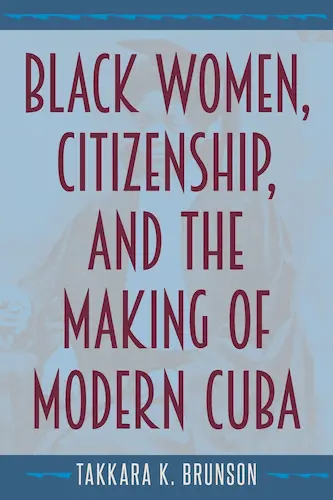
Cover of Takkara K. Brunson's Black Women, Citizenship, and the Making of Modern Cuba (University Press of Florida, 2021),  about the role Afro-Cuban women played in shaping modern Cuban identity.

Brunson, a scholar of African diaspora studies, presents a meticulously researched narrative that intertwines individual and collective experiences of Afro-Cuban women. This work, which won the 2022 Letitia Woods Brown Memorial Book Prize, focuses on how these women navigated and contested overlapping systems of racial and gender oppression while asserting their rights as citizens. Her work stands out for its use of unconventional sources, such as personal letters and photographic portraiture, which serve as powerful counter-archives to dominant historical narratives.

The book is organized into seven chapters, each exploring different facets of Afro-Cuban women’s activism. The early chapters delve into the post-abolition era, highlighting how Black women engaged in public life through education, political advocacy, and cultural production. Brunson analyzes letters written by Afro-Cuban women to male political leaders, revealing how they leveraged patriarchal discourse to advocate for both gender and racial justice.

Subsequent chapters examine the evolution of political strategies among Afro-Cuban women, from their participation in national feminist movements to their involvement in the Communist Party during the 1940s and 1950s. Brunson emphasizes that Afro-Cuban women’s activism was not monolithic; rather, it reflected diverse perspectives and approaches to achieving social and political equity.

One of the book’s key contributions is its exploration of how Afro-Cuban women redefined notions of citizenship. Through their activism, they not only challenged racial and gender hierarchies but also helped to reshape the very concept of what it meant to be Cuban. Brunson’s analysis underscores the complexity of these struggles, illustrating how Afro Afro-Cuban women negotiated their identities within a society marked by persistent racial and gender inequalities.

Black Women, Citizenship, and the Making of Modern Cuba is an essential read for scholars of Cuban history, Black feminism, and Latin American studies. Its rigorous analysis and innovative use of sources provide a nuanced understanding of the multifaceted roles Afro-Cuban women played in the making of modern Cuba, offering fresh insights into the intersections of race, gender, and citizenship. For readers interested in delving deeper into the transformative impact of Afro-Cuban women on Cuba’s past and present, this essential work is available here.

Explore More Award-Winning Books
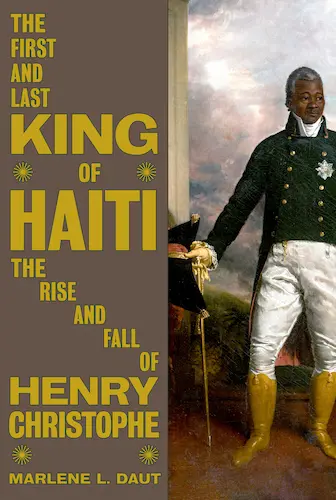
Portrait of Henry Christophe: A Haitian King’s Rise and Legacy
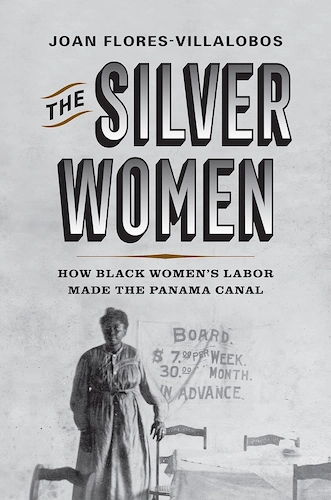
Cover of the book The Silver Women: How Black Women’s Labor Made the Panama Canal
Cover of Takkara K. Brunson's Black Women, Citizenship, and the Making of Modern Cuba (University Press of Florida, 2021), about the role Afro-Cuban women played in shaping modern Cuban identity.
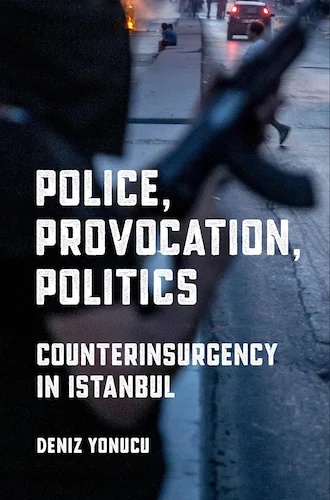
Cover of the book_Police, Provocation, Politics: Counterinsurgency in Istanbulb (policing)

DON’T MISS AN ARTICLE

We don’t spam! Read our privacy policy for more info.

Check your inbox or spam folder to confirm your subscription.

TAGGED:Political HistoryRacism

Sign Up For Our Newsletter

Keep up with our latest work

Check your inbox or spam folder to confirm your subscription.

By signing up, you agree to our Terms of Use and acknowledge the data practices in our Privacy Policy. You may unsubscribe at any time.
Share This Article
Facebook Pinterest Whatsapp Whatsapp LinkedIn Email Copy Link Print
Previous Article Cover of the book_Police, Provocation, Politics: Counterinsurgency in Istanbulb (policing) Policing Dissent: Counterinsurgency in Istanbul
Next Article ccCover-of-the-book-Deaths-Futurity_-The-Visual-Life-of-Black-Power_Black-Death The Politics of Black Death

Latest

The Supreme Court chamber in Washington, D.C., where rulings on campaign finance and political speech have shaped the power of political spending in the United States.

Reflections on the Effect of Excessive Private Power

Mordecai Kurz
By
Mordecai Kurz
Pieter van Mol, Diogenes with His Lantern Looking for an Honest Man, 17th century. Jacqui Safra Collection. Public domain.
The Honesty Crises We Are Confronting Today
Christian B. Miller
By
Christian B. Miller
Pericles addresses the Athenian assembly from the Pnyx, delivering the funeral oration Thucydides renders as the definitive statement of Athenian democratic self-understanding — the speech Smith gestures toward when he names Pericles among history's masters of persuasion. Philipp Foltz, Pericles' Funeral Oration (Perikles hält die Leichenrede), 1852. Public domain.
Democracy and the Art of Rhetoric
Steven B. Smith
By
Steven B. Smith

Distinguished Scholars

Jeremy Black
Distinguished Fellow at the Center for History and Strategy, Hillsdale College. A British historian and prolific author of over 190...
Melissa B. Jacoby
Graham Kenan Distinguished Professor of Law at the University of North Carolina at Chapel Hill, she wrote over fifty articles...
Michael Patrick Lynch
Provost Professor of the Humanities and Board of Trustees Distinguished Professor at the University of Connecticut. His new book is...
Gennifer Weisenfeld
Walter H. Annenberg Distinguished Professor at Duke University. She specializes in modern Japanese art, design, and visual culture. Her books...
Merry Wiesner-Hanks
Distinguished Professor Emerita at the University of Wisconsin-Milwaukee. She is the author or editor of forty books that have been...

Partner With Us

Reach a global academic audience in English, French, and Spanish.

Explore partnerships

Read in 200+ countries and territories by scholars, students, and engaged citizens.

Dont' Miss

Queer_Christ and Saint John the Evangelist, Swabia, Germany, ca. 1300–1320. Cleveland Museum of Art (Public Domain). Karl Whittington reads the carving of the two figures' clasped hands as a trace of the sculptor's own touch.

Queer Making: What Does It Feel Like to Make a Work of Art?

Karl Whittington
By
Karl Whittington

Epistemic Ecology: Thinking for Ourselves Together

Catherine Z. Elgin
By
Catherine Z. Elgin

How Emotions Shape Climate Action: Barriers and Agency

Debra Davidson
By
Debra Davidson

How Institutional Cooperation Enables Intelligence Competition

Jon R. Lindsay
By
Jon R. Lindsay

Presidential Conspiracy Mongers

Stephen Knott
By
Stephen Knott

You Might Also Like

Colonialism-Cover of the book Ruling Emancipated Slaves and Indigenous Subjects
Laureates

3 Ways Colonialism Shaped Modern Inequality

4 Min Read
The Agnew Clinic" by Thomas Eakins epitomizes medical professionalism, depicting a 19th-century surgical lecture in meticulous detail.
BooksPolitical History

Redefining Professionalism: A Historical and Sociopolitical Exploration

22 Min Read
ccCover-of-the-book-Deaths-Futurity_-The-Visual-Life-of-Black-Power_Black-Death
Laureates

The Politics of Black Death

4 Min Read
Cover of the book Winners and Losers. The Psychology of Foreign Trade
Laureates

Why Public Opinion on Trade Is Not Just About Economics

5 Min Read
Politics and Rights Review
ISSN 2818-4610
  • Resources
  • Guidelines for Authors
  • Terms and Conditions
  • Privacy Policy
  • Menu
  • Politics
  • Human Rights
  • Books
  • About
  • Partner With Us
  • en_US
  • ISSN 2818-4610
  • Contact

[email protected]

LinkedInFollow
BlueskyFollow
RSS FeedFollow
Politics and Rights Review is licensed under a Creative Commons Attribution-NonCommercial-NoDerivs License (CC BY-NC-ND), except where otherwise noted. Some links on this site are affiliate links. We may earn a commission from qualifying purchases made through these links, at no additional cost to you. This helps support the mission of Politics and Rights Review.
Welcome Back!

Sign in to your account

Username or Email Address
Password

Lost your password?