Politics and Rights Review connects academic knowledge with society, uniquely synthesizing clarity and rigor in a way that appeals to both academic and non-academic audiences.
  • Politics
    • Analysis & Theories
    • Culture & Politics
    • Democracy & Authoritarianism
    • Environment & Sustainability
    • Global North
    • Political History
    • Opinion & Insights
    • Politics & Religion
    • Technology
    • The Politics Brief
  • Human Rights
  • Books
  • About
    • Academic Advisory Board
    • Contributors
    • Guidelines for Authors
  • Partner With Us
  • en_US
    • fr_FR
    • es_ES
  • ISSN 2818-4610
Reading: The Limits of Data: Race, Representation, and Experimentation
Share
Politics and Rights ReviewPolitics and Rights Review
Font ResizerAa
Search
  • Politics
    • Analysis & Theories
    • Culture & Politics
    • Democracy & Authoritarianism
    • Environment & Sustainability
    • Global North
    • Political History
    • Opinion & Insights
    • Politics & Religion
    • Technology
    • The Politics Brief
  • Human Rights
  • Books
  • About
    • Academic Advisory Board
    • Contributors
    • Guidelines for Authors
  • Partner With Us
  • en_US
    • fr_FR
    • es_ES
  • ISSN 2818-4610
Have an existing account? Sign In
Follow US
Politics and Rights Review is licensed under a Creative Commons Attribution-NonCommercial-NoDerivs License (CC BY-NC-ND), except where otherwise noted.
Politics and Rights Review > Laureates > The Limits of Data: Race, Representation, and Experimentation
Laureates

The Limits of Data: Race, Representation, and Experimentation

About The Matter of Black Living: The Aesthetic Experiment of Racial Data, 1880–1930, winner of the 2022 William Sanders Scarborough Prize.

P&RR
P&RR
Published: October 5, 2025
Share
SHARE
Contents
  • Black Intellectuals and the Power of Racial Data
  • Social Science, Racial Data, and Visual Resistance
  • Zora Neale Hurston and Experimental Film

Black Intellectuals and the Power of Racial Data

Autumn Womack’s The Matter of Black Living: The Aesthetic Experiment of Racial Data, 1880–1930, winner of the 2022 William Sanders Scarborough Prize, examines how Black intellectuals and artists navigated the rise of data-driven racial knowledge in the late nineteenth and early twentieth centuries.
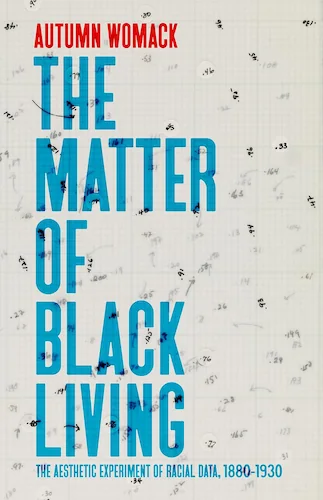
Cover-of-The-Matter-of-Black-Living-The-Aesthetic-Experiment-of-Racial-Data-1880–1930

Through a study of social surveys, photography, and film, Womack reveals how data was used both as a tool of racial control and as a site of aesthetic and political experimentation.​

At a time when social scientists sought to quantify and manage Black life, figures like W. E. B. Du Bois, Sutton Griggs, and Zora Neale Hurston engaged with data in ways that disrupted its supposed objectivity.

The book argues that these cultural producers did not merely resist racialized data collection but actively repurposed it, transforming numbers, images, and cinematic techniques into new forms of representation​.

Social Science, Racial Data, and Visual Resistance

The first section of the book focuses on the social survey, a method central to Progressive-era social science. Womack reframes Black fiction from this period as a form of “social document fiction,” in which literary narratives—such as Griggs’s Imperium in Imperio (1899)—challenged the detached gaze of the surveyor and exposed the racial biases embedded in data collection​.

The second section turns to photography, particularly its role in documenting racial violence. Lynching photographs were weaponized both by white supremacists and by anti-lynching activists, yet Womack highlights how survivors of racial terror, such as the Baker family, used photography to assert their agency.

She introduces the concept of “looking out” to describe how Black subjects strategically engaged with the photographic medium to complicate its authority.

Zora Neale Hurston and Experimental Film

The final section examines Hurston’s early film work, arguing that her experimental approach—marked by overexposure, blurring, and fragmentation—offered a radical alternative to the rigid documentary practices of social science. Rather than striving for empirical accuracy, Hurston’s films embraced excess and opacity, unsettling the expectation that Black life could be fully captured through visual data​.

Womack’s study is not just a historical excavation but a critical intervention into contemporary debates on racial data, surveillance, and the politics of representation. By uncovering how Black artists and intellectuals engaged with data technologies in unpredictable ways, The Matter of Black Living challenges prevailing narratives about the relationship between race and empirical knowledge.  Explore The Matter of Black Living here.

Explore More Award-Winning Books
Portrait of Henry Christophe: A Haitian King’s Rise and Legacy
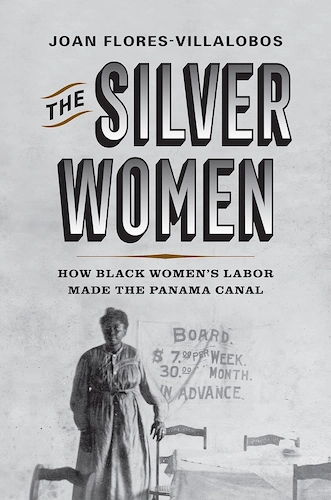
Cover of the book The Silver Women: How Black Women’s Labor Made the Panama Canal
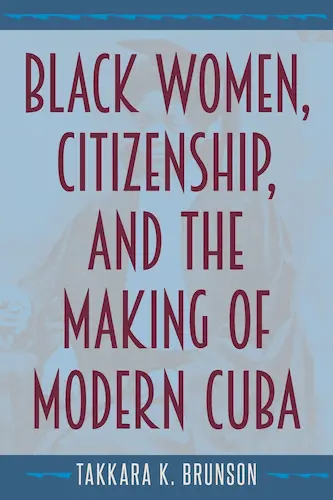
Cover of Takkara K. Brunson's Black Women, Citizenship, and the Making of Modern Cuba (University Press of Florida, 2021), about the role Afro-Cuban women played in shaping modern Cuban identity.
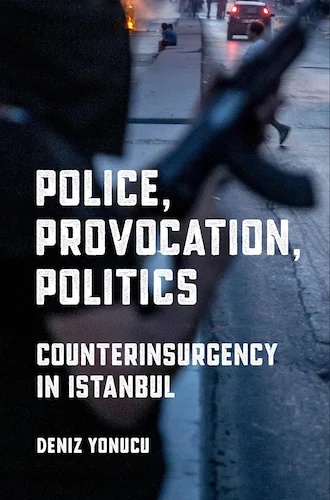
Cover of the book_Police, Provocation, Politics: Counterinsurgency in Istanbulb (policing)

DON’T MISS AN ARTICLE

We don’t spam! Read our privacy policy for more info.

Check your inbox or spam folder to confirm your subscription.

TAGGED:Racism

Sign Up For Our Newsletter

Keep up with our latest work

Check your inbox or spam folder to confirm your subscription.

By signing up, you agree to our Terms of Use and acknowledge the data practices in our Privacy Policy. You may unsubscribe at any time.
Share This Article
Facebook Pinterest Whatsapp Whatsapp LinkedIn Email Copy Link Print
Previous Article ccCover-of-the-book-Deaths-Futurity_-The-Visual-Life-of-Black-Power_Black-Death The Politics of Black Death
Next Article Cover of the book Winners and Losers. The Psychology of Foreign Trade Why Public Opinion on Trade Is Not Just About Economics

Latest

Worlds end : A boat left stranded on cracked earth, its water gone. A small, literal picture of what it means when a world ends. Photo by Pijarn Jangsawang, public domain.

What Happens When Worlds End: A Perturbed System

Susannah Crockford
By
Susannah Crockford
School in USA
Slow Violence: Rethinking Schools as Democratic Institutions
Ranita Ray
By
Ranita Ray
Pieter van Mol, Diogenes with His Lantern Looking for an Honest Man, 17th century. Jacqui Safra Collection. Public domain.
The Honesty Crises We Are Confronting Today
Christian B. Miller
By
Christian B. Miller

Distinguished Scholars

Jeremy Black
Distinguished Fellow at the Center for History and Strategy, Hillsdale College. A British historian and prolific author of over 190...
Melissa B. Jacoby
Graham Kenan Distinguished Professor of Law at the University of North Carolina at Chapel Hill, she wrote over fifty articles...
Michael Patrick Lynch
Provost Professor of the Humanities and Board of Trustees Distinguished Professor at the University of Connecticut. His new book is...
Gennifer Weisenfeld
Walter H. Annenberg Distinguished Professor at Duke University. She specializes in modern Japanese art, design, and visual culture. Her books...
Merry Wiesner-Hanks
Distinguished Professor Emerita at the University of Wisconsin-Milwaukee. She is the author or editor of forty books that have been...

Partner With Us

Reach a global academic audience in English, French, and Spanish.

Explore partnerships

Read in 200+ countries and territories by scholars, students, and engaged citizens.

Dont' Miss

Pericles addresses the Athenian assembly from the Pnyx, delivering the funeral oration Thucydides renders as the definitive statement of Athenian democratic self-understanding — the speech Smith gestures toward when he names Pericles among history's masters of persuasion. Philipp Foltz, Pericles' Funeral Oration (Perikles hält die Leichenrede), 1852. Public domain.

Democracy and the Art of Rhetoric

Steven B. Smith
By
Steven B. Smith

Queer Making: What Does It Feel Like to Make a Work of Art?

Karl Whittington
By
Karl Whittington

Epistemic Ecology: Thinking for Ourselves Together

Catherine Z. Elgin
By
Catherine Z. Elgin

How Emotions Shape Climate Action: Barriers and Agency

Debra Davidson
By
Debra Davidson

How Institutional Cooperation Enables Intelligence Competition

Jon R. Lindsay
By
Jon R. Lindsay

You Might Also Like

Cover of the book_Police, Provocation, Politics: Counterinsurgency in Istanbulb (policing)
Laureates

Policing Dissent: Counterinsurgency in Istanbul

3 Min Read
Laureates

Sharia, Custom, and Power: Lawfare in Postwar Chechnya

3 Min Read
Cover of the Book Laboratories against Democracy-National Politics
Laureates

How U.S. States Became Battlegrounds for National Politics

4 Min Read
Abolition : Artwork by Shepard Fairey. A powerful visual of Black resistance and radical truth-telling, challenging the structures of obedience through unapologetic presence and voice.
Books

We Were Never Meant to Obey: Weaving Abolitionist Constellations

14 Min Read
Politics and Rights Review
ISSN 2818-4610
  • Resources
  • Guidelines for Authors
  • Terms and Conditions
  • Privacy Policy
  • Menu
  • Politics
  • Human Rights
  • Books
  • About
  • Partner With Us
  • en_US
  • ISSN 2818-4610
  • Contact

[email protected]

LinkedInFollow
BlueskyFollow
RSS FeedFollow
Politics and Rights Review is licensed under a Creative Commons Attribution-NonCommercial-NoDerivs License (CC BY-NC-ND), except where otherwise noted. Some links on this site are affiliate links. We may earn a commission from qualifying purchases made through these links, at no additional cost to you. This helps support the mission of Politics and Rights Review.
Welcome Back!

Sign in to your account

Username or Email Address
Password

Lost your password?