
We tend to look at the vocal extremes to understand polarization. But what if the real power lies in ordinary people’s silence? My book, Whispers in the Pews: Evangelical Uniformity in a Divided America, examines how the conversations we evade shape our political outlooks and sense of belonging. Through an immersive ethnography of a Protestant evangelical church, it shows how being “nice” ultimately favors the political right.
Polarization afflicts most advanced democracies. Yet data from the Pew Research Center reveals that the United States is distinguished from its peers like the United Kingdom, France, and Germany by just how deeply personal the social sorting has become. Pew finds that Americans are actively curating their own bubbles—choosing friends, media, and ZIP codes to avoid social friction. But survey research cannot capture the intimate, ground-level reality of these shifts.
On a national scale, polarization is actively fueled by this exact reluctance to stay in relationships with people who do not share their worldview.
Driven by a desire to understand how the dividing lines are built, I conducted a qualitative study within a majority-white evangelical church—a space tightly bound to the right side of the culture wars. By listening to the people in the pews, I wanted to find out how everyday believers challenge or uphold political poles within their own social circles.
Inside an Evangelical Bubble
I began my study right before Donald Trump’s first presidential election, just as the country began following the political footsteps of American evangelicals. At the time, sociological scholarship was documenting the rise of Christian nationalism—an anti-democratic ideology and movement that merges state governance with conservative Christianity. But a critical piece of the puzzle was missing: the micro-interactional work that fuels this movement on the ground.

My goals were simple: find out what people talk about at church and document how they broach controversial issues. Ethnography—the method of witnessing social dynamics up close—was the ideal tool for my goals.
I embedded myself at “Welcome,” a Southern Baptist church plant envisioned as an inclusive solution to the rise in secularism in Mississippi, the most churchgoing state in the country. Its founders wanted to build a space for “everybody” that bridges the divides of race, nationality, age, and class.
Welcome’s mission stood out in Oxford, Mississippi—a historically conservative college town caught between its traditional past and progressive future. The church launched precisely when Oxford’s residents were debating Confederate monuments and organizing the town’s first Pride parade, placing the church at the center of a cultural fracture.
For over two and a half years, I attended services, volunteered for outreach events, and tracked the conversations within Welcome’s small groups—informal, member-led gatherings organized around themes ranging from parenting and marriage to apologetics and racial reconciliation.
Building the Bubble with Small Talk
Churchgoers frequently spoke about spreading the gospel, inserting their faith into public schools and universities, and their duty to promote conservative views on gender. But there was also an overwhelming amount of silence and avoidance deployed the moment a topic threatened to spark lively discussion or expose diverging viewpoints.
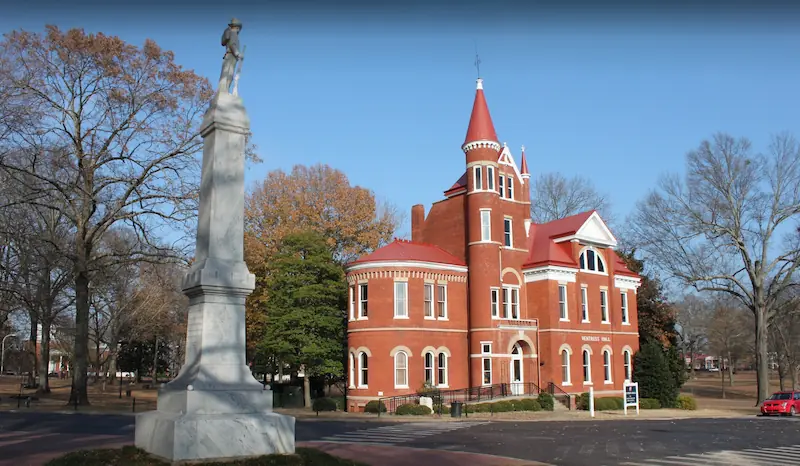
Conversations about border control, electoral politics, Trump, LGBTQ+ church membership, and local conflicts over Lost Cause propaganda were among the issues that were systematically sidestepped at Welcome. These issues, churchgoers shared in private interviews, were “divisive” and could make someone feel uneasy or unwelcome.
Black members were absorbing daily discomfort to adapt to a church culture not built for them.
In place of heated exchanges, the church routinely fell back on what I call “small talk”—a polite, interactional routine used to bypass subjects a community tacitly deems off-limits.
A conversation about an evangelical speaker addressing poverty and the death penalty swiftly pivoted to the color of his pants. When a Black congregant confronted a racial reconciliation group about a peer’s racist image, her concern was met with not much more than groans of annoyance. And when white supremacists stormed through town to rally for local Confederate monuments, church leadership hid behind ambiguous, race-neutral language that obscured where the church stood on the issue.
The Harm of Small Talk
This persistent evasion left several members feeling unheard and isolated. It also reinforced the assumption that charged discussions are inherently un-Christian.
Churchgoers explicitly defended this sentiment in private interviews, telling me it was best to “keep politics to yourself” and arguing that elevating their commonalities over differences was the proper Christian thing to do. For them, “politics” was synonymous with attitudes or topics that could expose disagreement, unlock critical dialogue, or challenge the presumed majority-white Christian opinion on race, gender, sexuality, immigration, and elections.
Breaking the cycle of small talk and silence requires a collective willingness to embrace the friction of genuine dialogue.
Beneath the surface, small talk was masking an unfair reality in the Welcome community: marginalized groups were sacrificing far more than those in power to participate. Black members were absorbing daily discomfort to adapt to a church culture not built for them. White members, by contrast, were risking very little; they could coast on the good feelings of occupying a racially diverse space without ever shifting their own sense of contentment or responsibilities.
What appeared to be a mutual effort to keep the peace in a multiracial community was, in fact, an uneven transaction with one side paying the price for the other’s peace of mind. Sociologist Korie Little Edwards unpacks this dynamic with great depth in The Elusive Dream: The Power of Race in Interracial Churches. Similarly, sociologists Glenn Bracey and Michael Emerson attribute this unevenness to Whiteness being “religionized” in The Religion of Whiteness: How Racism Distorts Christian Faith.
Small talk offered only a fragile illusion of unity at Welcome. By retreating into the safety of comfortable conversation, churchgoers inadvertently surrendered their collective voice to the most outspoken and, in some cases, most aggressive members. Whispers in the Pews shows that this masquerade of agreement does not preserve peace; it merely conceals an undercurrent that pulls Christian communities—no matter how well-intentioned—further toward the political and religious right.
The Fear That Silences Us
In The Art of Fighting: The Transformative Power of Conflict, conflict resolution expert Priya Parker argues that society suffers a phenomenon she labels “toxic politeness.” Our societies, communities, organizations, families, and friendships are fracturing, she asserts, because we have become so conflict averse – scared of entering the very discussions necessary to build true, lasting community.
The members of Welcome, like so many Americans, were proficient in politeness. They skillfully swept tensions under the rug and ignored elephants in the room. They wanted church to be fun, and free of all the fighting that goes on in the outside world. They wanted to be “friendly,” they told me.

Yet the immense effort they poured into playing nice effectively blocked meaningful, transformative conversations that could have brought more people in and made those already in the pews feel seen and included.
This dynamic became vividly apparent whenever the subject of gender arose at Welcome. The church openly preached men’s divine authority and women’s submission, declaring that men who failed to control their households failed at masculinity. Several women in the church felt uneasy and belittled by these teachings, yet they had no space to air their grievances—not even in gender-segregated women’s ministry spaces.
I watched women try to bring up overbearing husbands or the oppressive force of men’s “biblical” authority, but their comments went nowhere. Other women, uncomfortable and uncertain of where the comments might lead, shut the conversation down by changing the subject or laughing it off.
Critiquing patriarchal structures was deemed un-Christian by church leadership—even a satanic force ushered in by what one churchgoer called the “F-word”: feminism. Terrified of being branded as one of “them,” churchgoing women learned to keep their complaints to themselves. In the process, they remained unaware of other women in the pews who felt the same way. By hiding their doubts to preserve a front of what I conceptualize as “biblical sameness” in the book, they surrendered the definition of “us” to the church’s loudest voices, further sharpening the divide between evangelicalism and those on the outside of their bubble.
The Conversations That Save Us
The lessons of silence and avoidance that I took away from Welcome extend far beyond evangelical spaces; they mirror the relational dynamics driving polarization across entire societies.
Wherever I speak about the book, audiences invariably echo my findings: “This happens where I work,” or “I feel this constantly in my classroom.” Students, for instance, are scared to voice opinions for fear of being singled out, labeled “too woke,” or branded a bigot. It feels safer to retreat to superficiality. As one student shared while mimicking scrolling her phone: “At the sorority house, we just talk about TikTok or a new restaurant. Everything is so heated—I don’t want to get into a fight.”
Only by cultivating open channels of communication can we dismantle false uniformity, moving past quiet conformity toward the healthy, honest relationships necessary for a resilient democracy.
This avoidance stems from a deep cultural paradox: people are longing to talk about something of depth, but they are afraid to do so. On a national scale, polarization is actively fueled by this exact reluctance to stay in relationships with people who do not share their worldview.
Just as the congregants at Welcome chose comfort over community, we are increasingly surrounding ourselves only with those who think like us – or pretend to – while abandoning the connections that feel prickly, difficult, or demand “too much work.”
There is an antidote to this evasion. That is the foundational claim Dawne Moon and Theresa Tobin make in Choosing Love: What LGBTQ+ Christians Can Teach Us All About Relationships, Inclusion, and Justice. Uncovering the opposite of what I found at Welcome, they encountered strangers, families, and partners in conservative ministries who were broaching faith, gender, sexuality, and politics. Instead of sticking to small talk, these individuals engaged in vulnerable “real talk.” They forged connections that reshaped their relationships—proving that nourishing interpersonal bonds are foundational to healing a divided society.
Breaking the cycle of small talk and silence requires a collective willingness to embrace the friction of genuine dialogue. This is not easy, nor is it a burden to be shared evenly by everyone.
Marginalized groups have long borne the emotional cost of repair and peace; consequently, the responsibility to initiate and endure this friction falls most heavily on those with institutional and cultural power. Only by cultivating open channels of communication can we dismantle false uniformity, moving past quiet conformity toward the healthy, honest relationships necessary for a resilient democracy.