When a cultural or religious minority imposes rules on its own members that restrict their individual freedom, does a liberal state have standing to intervene, or must it stay out and respect the group’s right to govern itself?
Will Kymlicka and Chandran Kukathas have given opposite answers to this question for more than thirty years, and neither has conceded ground to the other.
Two kinds of rights
Kymlicka’s framework, first laid out in Multicultural Citizenship, rests on a single distinction: external protections versus internal restrictions.
A minority group may ask the state to shield it from pressure by the wider society. Sikh officers wearing turbans instead of police caps, or Muslim students wearing the hijab at school, are external protections: they touch relations between groups, not inside them.
The same logic applies to something as ordinary as the public holiday calendar. In Finding Our Way, Kymlicka argues that swapping one Christian holiday for a Jewish or Muslim one is not a concession to any group, but a correction: the current calendar reflects a Christian majority’s convenience, not a neutral default.
What Kymlicka rejects is the second kind of claim: a group’s right to restrict its own members’ civil or political freedoms in the name of unity. A liberal theory, on his account, depends on each person’s standing freedom to question or leave behind the beliefs she was raised with.
Tolerance without a judge
Chandran Kukathas denies that this distinction holds up, and his 1992 essay, “Are There Any Cultural Rights?,” explains why. His starting point is that cultural communities have no moral standing of their own. They matter only because, and to the extent that, actual individuals matter.
From that premise Kukathas draws a conclusion that sounds, at first, close to Kymlicka’s own: since groups are not natural entities with rights, the state should stay out of their internal life entirely, neither propping them up nor reforming them.
But where Kymlicka’s individualism leads to a right of internal dissent, Kukathas’s leads to a right of free association, full stop.
If a community’s members want to keep living by beliefs the wider society finds objectionable, the outside world has no standing to intervene, provided each member keeps one thing: a real option to leave.
Tolerance, for Kukathas, is what Isaiah Berlin called a negative value, meaning non-interference, not a positive duty to equip anyone to question their own community.
How far Kukathas was willing to go
Kukathas did not stand still after 1992. By 2009, in “Two Constructions of Libertarianism,” he pushed his own position further than most readers expected.
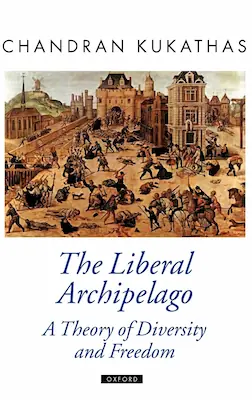
He distinguishes a “Union of Liberty,” where a central authority intervenes whenever a member’s freedom is compromised, from a “Federation of Liberty,” which forbids intervention in any community’s internal life, however illiberal, as long as no one is physically stopped from leaving.
Kukathas chooses the Federation, deliberately, and does not flinch from what it implies.
In his own words, a Federation of Liberty could contain no communities that actually respect freedom at all, and even slavery might have a lawful place within it, since a servitude contract would simply be one more arrangement a person was free, in principle, to walk away from.
He prefers this to a Union strong enough to override dissenting moral traditions, which he sees as the greater danger.
The concession inside Kukathas’s own argument
It would be unfair to leave Kukathas there, because his 1992 essay quietly gives up more ground than his later position suggests. Exit only means something, he admits, if the wider society is open enough for a person to actually survive outside her own community, with real economic and social alternatives available to her.
A formal right to exit means little to someone raised without the language, schooling, or economic footing that right presupposes.
That is a substantial condition, and Kukathas is honest about its cost: it may require that the wider society itself be, in his words, a liberal political culture.
In other words, his scheme still needs the state to guarantee something well beyond mere non-interference. Kymlicka’s critics rarely give Kukathas credit for admitting this, but it means the two are closer, and the disagreement more precise, than the 2009 essay alone suggests.
Whose freedom actually counts
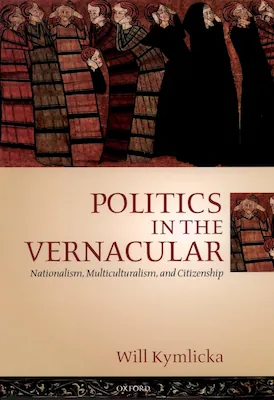
Kymlicka’s 1992 reply to Kukathas, and later Politics in the Vernacular, press the same point: a formal right to exit means little to someone raised without the language, schooling, or economic footing that right presupposes.
On paper, the door is open. Whether it is open in practice depends on the external support Kukathas’s model was designed to avoid providing.
Kymlicka’s own tolerance protects the dissenter while she still lives among her own people, not only on the day she finally leaves.
Kukathas would answer that outsiders have no business judging what a member of another community is owed in conscience. But a theory whose only backstop against slavery is a contract’s revocability, and whose own credibility depends on a liberal wider culture it cannot guarantee, has already conceded more than neutral toleration allows.
Still an open question
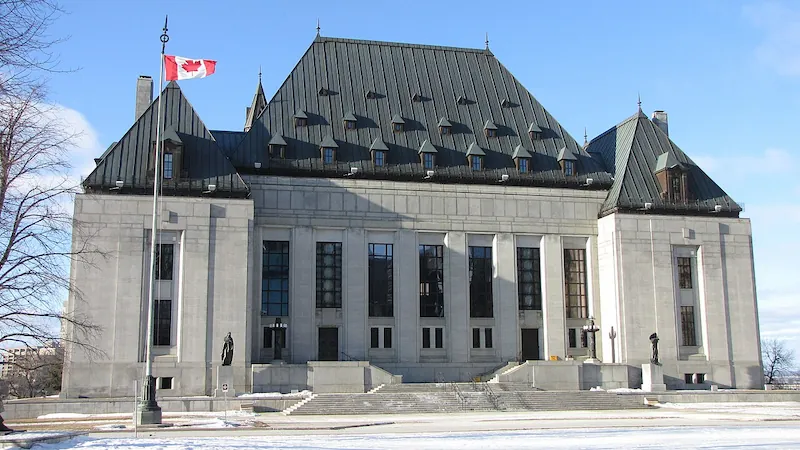
None of this is settled history. Quebec’s Bill 21 bars public employees in positions of authority from wearing religious symbols at work. The Supreme Court of Canada heard a constitutional challenge to it in March 2026, with a ruling still pending.
Ontario’s 2005 decision to ban all religious family arbitration, rather than extend to Sharia tribunals the recognition already given to Jewish and Christian ones, turned on the same question from the other side: was a woman accepting religious arbitration exercising free association, or an arrangement she had no real power to refuse?

Conclusion
Neither dispute was settled by appeal to toleration in the abstract. Both were settled by deciding whose freedom the state was actually prepared to answer for: the group’s right to run its own affairs, or the individual’s right to question them from inside.
That choice will keep resurfacing wherever liberal states negotiate with communities that do not share their premises, and no formula from either thinker, not even Kukathas’s own admission that a liberal wider culture is required, makes it disappear.