The Many Faces of Nationalism
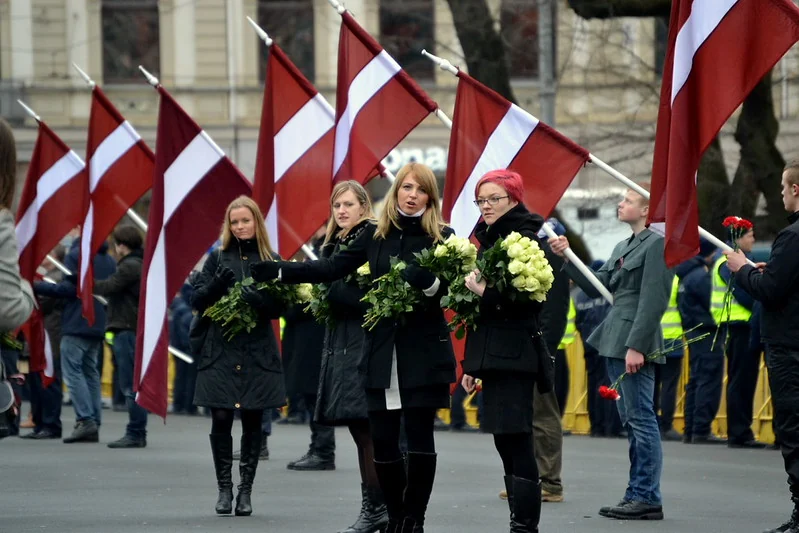
The word ‘nationalism’ often generates very different understandings. For some people, nationalism is firmly associated with far-right politics, anti-immigrant populism, nativist movements and the attacks on minorities. Others go further and depict nationalism in medical terms as a form of social pathology. For example, for the early 20th-century psychologist William McDougall, nationalism was a form of disease in which human beings lose control of their senses[1]. He links this feeling to that of being drunk and unable to distinguish fiction from reality.
Albert Einstein also used a medical metaphor to describe nationalism as ‘an infantile disease…the measles of mankind’[2]. Other such highly negative accounts make a strong connection between nationalism and violence. Thus, nationalist ideologies are typically blamed for the start of wars, violent uprisings, terrorism and even genocidal projects. For Arundhati Roy, ‘flags are bits of coloured cloth that governments use first to shrink-wrap people’s minds and then as ceremonial shrouds to bury the dead’. Consequently, she argues, ‘nationalism of one kind or another was the cause of most of the genocide of the twentieth century’[3].
A meaningful social change cannot take place by dismissing or ignoring nationalism or by attributing these ideas and practices to one’s political adversaries.
In direct contrast, others see nationalism as a project of political emancipation that can promote social solidarity and collective freedom. For Giuseppe Mazzini, nationalism fosters democratic self-determination and the liberation of all peoples from imperial and dynastic domination[4]. Similarly, Frantz Fanon understood nationalism as an indispensable step in the anti-colonial liberation: ‘It is national liberation that puts the nation on the stage of history’ and ‘It is at the heart of national consciousness that international consciousness establishes itself and thrives’[5].
The supporters of nationalism emphasise the moral principles that underpin movements for national self-determination. In their view, achieving key ethical principles such as justice, equality, and liberty for all requires that all nations be politically sovereign, independent, and free. As the Irish republican revolutionary Patrick Pearse framed it, ‘Ireland unfree shall never be at peace’[6].
Nationalism and Modern Subjectivities
These highly contrasting understandings of nationalism indicate that this is a multifaceted and politically highly polarising phenomenon. Nevertheless, such political disagreements do not adequately capture how central nationalism has become to social life in the contemporary world.
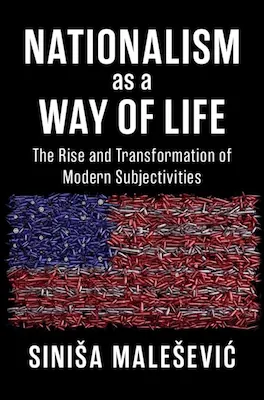
In my new book ‘Nationalism as a Way of Life: The Rise and Transformation of Modern Subjectivities’ (CUP, 2025)[7], I offer a very different way of understanding nationalism.
I argue that nationalism cannot be confined to the actions and programmes of the extremist political actors or the anti-colonial movements of self-determination. Nationalism is also much more than the flag-waving, shouting of propagandistic slogans and the ritualistic collective self-worship that transpire in times of war, revolutions, genocides or terrorist attacks.
Instead, nationalism in all its varied forms has become the dominant form of modern collective subjectivities. We live in a nation-centric world where all key state institutions and the majority of the non-state organisations, from the religious institutions and private corporations to the civil society networks, are deeply infused with, and regularly legitimised through, specific nationalist principles.
The ideas and practices that prioritise nationhood over other forms of collective identification are regularly reproduced in the education systems, military organisations, judicial apparatuses, economic and welfare organisations, sporting activities, mass media and are now also ever-present in social media platforms.
Moreover, nationalist habitus has also enveloped many aspects of everyday life and has deeply penetrated the intimate sphere of close friendships and family life. I aim to show how nation-centric views and social practices have become an ordinary and deeply embedded feature of social life in the contemporary world. The greatest influence of nationalism is not necessarily visible in moments of crises such as wars, revolutions or pandemics, or in the radical rhetoric of the far-right movements, but in the routine practices, established institutions, common collective activities, and shared assumptions that structure everyday experience.
Meta-Ideology
Nationalism is also much more than any other political ideology. It is a highly flexible meta-ideology that can coexist with and attach itself to social and political positions across the ideological spectrum – from socialism, liberalism, conservatism, fascism, to environmentalism, feminism or anti-colonialism. In the world of nation-states, nationalism operates simultaneously as a principal source of political legitimacy and as the primary form of collective solidarity. Modern social, political, cultural and economic life is overwhelmingly organised around national categories, even when people do not consciously see themselves as nationalists.
Nationhood was a direct product of coercive-organisational and ideological work.
I argue in the book that the growth and expansion of nationalism in the contemporary world is best captured through the long-term interconnected processes that I call the organisational, ideological and micro-interactional grounding.
Organisational grounding refers to the capacity of states and other large-scale organisations to embed national categories into social structures. Nation-state bodies continuously institutionalise organisational power, turning abstract political goals into routine, everyday procedures.
Organisational Power
With the rise of bureaucratic apparatuses in modernity, coercive-organisational power constantly increases as the state and many non-state entities can rely on the improved infrastructural capacities that connect millions of people – from transport and communication networks to revenue collection at source, policing state boundaries and expanding the techniques of surveillance over the entire territory of the nation-state. In this way, bureaucratic apparatuses can embed nation-centric authority and rules into everyday social structures.
For example, schools teach nation-centric curricula including national histories, geographies, literature or fine arts. Similarly, the military institutions organise citizens through national membership. This has historically been achieved via mass conscription through which ordinary recruits underwent intense nationalist socialisation in the military forces. In societies where armies are fully professionalised, the nation-centric attitudes are fostered through the constant glorification of the military sacrifices for the nation.
The organisational grounding also works through the welfare systems that distribute resources through national boundaries and tie the state’s economic support to one’s citizenship. The legal systems also operate within nationally defined territories and implement laws and regulations that are specific to each nation-state. Through these organisational mechanisms, national categories become part of the basic organisation of social life.
Ideological Power
However, nationalism could not become so prevalent if it relied on the coercive-organisational capacity alone. What is just as important is the ideological grounding. Nationalism attains society-wide support when ideas about the nation are presented as natural, obvious, and self-evident rather than as historically constructed, arbitrary and contingent social and political arrangements.
Rather than being a timeless identity, nationhood had no political or cultural significance for much of human history.
As Benedict Anderson noted many years ago, ‘it is the magic of nationalism to turn chance into destiny’[8].
In this way individuals learn to imagine the nation as an enduring community whose members share a common culture, history, territory, or ancestry.
From national symbols, flags, coats of arms, anthems to national holidays, monuments, public ceremonies, commemorations of fallen heroes, political speeches, mass and social media representations, to the symbolic rituals, nationalist ideas and practices are continuously reproduced in the public sphere.
The nation consequently comes to appear less like a particular historical and recent creation, a product of social contingency, and more like an unquestionable and eternal feature of social reality. In this way, combined organisational and ideological grounding enforces standard rules, language, and civic duties, making nationalist frameworks feel normal and obligatory.
The Power of Micro-Solidarities
Nevertheless, as much of everyday life takes place in intimate, face-to-face settings, nationalism could not be so successful if it did not effectively penetrate this micro-world. Hence, micro-interactional grounding allows nationalist discourses to envelop the networks of micro-level solidarities. Nationalism is sustained through ordinary relationships and interactions among family members, close friends, romantic partners, neighbours, work colleagues, and local communities.

Feelings of trust, loyalty, obligation, solidarity and the deep emotional commitment that initially develop within close social networks are now organisationally and ideologically extended to much larger abstract communities – nations. Individuals therefore conceptualise the world in terms of distinct national attachments and associate themselves with people whom they will never personally encounter but nevertheless regard as fellow members of the same nation. Nationhood consequently becomes emotionally meaningful because it is connected to the intimate relationships and everyday experiences through which people understand their social worlds.
These three mechanisms of nationalist grounding reinforce each other: the social organisations supply structures through which nationalism operates; ideological grounding provides meanings and legitimacy to these organisational structures; and the everyday inter-personal interactions among family and friends give emotional comfort, moral support and practical significance.
Nationhood and History
Nevertheless, nationalist grounding should not be understood as something teleological, predetermined or fixed. Despite its enormous potency in the contemporary world and the ability of social organisations to depict nations and nationalisms as ancient and natural forms of social being, it is only recently that nationalism has acquired such social power. Rather than being a timeless identity, nationhood had no political or cultural significance for much of human history.
Obviously, nationhood could not exist in the world of our early predecessors, the nomadic hunter-gatherers who lived in tiny and ever-changing bands focused on everyday survival. This form of human social existence, which accounts for close to 99 percent of our presence on this planet, lacked the basic organisational, ideological and even full micro-interactional ingredients of nationhood.
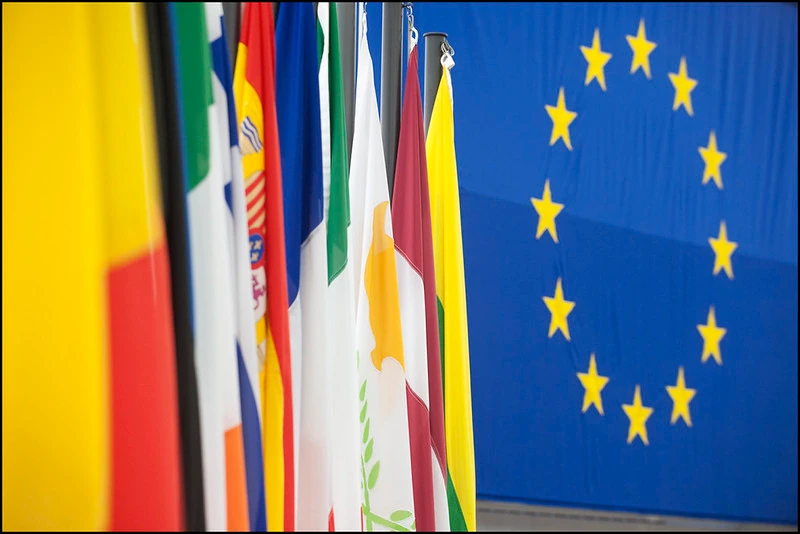
However, even if this extremely lengthy period is completely discounted and the focus is only on the sedentary lifestyles, humans have lived in the world of nation-states for less than 2% of their existence. The pre-national models of social and political order such as empires, patrimonial kingdoms, city-states, religious orders, tribal confederacies, or complex chiefdoms relied on very different ideological doctrines to justify their existence.
Hence, the rulers of such polities invoked hereditary privilege, imperial traditions, religious doctrines including the divine sanction, or elaborate mythologies to legitimise their authority. At the same time, the overwhelming majority of the population identified primarily in religious, local, kinship or clan-based terms rather than in any form of national attachments.
It is only in the last two centuries, with the unprecedented political, economic, military and ideological transformations, that nation-states have become the dominant form of territorial organisation and nationalism has acquired the ideological monopoly as the central mechanism of political legitimacy. This process was neither automatic nor peaceful. The nation-states relied on compulsory education, bureaucratic administration, standardised languages, military conscription, uniform legal systems, mass communication and transport to homogenise diverse populations into national citizens. Nationhood was a direct product of coercive-organisational and ideological work.

This was a slow and protracted process that intensified in the 20th century when imperial projects became delegitimised, and nation-states were established as the only legitimate forms of territorial authority. As nation-states expanded, so did the ideological backbone of this territorial order – nationalism.
Hence, nationalism is not just an ideology like any other; it is a distinct way of life that underpins the world we currently live in. Individuals do not need to join a specific political organisation that promotes nationalist causes or consciously describe themselves as nationalist for nationalism to influence their behaviour.
We are all shaped by nation-centric environments whenever we attend school, use public services, consume mass and social media, obtain state documents, participate in national ceremonies, watch international sporting events or share nationally coloured jokes at the family barbecues. Nationalism is enacted, reproduced and normalised in the public sphere, in the civil society realm as well as in the most intimate private settings of family members and close friends.
Living in a Nation-Centric World
In this book, I do not argue that everyone is a nationalist in the same way, nor that there is no escape from nationalism. Instead, I try to show how national categories have become so deeply institutionalised and socially meaningful that modern subjectivity is difficult to understand without taking nationalism seriously. Its power comes less from its loudest and most extreme expressions than from its largely inaudible but ever-expanding presence in everyday social and interpersonal life.
This might of nationalism has less to do with the die-hard activists or the far-right movements than with the dominant social structures that underpin the contemporary world. As long as the nation-state remains the dominant form of social and political organisation, nation-centric categories will continue shaping many aspects of social life including political legitimacy, collective identification, social solidarity, welfare citizenship rights and so on.
A meaningful social change cannot take place by dismissing or ignoring nationalism or by attributing these ideas and practices to one’s political adversaries. We can transform our societies only once we recognise that, whether we like it or not, we all live in a nationalist world.
Notes
[1] https://jspp.psychopen.eu/index.php/jspp/article/download/4847/4847.html
[2] https://globalgovernanceforum.org/visionary/albert-einstein/
[3] https://www.democracynow.org/2002/10/22/power_politics_the_indian_writer_arundhati
[4] https://www.cambridge.org/core/books/abs/prophetic-times/prophetic-voices-of-the-risorgimento-and-the-antifascist-resistance/B885734BF88B84711B7859DEA11C622D
[5] https://www.tandfonline.com/doi/full/10.1080/1369801X.2025.2523290
[6] https://www.libraryireland.com/HullHistory/Appendix2b.php
[7] https://www.cambridge.org/core/books/nationalism-as-a-way-of-life/0FF3EC95CB79051E18C5B6158C49F66C
[8] https://is.muni.cz/el/1423/podzim2013/SOC571E/um/Anderson_B_-_Imagined_Communities.pdf