Whether the UN is capable of stopping wars has been the object of intense scholarly scrutiny for decades. Although flawed, sending the blue helmets to war-torn communities seems effective in stopping violence from recurring. Today, despite a drastic increase in armed conflict, nothing seems more distant than contending with the possibility, functionality, and impacts of peace operations. And yet, this may be the best moment to re-examine peace operations.
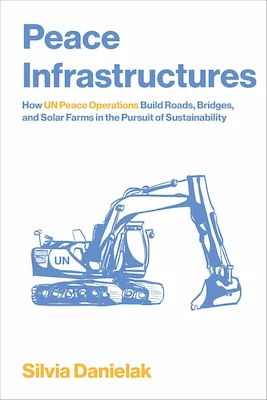
My new book, Peace Infrastructures: How UN Peace Operations Build Roads, Bridges, and Solar Farms in the Pursuit of Sustainability, does precisely that. It shows that peace operations are both a sui generis and a very special kind of urban and infrastructure planner.
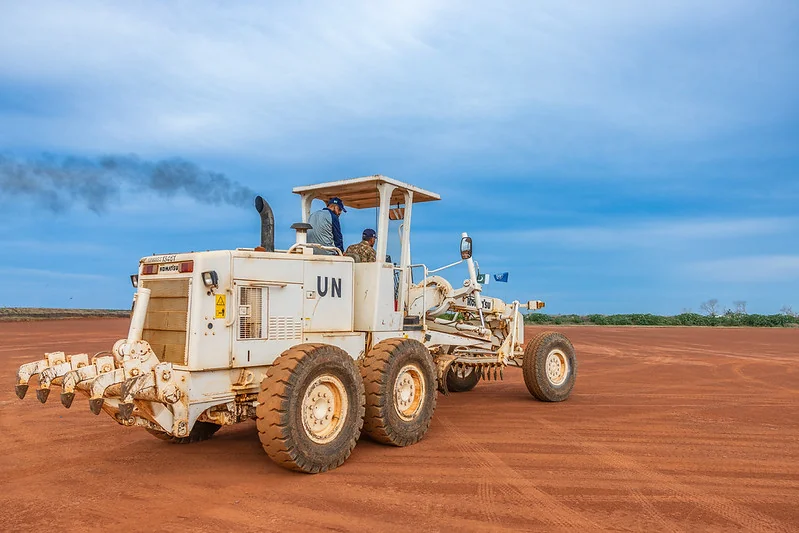
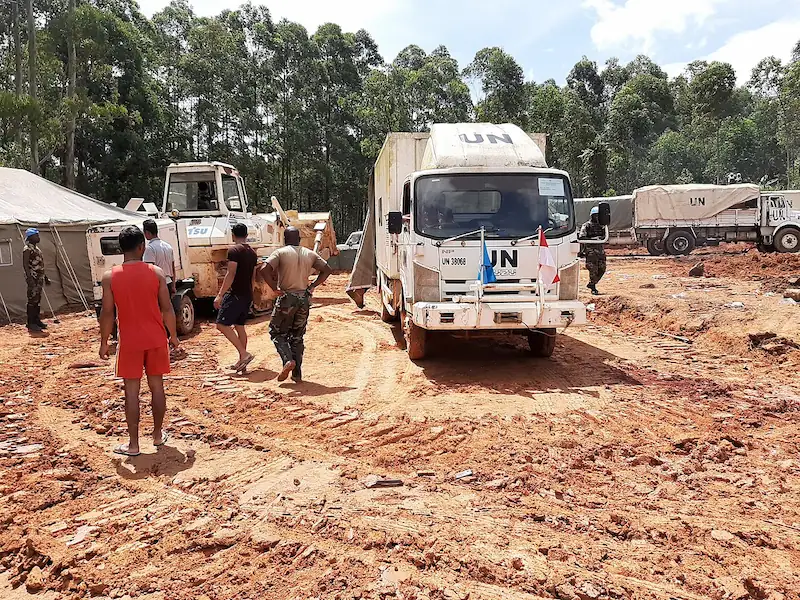
Peacekeepers build infrastructure: As missions multiplied in the post-Cold War era and ballooned during large-scale “stabilization” efforts, peacekeepers set up large camp-turned-cities in places like Mali, Central African Republic, or South Sudan. They also built infrastructure for communities, like paving a street that made traveling faster and safer for both UN personnel and local residents, and they set up community centers, constructed government office buildings, and refurbished schools, in addition to repairing water pipes and facilitating electricity access.
Roads, energy systems, camps, flood defenses, and public works embody assumptions about security, mobility, development, and whose futures matter.
Infrastructure, across early UN missions in the 1950s to most recent involvement in places like Somalia or South Sudan, is not merely something that peacekeepers build, though. Infrastructure reveals how international actors imagine peace itself.
A concern with urban service infrastructure reflects an attempt to stabilize governance in areas threatened by gang violence. A preoccupation with solar farms points to efforts of decarbonization in climate-vulnerable conflict zones where generator fuel is a commodity ripe for violent attack. Finally, when international peacebuilders leave, infrastructure is the tangible output that remains in place, either as flourishing projects that serve the community or hazardous ruins.
At a moment when peacekeeping appears to be in retreat, infrastructure offers a new way of understanding both the legacy of past missions and the future of reconstruction in war-torn societies.
Why Talk About Peacekeeping Now?
Current wars target infrastructure. As infrastructure lies in ruin, reconstruction is necessary. The latter will take place, even if peace agreements have not arrived. Some may question the relevance of peacekeeping at a moment when new missions appear politically unlikely. Yet the value of examining peace operations today lies not only in understanding peacekeeping itself.
Peace operations offer decades of experience in building and managing infrastructure amid conflict, uncertainty, and competing demands for security, development, and sustainability. Those are exactly the conditions that future reconstruction efforts are likely to confront. We therefore need to understand the politics of infrastructure.
Infrastructure is often framed as a technical matter best left to engineers and planners. Yet decisions about infrastructure are also decisions about power. They determine which communities are connected and which remain isolated, whose neighborhoods receive investment, whose mobility is prioritized, and which risks are tolerated.
In conflict-affected settings, these choices become even more consequential because infrastructure often functions as one of the most visible manifestations of state authority and international intervention, and peacekeepers are often the only one present to build such infrastructure. Rebuilding a bridge, extending an electricity network, or protecting a settlement from flooding can shape local political dynamics, not only in the very moment, but for decades.
Just like infrastructure, reconstruction is often discussed as a technical process of replacing damaged assets. Yet the experience of peace operations shows that rebuilding infrastructure is never merely about replacing damaged assets. Reconstruction decisions shape authority, inclusion, and long-term stability.
Infrastructure Reveals What Kind of Peace Is Imagined
Bridges, wells, military bases, energy systems: Each embodies assumptions about order, security, mobility, and development. Infrastructure is technical, but it is also a theory of peace in concrete form. Different infrastructures embody different assumptions about what produces stability or greater social cohesion.
A road may reflect a belief that mobility and market access will strengthen peace. A government office building may express confidence in the importance of state institutions. A solar power plant may signal a commitment to sustainability, resilience, and long-term economic development.
These projects are therefore more than collections of materials and technical specifications. They reveal what international actors perceive as the causes of instability and the pathways toward a more peaceful future. Infrastructure thus offers an analytical lens into practices and politics that often remain overlooked—even by practitioners and policymakers. All the while, a closer look at peacekeeping uncovers a considerable amount of innovation, improvisation, and multidisciplinary knowledge circulating globally, between different peacekeeping missions and the New York UN headquarters.
Recognizing the importance of infrastructure does not mean turning peacekeepers into development agencies. The challenge is not that peace operations have become too concerned with infrastructure, but that they have often engaged with infrastructure without fully acknowledging its long-term social and political consequences.
How Peacekeeping Changed
Early peace operations often focused on mobility and logistics: ports and transportation networks that enabled troop movement and humanitarian access. Later missions became increasingly involved in supporting governance through public buildings, service provision, and urban infrastructure. More recently, concerns about sustainability, climate risk, and mission legacies have brought renewable energy systems, environmental management, and resilience-building projects into the center of peacekeeping practice.
Examining infrastructure building in a conflict context is also about who can operate and maintain infrastructure, adapt it and fix it, and whether the resources are available to do it.
Examining these changing infrastructures reveals changing ideas about what peace operations are expected to accomplish. It also reveals something else, surprisingly simple: Peace has always had a physical form. It takes shape in roads that connect communities, power systems that sustain daily life, and public works that signal whose futures are worth investing in.
Climate Change Makes Infrastructure Even More Important
Climate-related risks make those infrastructural investments only more pivotal, expanding their potential for harm or opportunity for resilience. Many of the conflict-affected countries are also the most affected by extreme weather events. Put differently, peacebuilding increasingly occurs amidst climate stress, environmental risk, rapid urbanization, and sustainability transitions. Questions of energy, flooding, resilience, and environmental governance are becoming central to interventions, and can no longer be divorced from peacebuilding strategies. Again, infrastructure occupies a growing role in how peace and security are imagined and pursued in this era of environmental change.
Reconstruction will eventually come, whether through negotiated settlements, uneasy truces, or the slow exhaustion of war.
Consider flooding in South Sudan, where extreme weather has repeatedly displaced communities and complicated peacekeepers’ efforts. In such contexts, interventions increasingly confront ecological pressures that cannot be separated from questions of governance, security, and livelihoods.
Flood mitigation interventions designed to reduce vulnerability, whether drainage systems, flood defenses, renewable energy installations, or climate-resilient public facilities, become part of how international actors pursue stability. Climate adaptation and peacebuilding are therefore becoming intertwined through material systems that shape how communities experience both risk and security.
Of course, infrastructure is not inherently beneficial. A highway can connect communities, but it can also bypass them or, even worse, constitute a severe safety hazard. Energy systems can expand opportunity while concentrating benefits among more powerful groups. Taking infrastructure seriously therefore requires abandoning the assumption that it is politically neutral. Infrastructure’s capacity to redistribute risks and opportunities warrants greater scrutiny, not less.
Why This Matters for Reconstruction
Wars destroy infrastructure today. Tomorrow’s reconstruction choices will determine who benefits, who is excluded, who bears risks, and what political order emerges. In other words, as wars destroy hydropower dams, electricity grids, and cities across the globe, the central question is no longer whether infrastructure matters for peace. It is whose vision of peace will be built into the infrastructures that replace what has been lost.
Reconstruction is often presented as a technical and financial challenge. Yet experience from peace operations suggests that rebuilding infrastructure is also a political act that shapes authority, inclusion, and the distribution of future opportunities. Decisions about infrastructure reveal how peace is imagined, prioritized, and translated into material form. Roads, energy systems, camps, flood defenses, and public works embody assumptions about security, mobility, development, and whose futures matter.
Examining infrastructure building in a conflict context is therefore less about whether it should be built than when, under what conditions, and with what responsibilities. To complicate things further, examining infrastructure building in a conflict context is also about who can operate and maintain infrastructure, adapt it and fix it, and whether the resources are available to do it.

None of this suggests that infrastructure can replace political settlements, nor that peacekeepers should become development planners. Infrastructure is not a cure for conflict, and it can deepen inequalities as easily as it can reduce them. Yet because infrastructure shapes who benefits from peace, who bears risks, and how communities experience authority, it cannot be treated as a technical afterthought.
At a moment when peacekeeping’s future remains uncertain, revisiting the material footprint of past missions may seem like an academic exercise. Yet the widespread destruction of infrastructure in contemporary conflicts makes the questions newly urgent. Future reconstruction efforts will confront many of the same dilemmas that peace operations have grappled with for decades: what to build, where to invest, whose priorities to serve, and how to balance immediate needs with long-term stability.
Reconstruction will eventually come, whether through negotiated settlements, uneasy truces, or the slow exhaustion of war. When it does, the challenge will not simply be rebuilding what has been lost. It will be deciding what kind of future those reconstructed infrastructures are meant to sustain. Seeing peacekeeping through infrastructure reminds us that peace is not only negotiated. It is also built into the landscapes, systems, and spaces that people inhabit every day.