Four years after Russia’s invasion of Ukraine, and in the absence of substantial US efforts to collaborate with the EU in ending the war, the EU is still deliberating on disagreements over who is considered a beneficiary of European security initiatives, and how to assure security, defense, and against what and in what way to relate the many organizations that address European security policy. The EU’s struggle to assert its authority in security and defense, however, has much deeper roots, stemming from the EU’s economic governance since the Maastricht Treaty, the economization of politics, and the weakening of party politics since the 1990s.
- The Legacy of Europe’s Post-1989 Political and Economic Interplay
- The Economic Legacy to Current Geopolitical Predicaments
- When Economics Replaces Politics: The Consequences of Maastricht
- The Decline of Party Politics and the Rise of Populism
- Populism, Pragmatism and the EU in Contemporary Geopolitics
- The Cost of Economization: The EU’s Institutional Paralysis
My new research on Europe’s Historical Legacy of 1989 in the Geopolitical Context, part of the Special Issue on the same topic, shows that the legacy of the EU’s institutional political-economic adaptation, formalized by the Maastricht Treaty, left long-lasting consequences for EU decision-making in the new geopolitical context. Two key factors are contributing to the enhancement of the EU’s security and defense capabilities.
- First, the emergence of a technocratic style of governance, which remains a high risk to the EU’s repositioning within the evolving security architecture.
- Second, the declining role of political parties in institutionalizing democracy, particularly since the early 1990s onwards, contributing to ongoing tensions between policy delivery and citizens’ expectations, or between legitimacy and legitimization.
These key factors pose risks to the EU integration process and to the EU’s normative role in the geopolitical context. Both are related to the crisis of representative democracy, characterized by growing populism and traditional political parties’ inability to uphold democratic standards.
The Legacy of Europe’s Post-1989 Political and Economic Interplay
The historian Mark Mazower rightfully identified that there was a disillusionment following the triumph of democracy in Europe after 1989, combined with Europe’s long-term ideological exhaustion.
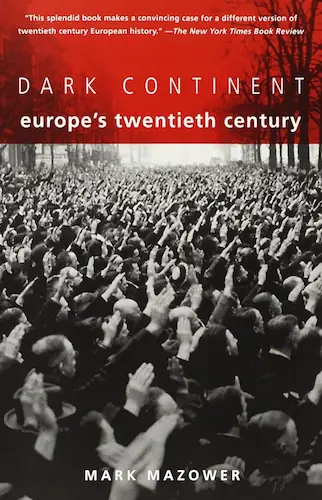
This has obscured our understanding of a much deeper crisis in the transformation of politics amidst the rearrangement of the international and political-economic architecture in both Western and Eastern societies prior to the fall of the Berlin Wall.
Political and economic changes had been underway for a long time before the events culminated in 1989. Another eminent historian, Eric Hobsbawm observed that the legacy of Europe’s history since 1989 has indeed been shaped by the domestic politics of EU member states.
Many of today’s EU challenges stem from the legacy of the Cold War, given that the EU is a unique form of multi-state body that integrates the national economies and legal systems of several independent nation-states on a permanent or long-lasting basis.
There are several reasons behind these views. On the one hand, it was expected that socialism would survive the reconciliation with capitalism at the time.
This, however, required effective intermediation between citizens and their societies, social classes acting as intermediaries, as well as a state capable of withstanding external economic shocks.
On the other hand, Western and Eastern European societies with different political and economic models were not equipped to adapt to the global economy in the same way. The interaction of Soviet-type economics with the capitalist world economy made socialism vulnerable, thereby furthering a paradox in the processes of adapting to global transformations.
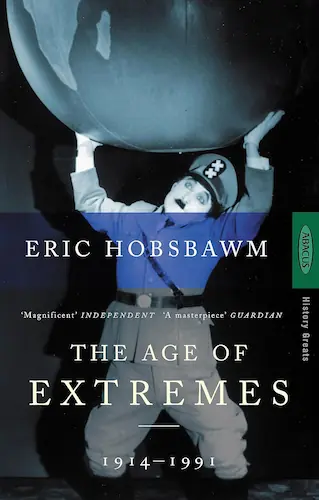
This created the false belief that nothing had changed, even though the international structure had already transformed, setting the trajectory for Europe’s approach to the political and economic consequences of the end of the Cold War.
Against a backdrop of unprecedented changes in the world economy, a new type of state governance was incorporated as a response to the economic changes since the 1970s – a domain of norms based on science and calculations of utility.
Policy intellectuals and policymakers claimed to act on behalf of expert knowledge. As Charles Maier argues, they deployed the language of public affairs supposedly for the common good, not just on behalf of a particular party or interest.
These claims to expertise and governance have become increasingly politicized since the 1970s and the 1980s, prevailing in the direction of technocratic governance, mainly on behalf of capitalist modernization. This has, however, created ruptures in societal relations and in political responses to the economic changes.
The Economic Legacy to Current Geopolitical Predicaments
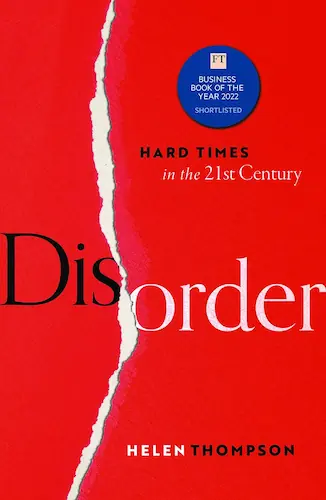
To varying degrees, all the geopolitical predicaments of the past three decades have been amplified by economic problems. The substantial economic changes since the 1970s have played an independent role in destabilizing politics in Western democracies, including by constraining geopolitical choices, as Helen Thomson identifies.
With the breakdown of the Bretton Woods era and the replacement of the fixed exchange rate system by floating exchange rates in 1973, there has been no return to an international monetary order or to the use of human capital as a non-commodity.
The end of Bretton Woods later created monetary problems for which the Eurozone became a remedy; it shaped German power within the EU in a particular way. Indeed, the monetary union was crucial for German unification and European integration.
After the fall of the Berlin Wall, France’s response to the unified Germany, the EU member states’ responses to the fiscal requirements, and, later, the consequences of the Eurozone crisis—as in the case of Italy or Greece—have been interlinked in ways that continue to shape political developments. The Italian Cabinet appointed in 2011 by former European Commissioner Mario Monti was one of the responses to the Eurozone crisis. From that political moment until September 2019, no minister of economy and finance in Italy was an elected politician.
At the beginning of the 1990s, it was understood that creating responses to geopolitical changes had to be anchored in a broader institutional framework to remain a stable component of an enlarged Europe. Similarly, British Prime Minister John Major understood that the United Kingdom would not support an upgraded EU that did not provide for an opt-out on a common currency. One of Mitterrand’s goals was to level French influence with Germany inside the Union, by means of the Union. All of these decisions reflected national concerns while recognizing the opportunity to reshape the EU’s economic and political architecture as a collective response.
The efforts of the EEC members to develop the community’s institutional structure and advance toward monetary union culminated in the Maastricht Treaty of 1992 and the introduction of a common currency in 1999. EU institutions have been changing slowly, but the Commission was energized by Jacques Delors’s appointment as its president in spring 1984. Over the next year, Mitterrand, Kohl, and the Commission pushed forward a program for market liberalization coupled with majority voting on most matters, except where a member state could veto a proposal that affected its vital interests.
When Economics Replaces Politics: The Consequences of Maastricht
In addition to the economic changes of the 1980s and the neoliberal turn, political parties lost their ability to adapt to societal changes or to engage with their members as traditional parties once did. When socialist parties and labor movements lost the ability to achieve their core objectives, reformed capitalism embraced various ideologies due to a lack of control over economic policies in collective decision-making.
A far-right victory in France would be far more consequential than Hungary’s and Italy’s experimentations with far-right rule in recent years.
Unlike their Western counterparts, communist regimes in Eastern societies could not adjust to the economy through deflation or mass unemployment for political reasons. In Western societies, institutions such as the traditional family and organized churches were severely undermined by moral individualism and the lack of collective organized interest. Both the East and the West lost their belief in socialist ideology, embracing the rhetoric of neoliberalism instead.
The Decline of Party Politics and the Rise of Populism
This was also driven by the rise of ‘new’ group identity politics, resulting in the rejection of ‘old politics’ and the universalism of democratic and citizenship politics. In the late 1980s and early 1990s, there was a dramatic collapse in electoral support for established parties with long records in government, and the stable political structures of democratic capitalist countries began to fall apart.
Membership in labor unions, closely linked to the political parties, continued to decline in Western societies. Parties of the left, whether in France, Italy, Britain, Germany, Scandinavia, or the United States, no longer maintained the same sense of ideological cohesion and were becoming more internally divided. Globalization became a justification for a new lean regime, and the second half of the 1980s brought remarkable reforms to Europe, East and West.
The end of the Cold War introduced fiscal problems that led Western European governments to cut military spending. This resulted in a budgetary and legitimacy crisis for military organizations, forcing them to find ways to regain legitimacy and salvage their resources beyond traditional defense. By 1995, NATO provided the framework for West European security.

There were geopolitical tensions for a West European security federation, and significant risks for Western Europe in accepting the American nuclear umbrella as the Cold War spread well beyond Europe. Inside Europe, if security was the strongest rationale for federation, whether as a customs union or a defense community, NATO made this political logic redundant.
As an economic response, the European Union emerged during the 1990s as something akin to an economic federation, via the single market and a partial monetary union; and it remained dependent on outsourcing its security to an inherently unstable NATO. By creating the Common Foreign and Security Policy, the EU took a step towards becoming a security confederation, without assuming the new geopolitical turns.
These responses to geopolitical changes continue to reveal the national positions and historical legacies of the EU member states, particularly Germany and France, in security and defense matters, before and after the fall of the Berlin Wall. The complex interplay of politics, economics, and states’ responses to market globalization in the contemporary context has, however, become increasingly complicated with the rise of populist parties and their agenda-setting at the EU level.
Populism, Pragmatism and the EU in Contemporary Geopolitics
The political consequences for the EU’s contemporary politics and policymaking are manifold. The political investment in Meloni’s pragmatism for uniting the Western voice in security and defense placed less emphasis on uniting Europe’s voice altogether and more on addressing its own migration policy. Back in 2017, the Italian Prime Minister, Giorgia Meloni, called Europe a “failed project” and pushed for Rome to ditch the euro, but a few years later, the party leader has gone from blasting the EU to coordinating the EU’s voice in geopolitics.
Furthermore, in November 2023, Meloni campaigned on a promise to curb irregular migration and to reach a deal with Albania to establish two detention centers to hold asylum seekers rescued from the Mediterranean. To achieve these objectives, Meloni faced legal challenges while using public funds. However, the Commission’s latest support for dealing with asylum seekers confirms that it is now the Italian prime minister who is setting EU migration policy.
The establishment of common European procurement programs is an additional challenge in the geopolitical context.
The Italian support for NATO’s objective of increasing defense spending to 5% of GDP by 2035, on the other hand, depends on its own timeline and order of action, as stressed by Meloni – this requires decisions guided by the “national interest” rather than by any personal rapport. In the same vein, Rome has threatened to pull out of the EU’s flagship SAFE (Security Action for Europe) rearmament program unless Brussels extends fiscal “escape clause” measures to allow spending to protect Italy from the Middle East energy crisis.
While EU leaders are negotiating the EU’s post-2027 budget and advancing the EU’s geopolitical agenda, France advocates massive increases in EU security and defense spending while strictly insisting on “European preference” rules to build continental military autonomy. Paris utilizes EU financial instruments to support this goal, having secured a €15.09 billion loan for rearmament under the SAFE initiative.
These negotiations will be a first major test for France and Europe, especially since the National Rally has announced its intention to seek a reduction of ‘two to three billion’ euros in France’s contribution to the EU budget, if it comes to power, and Le Pen has announced a fourth bid for the French presidency. In fact, next year France could elect its first far-right leader since 1944, with the RN’s growing popularity boosting its strategies around rising immigration and France’s economic struggles.
The Cost of Economization: The EU’s Institutional Paralysis
A far-right victory in France would be far more consequential than Hungary’s and Italy’s experimentations with far-right rule in recent years. With the fifth-largest Western economy, membership in the UN Security Council, and status as a nuclear state, France carries significant influence over the EU. A French far-right in power can even exert leverage over the EU’s agenda-setting or subvert the EU’s law-based, supranational architecture.
Ultimately, the biggest challenge for the EU and its decision-making remains the political competition among leaders with more credible economic programs to offer. Those who can maintain a more collaborative attitude toward business owners and economic actors, such as Bardella, might even move as far into the EU mainstream as Italian Prime Minister Giorgia Meloni, particularly on matters like EU defense and enlargement.
That said, three decades later, the EU’s capability to deliver in security and defense, and its capacity for future enlargements, are closely linked to the disparities between the EU as a whole and its member states, which face diverse financial, economic, social, and political challenges. The establishment of common European procurement programs is an additional challenge in the geopolitical context.
This will still test the readiness of individual EU states to give up their independent capabilities and the foreign policies associated with them. The key challenge remains in the EU’s monetary union, where there is a growing clash between technocratic governance and populist rhetoric. This is closely linked to the EU’s inability to deliver on popular and policy demands, to deal with the legacy of the institutional political and economic redesign, and to reinvent its normative role in the geopolitical context.