Conspiracy theories have been part of the human experience since the dawn of civil society. But while their appeal is inherent in human nature and they have circulated in every political order devised by man, technological innovations, most glaringly the internet, have amplified their destructive potential.
Nowhere is this damage more evident than in Donald Trump’s conspiracy mongering on social media, where millions of Americans embrace his claim that a “deep state” controls their government and that elections are routinely stolen. But while Trump has raised conspiratorially based demagoguery to an art form, he is not the first president to engage in this harmful practice.
Conspirator in Chief
Donald Trump has demonstrated that a President can foster an alternative reality among millions of Americans, a “reality” at odds with the truth. His repeated references to a “deep state” conspiring against the public have done incalculable damage. The fact that nearly two-thirds of Republicans in the United States believe the 2020 presidential election was stolen reveals the power of the presidential “bully pulpit” to poison the public square.
Twitter (now X), and Trump’s own website, Truth Social, are the main platforms used by Trump to circulate an endless array of conspiracy theories.
In one instance Trump posted that “an ‘extremely credible source’ has called my office and told me that @BarackObama’s birth certificate is a fraud.” Even after a birth certificate was produced, Trump questioned its validity and capitalized on the death of a Hawaiian official who verified the certificate.
In 2013, he posted, “How amazing, the State Health Director who verified copies of Obama’s ‘birth certificate’ died in plane crash today. All others lived.”
Trump rarely accepts the official account of the deaths of prominent figures, detecting the hidden hand of the “deep state” as the source of their demise. When Supreme Court justice Antonin Scalia died in February 2016, Trump claimed that he was the victim of foul play.
“They found a pillow on his face, which is a pretty unusual place to find a pillow,” Trump claimed to a conspiratorially inclined talk radio host, the latter of whom advocated creating “the equivalent of a Warren Commission” to investigate Scalia’s “suspicious” death. Trump considered several of his opponents, or their relatives, to be accessories to murder, including Bill and Hillary Clinton, Senator Ted Cruz (R–Texas), and former congressman and talk show host Joe Scarborough.
Trump’s war on the truth may serve to be his most egregious legacy. To borrow from Abraham Lincoln, a house divided over what constitutes reality and what is fake will not stand for long.
Bashing Immigrants
In addition to accusing illegal immigrants of eating people’s pets, Trump also claimed that the immigrant influx into the United States was being facilitated by former Vice President Kamala Harris and the Democratic Party. In 2024 Trump vowed to “shut down all entries through Kamala’s migrant app. She’s got a phone app. It’s meant for the cartel heads. The cartel heads call the app, and they tell them where to drop the illegal immigrants.”
The United States has survived conspiracy mongering presidents in the past, but Donald Trump stands alone in terms of the sheer volume and level of egregiousness of his war on the truth.
He also accused Harris of murder, blaming her for the death of an American woman at the hands of an illegal immigrant from El Salvador: “I’m outraged that [Harris] let in the savage who raped and murdered Rachel Morin. . . . Kamala let her in, let her in. She murdered him. . . . In my opinion, she murdered him. She did it just like she had a gun in her hand.”
In the wake of devastation from Hurricane Helene in September 2024, Trump accused President Joe Biden and Kamala Harris of diverting funds designated for hurricane relief to illegal immigrants, claiming that “they stole the FEMA [Federal Emergency Management Agency] money like they stole it from a bank so they could give it to their illegal immigrants that they want to have vote for them this season.” None of this was true, but this type of conspiracy mongering played well with Trump’s conspiracy-obsessed base.
Trumpist Precursors
But while Trump is the apotheosis of the conspiracy mongering president, this practice did not begin with him. Presidential conspiracy mongering first became a feature of the American presidency in the early years of the republic. While George Washington was especially cognizant of the importance of presidential silence, of measuring one’s words, of appealing to reason, many of Washington’s successors abandoned this standard.
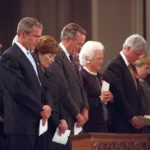
Thomas Jefferson (1801-1809), branded his opponents as “monarchists,” “aristocrats,” or “plutocrats” intent on betraying the “Spirit of 1776.” Jefferson was a brilliant politician, utilizing a network of newspapermen and political operatives to circulate rumors that his opponent Alexander Hamilton and his Federalist Party were “Anglophiles” if not outright British agents. These myths took hold and contributed to the rapid demise of the Federalists. Toward the end of his life, Jefferson concluded that efforts to contain slavery were the result of a conspiracy among descendants of the old Federalists to oppress the South.
In addition to the racial stereotyping that animated many of their conspiratorial musings, condemnation of those “woke” whites, or “Federalist” whites, or “unmanly,” or “communist” whites who argued for equal justice under the law served to complement these allegations. Andrew Jackson (1829-1837), Andrew Johnson (1865-1869), and Woodrow Wilson (1913-1921) all believed in the supremacy of the white race, and each helped to circulate and perpetuate various racial stereotypes or perpetuated the second-class status of African Americans. For Johnson and Wilson, efforts at ensuring equal treatment under the law were simply plots to put white Southerners under, as Wilson put it, the “heel” of the black South.
Populist Conspiracy Mongering
Throughout much of American history, the Democratic Party, historically the more populist of the two major parties, was the medium by which many conspiracy theories were circulated in the United States. Pandering to public prejudice was the hallmark of these Democratic administrations.
Unpopular religious, ethnic, or racial groups, or those with political views outside the mainstream, were frequently the targets of various American presidents who portrayed themselves as champions of the “common man,” a group whose membership was limited to those of a certain race.
Abraham Lincoln provides the most compelling model of presidential commitment to reason and rhetorical restraint.
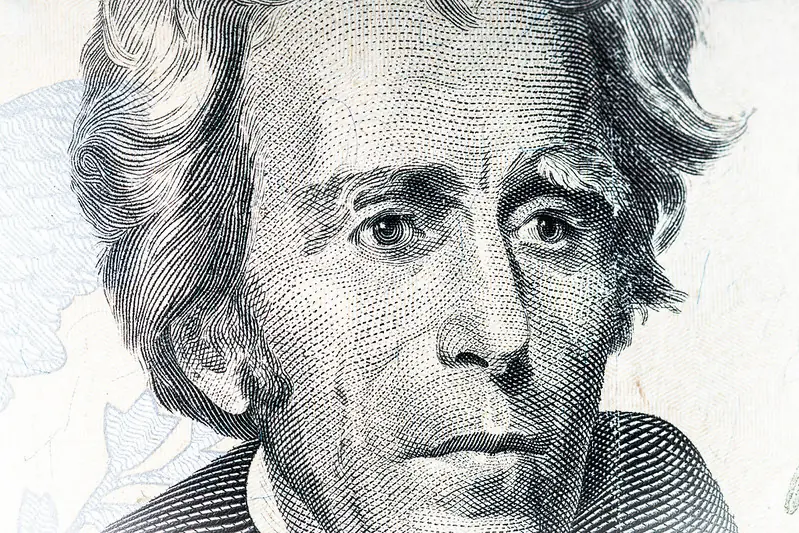
One of those Presidents, Andrew Jackson, spent much of his life portraying his opponents as inherently evil, as could be seen when he became the target of the first serious assassination attempt on an American president. Jackson was convinced that two members of the United States Senate (one of whom was his former vice president) were part of a conspiracy to kill him.
Jackson’s fellow Tennessean, Andrew Johnson, compared himself to Jesus Christ (as did Jackson) and believed his opponents were engaged in an immense conspiracy to crucify him and shred the Constitution. Woodrow Wilson spoke of an “invisible empire” composed of corporate titans who sought to undermine the republic while Franklin Roosevelt echoed the same allegation and accused those opposed to American entry into World War II of being German sympathizers, or worse.
Shared Demagogic Traits
Despite the disparate character of all the presidents previously mentioned, they shared many traits that fueled their penchant for circulating conspiracy theories. These presidents were zealous in pursuit of their causes, especially when it came to smiting their “enemies.”
Jefferson’s zealotry was in the service of “the spirit of 1776”; in the case of Jackson and Johnson, it was in service to their self-proclaimed role as the spokesman for the people; in the case of Trump, it was in service to himself. Jefferson, Jackson, Johnson, Wilson, Franklin Roosevelt (1933-1945), and Richard Nixon (1969-1974), along with Trump, instinctively assumed that their opponents were, as a cleric might view a heretic, evildoers. This is hubris at its worst but easy to rationalize if you consider yourself the personification of the “people’s will.”
When Presidents view their opponents as members of a criminal or perhaps even treasonous conspiracy, then there are few limiting principles governing their conduct and no reason to act with restraint and moderation. Moderation in dealing with evil is no virtue, and all these presidents were comfortable spreading rumors to destroy the reputations of those who stood in their way.
Presidents can choose to unite or divide, to appeal to what binds the nation or to poison the public square.
While it is important to note that the path to Donald Trump’s conspiracy-mongering presidency was paved long before he took the oath of office in 2017, including by luminaries such as Thomas Jefferson, lumping Trump in the same sentence with Jefferson strains credulity, for Jefferson was a remarkably well-read and curious man, the poet of the American founding. Trump possesses none of those qualities.
Trump is in a league of his own when it comes to demeaning the presidency with his unceasing conspiracy mongering and his lack of knowledge of the world he inhabits. But while there is no equivalence between these men in terms of intellect and vision, there is no denying that Jefferson, and some of the other presidents mentioned in this essay, brought to the presidency a series of innovations that changed the office for the worse.
Saving the Republic
However, there is an alternative tradition in the American presidency that offers a corrective to Trump-style conspiracy mongering.
The United States was fortunate at times to be governed by presidents who appealed to the better angels of our nature, including George Washington, John Quincy Adams, Abraham Lincoln, William Howard Taft, and Dwight Eisenhower. None of these men were saints but they were averse, for the most part, to rumor mongering.
Abraham Lincoln provides the most compelling model of presidential commitment to reason and rhetorical restraint. Lincoln’s respect for the people led him to believe that they could grapple with reasoned arguments, that one did not have to stoop to the level of demagogic conspiracy mongering to move the citizenry.
He understood that truth must prevail for self-government to succeed, that republican leaders must speak the truth, no matter how unpopular. The United States is now facing the greatest test of that proposition with a president who manipulates public opinion without the slightest sense of shame and who routinely attacks those who challenge him with violence-tinged, hateful rhetoric.
The Choice is Theirs, and Ours
Presidents can choose to unite or divide, to appeal to what binds the nation or to poison the public square. The choice to elevate the political discourse by appealing to reason rests entirely in the hands of the person elevated to the nation’s highest office. But the perpetuation of the American experiment also depends on the citizenry’s commitment to, as Abraham Lincoln put it, “reason, cold calculating, unimpassioned reason.” The citizenry’s rejection of the kind of weaponized misinformation practiced by Donald Trump is key to ensuring the very survival of a republic once described by Lincoln as “the last best hope” of mankind.
The United States has survived conspiracy mongering presidents in the past, but Donald Trump stands alone in terms of the sheer volume and level of egregiousness of his war on the truth. Additionally, his attacks on judges, juries, and prosecutors involved in criminal and civil cases against him, his threats to “lock up” his opponents and prosecute media outlets, and his successful effort to convince millions of Americans that he is at war with a “deep state,” set him apart from his predecessors.
It is not conspiracy mongering to assert that under Donald Trump, the American republic and the rule of law for which it stands, is currently facing one of its greatest tests.