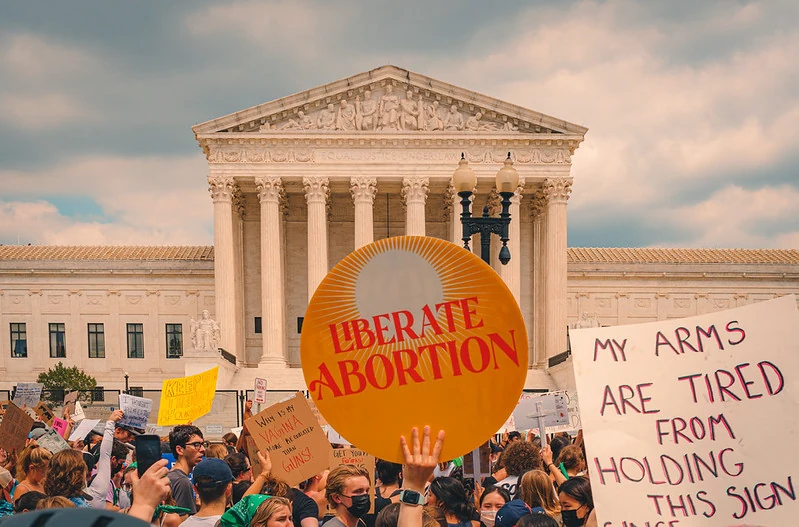
In recent terms, the United States Supreme Court has demonstrated an increasing willingness to overturn or substantially narrow established precedents. From abortion rights to administrative authority and affirmative action, long-standing doctrinal frameworks have been reconsidered or dismantled. The resulting debate is no longer confined to case-specific disagreement. It centers on a structural question: has the Supreme Court entered a post-precedent era?
At stake is the doctrine of stare decisis—the principle that courts should adhere to prior decisions to ensure stability, predictability, and legal continuity. While no precedent has ever been absolutely immune from revision, the Court’s recent trajectory suggests a recalibration of how much weight precedent carries in constitutional adjudication.
The Erosion of Stare Decisis in the Supreme Court
Historically, the Supreme Court has treated precedent as a presumptive constraint. Even when a majority of justices believed a prior decision was wrongly decided, the institutional costs of overruling—damage to legitimacy, disruption of reliance interests, and politicization of the Court—often counseled caution.
Is the Supreme Court primarily a guardian of continuity or an engine of constitutional correction?
Recent rulings signal a different calculus. The Court has emphasized factors such as “egregious error,” doctrinal unworkability, and inconsistency with historical tradition to justify reversal. This interpretive shift is closely linked to a broader methodological transformation: a renewed focus on text, history, and original meaning over evolving standards or pragmatic balancing tests.
Supporters argue that fidelity to the Constitution may require discarding flawed precedents. Critics contend that selective historical reasoning can mask ideological preference and destabilize constitutional expectations.
The key development is not simply that precedents are overturned. It is that the threshold for overruling appears lower, and the rhetoric surrounding precedent more skeptical.
Legitimacy and the Politics of Judicial Power
The Supreme Court lacks electoral accountability and enforcement authority; its legitimacy depends largely on public acceptance of its role as a neutral arbiter. Precedent has traditionally functioned as an institutional anchor, signaling that decisions are grounded in law rather than transient political alignments.

When precedents fall in rapid succession, perceptions of neutrality may erode. Polling over the past several years indicates declining public confidence in the Court, with approval increasingly polarized along partisan lines. The Court’s defenders argue that legitimacy flows from constitutional correctness, not popularity. Yet in a constitutional democracy, sustained public skepticism carries risks.
The legitimacy challenge is compounded by the Court’s growing engagement with politically salient issues: voting regulations, executive authority, environmental governance, and educational policy. As these questions intersect with electoral competition, judicial decisions inevitably acquire political resonance.
If the Court is perceived as a policy-making actor rather than an adjudicative institution, the authority of precedent weakens further. Legal continuity becomes secondary to ideological alignment.
Originalism, History, and Doctrinal Transformation
A defining feature of the current era is the ascendance of historically oriented interpretation. By privileging constitutional text and historical understanding at the time of enactment, the Court has reframed multiple areas of law.
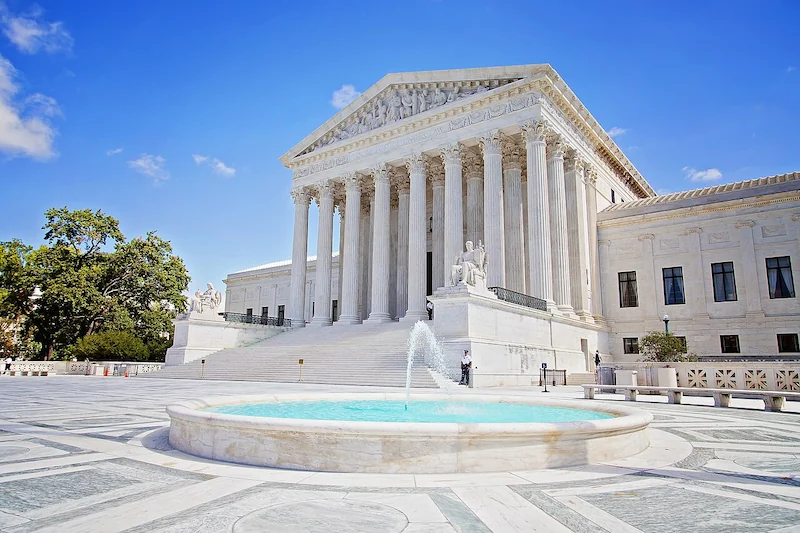
This approach reshapes the function of precedent. If constitutional meaning is fixed at ratification, then decisions departing from that meaning are vulnerable regardless of their longevity. Precedent becomes contingent rather than foundational.
However, historical methodology introduces its own uncertainties. The historical record is often incomplete or contested, and translating eighteenth- or nineteenth-century understandings into modern governance contexts requires judgment. Critics argue that heavy reliance on historical analogies can produce selective readings that undermine doctrinal coherence.
The tension between historical fidelity and modern reliance interests lies at the center of the post-precedent debate.
Institutional Consequences of a Post-Precedent Era
If the Supreme Court is indeed entering a post-precedent phase, several institutional consequences follow.
First, constitutional law becomes more volatile. Litigants are incentivized to challenge established doctrines, anticipating that shifts in the Court’s composition may yield favorable reconsideration. This dynamic increases strategic litigation and amplifies the stakes of judicial appointments.
Second, Congress and state governments may respond by testing the boundaries of existing doctrine more aggressively. If precedent is less stable, legislative experimentation becomes more attractive.
Third, the confirmation process for justices is likely to grow even more contentious. When precedents are perceived as provisional, each appointment carries heightened transformative potential.
The cumulative effect may be a feedback loop: diminished reliance on precedent intensifies political scrutiny, which in turn encourages further doctrinal disruption.
Is Stability Recoverable?
The Supreme Court has experienced cycles of assertiveness and restraint before. Periods of rapid doctrinal change—such as the New Deal era or the civil rights revolution—were followed by phases of consolidation. It is therefore possible that the current moment represents transition rather than permanent rupture.
Stability could reemerge through clearer standards governing when precedent may be overturned, greater emphasis on incrementalism, or a renewed institutional commitment to cross-ideological consensus in major cases.
Yet structural conditions differ from earlier eras. Media fragmentation, partisan polarization, and the salience of constitutional litigation make sustained quietism difficult. The Court operates in a highly visible political environment where every major decision is immediately interpreted through partisan frames.
Whether this constitutes a post-precedent era depends on durability. If reversals remain frequent and doctrinal foundations continue to shift, the Court may redefine its relationship to its own past. If, however, recent decisions stabilize into a new equilibrium, precedent may regain constraining force—albeit on revised interpretive terms.
The deeper issue is institutional identity. Is the Supreme Court primarily a guardian of continuity or an engine of constitutional correction? The answer will shape not only the trajectory of American constitutional law but also the balance between law and politics in the decades ahead.