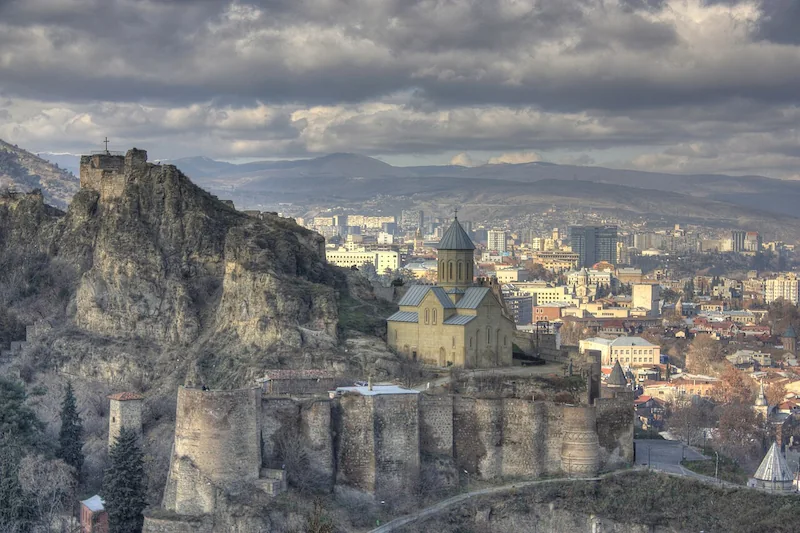
When the Soviet Union collapsed in 1991, Georgia emerged as an independent state with a formidable task: defining who it was. For seventy years, Moscow had shaped its politics, economy, and culture. Suddenly, Georgians had to answer a question that had been suppressed for generations – what kind of nation did they want to become?
Situated at the geopolitical crossroads between Russia and the West, Georgia became a target in a competition in the dimension of soft power. Both Moscow and Western capitals sought to win Georgian hearts and minds using their soft power strategies to promote their goals.
For scholars, policymakers, and citizens alike, the lesson is clear: we must learn to see the invisible dimensions of power.
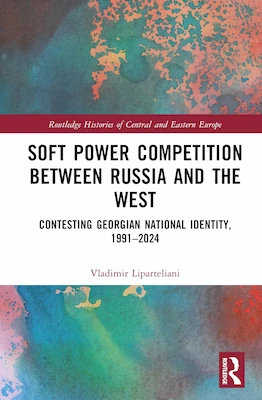
My new book, Soft Power Competition Between Russia and the West: Contesting Georgian National Identity, 1991–2024, is the first comprehensive study of this rivalry. It shows how soft power works in the twenty-first century, how it interacts with national identity, and why it matters far beyond the Caucasus.
Soft Power: From Insight to Instrument
American political scientist Joseph Nye introduced the concept of soft power in the late 1980s. He argued that in an increasingly globalized world, states could achieve influence not only through coercion but through attraction—by promoting values, ideas, and narratives that others wanted to embrace.
Nye was right. What he may not have anticipated was how quickly soft power would become a central arena of great power competition. It is cheaper than military force, it crosses borders with ease, and it works directly on how people think and what they believe.
For a while, soft power seemed synonymous with liberal values: human rights, gender equality, pluralism, religious tolerance, and democratic governance. The United States and Western Europe were held up as models. Their appeal, it was assumed, flowed from their commitment to these ideals.
That assumption no longer holds. Soft power has been appropriated by actors with very different agendas. It has become a tool not only of attraction but of competition, and not only of persuasion but of control.
The Authoritarian Counter-Offensive
As soft power became a popular tool, it also changed hands – and changed shape. Russia, China, and Iran began investing heavily in their own soft power. But their vision looked nothing like the Western model.
Rather than promoting liberal values, these states projected conservative and authoritarian narratives. They offered an alternative vision of modernity, sovereignty, and tradition. Their goal was not just to attract foreign audiences but to challenge and undermine the soft power of their competitors.
Georgia’s experience offers a window into a form of power that shapes outcomes without firing a shot.
This is a crucial shift. Soft power is no longer just a way for states to compete. It is a way for them to outcompete each other – by offering rival, mutually exclusive visions of how societies should be organized.
Georgia sits at the center of this contest. It is a country where these two visions meet, clash, and compete for allegiance. What happens there is not just a local affair. It is a preview of a broader global struggle over the future of political order.
Georgia: A Soft Power Battlefield
After the Soviet collapse, Georgia experienced what can only be described as an identity crisis. The old certainties were gone. The new ones had not yet formed. Georgians were searching for a sense of who they were and where their country was heading.
That search made them open to influence. Both Russia and the West stepped in, promoting their own visions of Georgia’s future. Through media, education, cultural programs, and civil society initiatives, they worked to shape how Georgians understood themselves and their place in the world.
The book reveals the channels and means of influence that often go unnoticed.
The stakes could hardly be higher. National identity determines not just how people see themselves, but what kind of state they want to build. By influencing identity, external powers can influence the direction of an entire country.
Georgia became a soft power battlefield – a place where great powers fought for control of hearts and minds. The conflict was rarely visible, but its effects were profound. It shaped Georgian politics, society, and even the country’s foreign policy orientation.
This is what makes Georgia such an important case. It is small enough to be influenced, yet significant enough to matter. It sits at the intersection of empires, religions, and civilizations. What happens there resonates far beyond its borders.
What the Book Reveals
Soft Power Competition Between Russia and the West is the first comprehensive study of this competition. Drawing on interviews, archival research, and analysis of media and policy documents, it traces how both sides pursued influence in Georgia from 1991 to the present.
The research draws on a wide range of sources. I interviewed leaders and members of media and NGO sectors linked to Western or Russian soft power efforts, state officials, journalists, experts in Georgian politics and international affairs, and ordinary citizens who engaged with these initiatives. I also analyzed historical and contemporary transnational print and digital media, policy documents, and sociological studies.
Particularly valuable were rare journalistic materials from the early 1990s detailing Russian and Western diplomatic, cultural, and educational activities in Georgia. These were located through archival and library research due to their limited digital availability.
How Soft Power Shapes Identity
The book reveals the channels and means of influence that often go unnoticed. These mechanisms are not as visible as military deployments or economic sanctions. Yet they constitute a powerful source of influence and an arena in which international rivalry increasingly unfolds – often in parallel with, and at times even ahead of, military competition.
Understanding these mechanisms requires looking beyond the headlines. It means paying attention to the slow, quiet work of cultural exchange, media framing, educational programs, and civil society funding. These are the tools through which soft power operates, and they are remarkably effective.
The book also shows how soft power and national identity interact. External actors do not simply impose their narratives on a passive audience. They engage with existing debates, anxieties, and aspirations within the target society. In Georgia, both Russia and the West tapped into real questions about the country’s past, present, and future.
This interaction is what makes soft power so potent. It does not override identity; it shapes it from within, often by amplifying certain voices and marginalizing others. Over time, this can shift the entire direction of a country’s development.
Why This Matters Now
We live in a moment of fierce international competition. Power is shifting from a unipolar world to a multipolar one, allowing regional powers to assert themselves and pursue their own interests. At the same time, advances in mass communication technologies have transformed the nature of international relations.
Information has always been an asset of power. Today, it is comparable in significance to economy, military might, geography, or population. This is what has elevated soft power to heights we are only beginning to understand.
Military and economic competition remain relevant – the wars in Ukraine and the Middle East make that clear. But we cannot fully grasp contemporary conflicts without recognizing the role of cognitive forms of power. Without soft power, hard power confrontations would often be pointless. Ideas and beliefs push conflicts forward and sustain them.
This is not a peripheral concern. It is central to how power operates in the twenty-first century. States that master soft power can achieve influence without coercion. They can shape the choices of others while appearing to do nothing at all. This is power in its most subtle and, arguably, most effective form.

The Cognitive Dimension of Power
The book shows that soft power competition between Russia and the West is just one example of a broader phenomenon: cognitive warfare. These forms of rivalry are often hidden from ordinary view, yet they significantly affect what happens to all of us.
Soft power can penetrate and shape consciousness itself – national, religious, or political identity. This proves that soft power is not merely a tool of persuasion. It is a dimension of one state’s capacity to penetrate, control, and win over others.
This has profound implications. If identity itself can be shaped by external actors, then sovereignty is never fully secure. States must not only defend their borders but also the narratives and ideas that hold their societies together.
Georgia’s experience illustrates this vividly. The competition for influence there was never just about geopolitics. It was about the very soul of the nation – what it means to be Georgian, and what future Georgians would choose for themselves.
Conclusion: Seeing the Invisible
Georgia’s experience offers a window into a form of power that shapes outcomes without firing a shot. For over three decades, Russia and the West have competed to define what Georgia is and where it should go. That competition has shaped Georgian politics, society, and identity in ways that are still unfolding.
As the world becomes more multipolar and information technologies more pervasive, soft power will only grow in importance. States that understand this will be better positioned to navigate the new era. Those that do not will find themselves vulnerable to influences they cannot see.
The war for hearts and minds is not a metaphor. It is real, it is ongoing, and it is reshaping the international order. Georgia is one battlefield. There are and will be others.
For scholars, policymakers, and citizens alike, the lesson is clear: we must learn to see the invisible dimensions of power. Only then can we understand the forces shaping our world – and perhaps begin to shape them ourselves.