Politics and Rights Review connects academic knowledge with society, uniquely synthesizing clarity and rigor in a way that appeals to both academic and non-academic audiences.
  • Politics
    • Analysis & Theories
    • Culture & Politics
    • Democracy & Authoritarianism
    • Global North
    • Political History
    • Opinion & Insights
    • Politics & Religion
    • Technology
    • The Politics Brief
  • Human Rights
  • Books
  • The Book Curator
  • About
    • Academic Advisory Board
    • Contributors
    • Guidelines for Authors
  • Partner With Us
  • en_US
    • fr_FR
    • es_ES
  • ISSN 2818-4610
Reading: What Racism Really Costs Us All
Share
Politics and Rights ReviewPolitics and Rights Review
Font ResizerAa
Search
  • Politics
    • Analysis & Theories
    • Culture & Politics
    • Democracy & Authoritarianism
    • Global North
    • Political History
    • Opinion & Insights
    • Politics & Religion
    • Technology
    • The Politics Brief
  • Human Rights
  • Books
  • The Book Curator
  • About
    • Academic Advisory Board
    • Contributors
    • Guidelines for Authors
  • Partner With Us
  • en_US
    • fr_FR
    • es_ES
  • ISSN 2818-4610
Have an existing account? Sign In
Follow US
Politics and Rights Review is licensed under a Creative Commons Attribution-NonCommercial-NoDerivs License (CC BY-NC-ND), except where otherwise noted.
Politics and Rights Review > Laureates > What Racism Really Costs Us All
Laureates

What Racism Really Costs Us All

About the book The Sum of Us: What Racism Costs Everyone and How We Can Prosper Together by Heather McGhee.

P&RR
P&RR
Published: October 5, 2025
Share
SHARE

 A Book That Redefines the Price of Inequality

Winner of the 2022 Robert F. Kennedy Human Rights Book Award, The Sum of Us: What Racism Costs Everyone and How We Can Prosper Together by Heather McGhee is more than just a powerful investigation into racial injustice.

Contents
  •  A Book That Redefines the Price of Inequality
  • The Fallacy of the Zero-Sum Game
  • Public Goods and the Privatization Trap
  • The Hidden Costs of Racism
  • Race, Economy, and the American Myth of Meritocracy
  • A Blueprint for Collective Prosperity
  • Why This Book Matters Now
  • A Call to Reimagine What We Share

 It is a data-driven and deeply human argument that racism, especially the “zero-sum” thinking it fosters, impoverishes everyone. McGhee, a distinguished policy expert and former president of the think tank Demos, travels across the United States to gather stories, facts, and experiences that reveal the structural logic behind inequality—and, crucially, the potential of solidarity to create a fairer and more prosperous society for all.

The Fallacy of the Zero-Sum Game
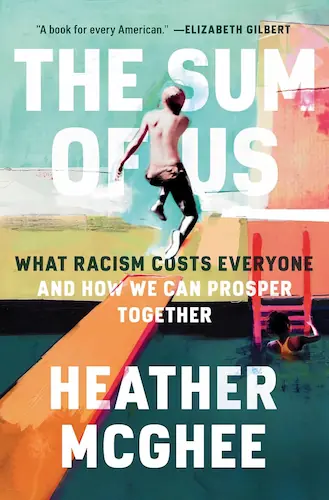
Cover-of-the-book_The-Sum-of-Us.-What-Racism-Costs-Everyone-and-How-We-Can-Prosper-Together

At the heart of McGhee’s thesis is the dismantling of the “zero-sum paradigm”: the belief that gains for some inevitably mean losses for others.

This idea, she argues, has been weaponized in American political and economic discourse to justify policies that disproportionately harm communities of color, while simultaneously stripping benefits from white Americans as well.

Her most emblematic example—cities closing public pools to avoid integration—demonstrates how racism can lead to collective loss rather than individual gain. Such decisions exemplify how fear of racial equity leads to the destruction of public goods for everyone.

Public Goods and the Privatization Trap

Through stories of disinvested neighborhoods, underfunded schools, and eroded labor rights, McGhee shows how public systems have been deliberately dismantled under the guise of fiscal conservatism and racial resentment.

 Universal programs—like quality public education, healthcare, or housing assistance—are too often viewed as handouts to the undeserving, rather than investments in a healthier and more productive society.

Read More

President of Russia Vladimir Putin and General Secretary of the Chinese Communist Party Xi Jinping, solidifying a strategic alliance that challenges the established norms of global geopolitics, during a state visit in the Great Hall of the People in Beijing.
Rethinking Geopolitics: Fluid Dynamics in Global Relations
Ukraine’s Displaced Citizens: Why Legal Aid is a Lifeline, Not a Luxury
Sacred Violence: Military AI in the Israel-Palestine Conflict
Price Tag on Love: Zimbabwe’s Silent Inequity
On the Power and Vulnerability of Concepts

In truth, McGhee argues, these systems crumble not because they are ineffective, but because their association with racial inclusion sparks opposition from segments of the white electorate. This paradox has allowed privatization to take hold, deepening inequality while reducing overall quality of life.

The Hidden Costs of Racism

What McGhee terms the “Solidarity Dividend” is her response to this entrenched zero-sum mentality.

 She documents how cross-racial coalitions have succeeded in improving conditions not just for minorities, but for working-class whites as well.

 From union victories to environmental campaigns, these examples highlight how mutual interests—clean air, fair wages, access to health—transcend racial lines when communities unite. Yet she also emphasizes that solidarity requires effort: it demands unlearning inherited prejudices and seeing through the myths that divide.

Race, Economy, and the American Myth of Meritocracy

McGhee interrogates the idea that the U.S. is a land of equal opportunity, illustrating how systemic racism distorts markets, punishes ambition, and limits social mobility.

Explore Books Written by Our Contributors

A curated selection of titles in the Social Sciences and Humanities, introduced by their authors in the pages of Politics and Rights Review.
View the Collection

Discriminatory lending practices, exclusionary zoning, and racially biased criminal justice policies don’t just target individuals—they shape the economic structure of entire communities.

And the costs reverberate: home foreclosures and mass incarceration don’t remain isolated problems. They ripple outward, harming national economic stability and exacerbating public health crises.

A Blueprint for Collective Prosperity

Rather than dwelling in critique, The Sum of Us offers an affirmative vision: a country where shared prosperity replaces racial scapegoating. McGhee urges readers to embrace a politics of mutuality, grounded in the belief that we can do better—together.

 Her interviews with organizers, policy innovators, and everyday citizens provide glimpses of what this future might look like.

From expanding voter access to rethinking climate justice, McGhee charts a course for collective progress rooted in moral clarity and practical solidarity.

Why This Book Matters Now

In a moment of increasing polarization and backlash against diversity initiatives, The Sum of Us is a vital counterweight. It makes an urgent case that dismantling racism is not merely an ethical imperative, but a pragmatic one.

By demonstrating that exclusion ultimately weakens everyone’s social fabric, McGhee shifts the narrative from guilt to possibility. Her work encourages readers, especially those not directly affected by racial injustice, to see equity as a shared investment rather than a charitable cause.

A Call to Reimagine What We Share

The Sum of Us is not only a landmark work of social analysis, but also a hopeful roadmap toward a more inclusive and equitable America.

 Heather McGhee reminds us that the cost of racism is borne by all—and that the rewards of solidarity are within reach. In a time when cynicism often prevails, her message is both urgent and empowering: our destinies are linked, and in unity, we can prosper. The book is available here.   

Explore More Award-Winning Books
Cover-of-The-Matter-of-Black-Living-The-Aesthetic-Experiment-of-Racial-Data-1880–1930
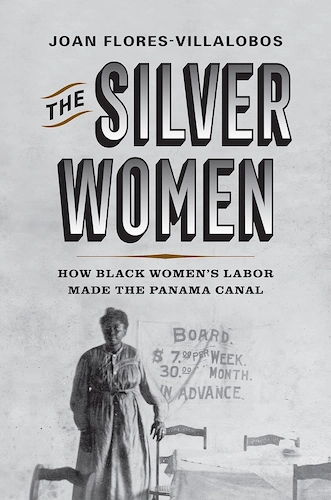
Cover of the book The Silver Women: How Black Women’s Labor Made the Panama Canal
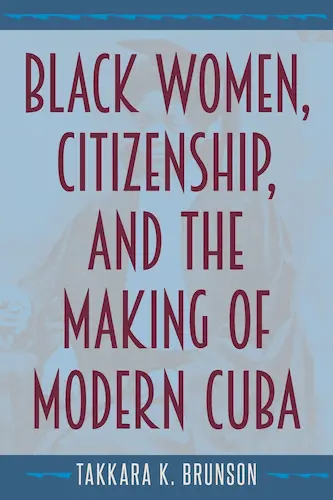
Cover of Takkara K. Brunson's Black Women, Citizenship, and the Making of Modern Cuba (University Press of Florida, 2021), about the role Afro-Cuban women played in shaping modern Cuban identity.
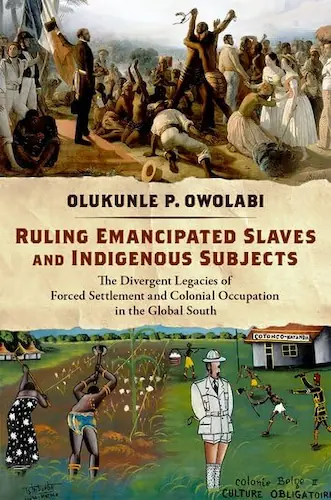
Colonialism-Cover of the book Ruling Emancipated Slaves and Indigenous Subjects
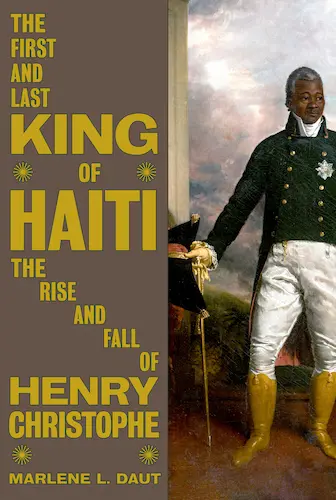
Portrait of Henry Christophe: A Haitian King’s Rise and Legacy

DON’T MISS AN ARTICLE

We don’t spam! Read our privacy policy for more info.

Check your inbox or spam folder to confirm your subscription.

TAGGED:BooksHuman RightsRacismSocial Justice
Share This Article
Facebook Pinterest Whatsapp Whatsapp LinkedIn Email Copy Link Print
Previous Article An intimate moment between human and machine, questioning the boundaries of love and morality in a world increasingly defined by technology and artificial intelligence. Can Robots Love? Ethics at the Boundaries of the Human
Next Article A coastal village in Greenland, where traditional Inuit life meets growing geopolitical interest and the visible effects of Arctic climate change. Trump’s Arctic Gambit: The Battle for Greenland

The Book Curator

Discover the Books Featured in Politics and Rights Review
Visit

Distinguished Scholars

Lori G. Beaman
Distinguished Professor and Canada Research Chair in Religious Diversity and Social Change in the Department of Classics and Religious Studies...
Jeremy Black
Distinguished Fellow at the Center for History and Strategy, Hillsdale College. A British historian and prolific author of over 190...
Anthony Elliott 
Distinguished Professor of Sociology at the University of South Australia. He is the author and editor of over 50 books,...
Melissa B. Jacoby
Graham Kenan Distinguished Professor of Law at the University of North Carolina at Chapel Hill, she wrote over fifty articles...
Alexander Laban Hinton
Distinguished Professor of Anthropology at Rutgers University-Newark, Director of the Center for the Study of Genocide and Human Rights, UNESCO...
Michael Patrick Lynch
Provost Professor of the Humanities and Board of Trustees Distinguished Professor at the University of Connecticut. His new book is...
Richard Moon
Distinguished University Professor at the University of Windsor, Canada. He has authored several books, including The Life and Death of...
Hiroshi Motomura
Susan Westerberg Prager Distinguished Professor of Law at UCLA and Faculty Co-Director of its Center for Immigration Law and Policy,...
Gennifer Weisenfeld
Walter H. Annenberg Distinguished Professor at Duke University. She specializes in modern Japanese art, design, and visual culture. Her books...
Merry Wiesner-Hanks
Distinguished Professor Emerita at the University of Wisconsin-Milwaukee. She is the author or editor of forty books that have been...

You Might Also Like

Microhistories of Africa: Statues at the Slave Market Memorial in Stone Town, Zanzibar, commemorating the victims of the transatlantic slave trade. Photo by Son of Groucho (CC BY).
BooksPolitical History

Microhistories and the African Past

16 Min Read
Colonialism-Cover of the book Ruling Emancipated Slaves and Indigenous Subjects
Laureates

3 Ways Colonialism Shaped Modern Inequality

4 Min Read
Cover of the book The Silver Women: How Black Women’s Labor Made the Panama Canal
Laureates

West Indian Women and the Hidden History of the Panama Canal

3 Min Read
Electoral Dynamics: An authoritarian leader stands elevated in the center, overseeing his henchmen distribute bread and coins to the populace below. In the foreground, one of the henchmen discreetly hands over pre-marked ballots to the citizens. The scene, set in a city square, is intricately detailed, showing the nuances of the buildings and expressions of the people.
BooksAnalysis & Theories

Electoral Dynamics: Autocracies & Power Struggles

8 Min Read
Politics and Rights Review
ISSN 2818-4610
  • Resources
  • Guidelines for Authors
  • Terms and Conditions
  • Privacy Policy
  • Menu
  • Politics
  • Human Rights
  • Books
  • The Book Curator
  • About
  • Partner With Us
  • en_US
  • ISSN 2818-4610
  • Contact

[email protected]

LinkedInFollow
BlueskyFollow
RSS FeedFollow
Politics and Rights Review is licensed under a Creative Commons Attribution-NonCommercial-NoDerivs License (CC BY-NC-ND), except where otherwise noted. Some links on this site are affiliate links. We may earn a commission from qualifying purchases made through these links, at no additional cost to you. This helps support the mission of Politics and Rights Review.
Welcome Back!

Sign in to your account

Username or Email Address
Password

Lost your password?