Politics and Rights Review connects academic knowledge with society, uniquely synthesizing clarity and rigor in a way that appeals to both academic and non-academic audiences.
  • Politics
    • Analysis & Theories
    • Culture & Politics
    • Democracy & Authoritarianism
    • Environment & Sustainability
    • Global North
    • Political History
    • Opinion & Insights
    • Politics & Religion
    • Technology
    • The Politics Brief
  • Human Rights
  • Books
  • About
    • Academic Advisory Board
    • Contributors
    • Guidelines for Authors
  • Partner With Us
  • en_US
    • fr_FR
    • es_ES
  • ISSN 2818-4610
Reading: 3 Ways Colonialism Shaped Modern Inequality
Share
Politics and Rights ReviewPolitics and Rights Review
Font ResizerAa
Search
  • Politics
    • Analysis & Theories
    • Culture & Politics
    • Democracy & Authoritarianism
    • Environment & Sustainability
    • Global North
    • Political History
    • Opinion & Insights
    • Politics & Religion
    • Technology
    • The Politics Brief
  • Human Rights
  • Books
  • About
    • Academic Advisory Board
    • Contributors
    • Guidelines for Authors
  • Partner With Us
  • en_US
    • fr_FR
    • es_ES
  • ISSN 2818-4610
Have an existing account? Sign In
Follow US
Politics and Rights Review is licensed under a Creative Commons Attribution-NonCommercial-NoDerivs License (CC BY-NC-ND), except where otherwise noted.
Politics and Rights Review > Laureates > 3 Ways Colonialism Shaped Modern Inequality
Laureates

3 Ways Colonialism Shaped Modern Inequality

About Ruling Emancipated Slaves and Indigenous Subjects, winner of the 2023 Merze Tate – Elinor Ostrom Outstanding Book Award.

P&RR
P&RR
Published: February 11, 2025
Share
SHARE

The impact of colonialism did not end with independence. In Ruling Emancipated Slaves and Indigenous Subjects, winner of the 2023 Merze Tate – Elinor Ostrom Outstanding Book Award, Olukunle P. Owolabi argues that different colonial governance models left deep and lasting inequalities across the Global South.

Contents
  • 1. The Divide Between Forced Settlement and Colonial Occupation
  • 2. The Impact on Education and Democracy
  • 3. The Persistence of Inequality After Independence
  • A Must-Read on Colonialism and Inequality

Rather than treating colonialism as a uniform system, the book highlights a crucial distinction: forced settlement colonies—where European powers imported enslaved Africans—developed differently from colonial occupation territories, where European rulers controlled indigenous populations.

This distinction, Owolabi argues, explains why some postcolonial nations achieved democracy and development while others remained trapped in authoritarianism and poverty.
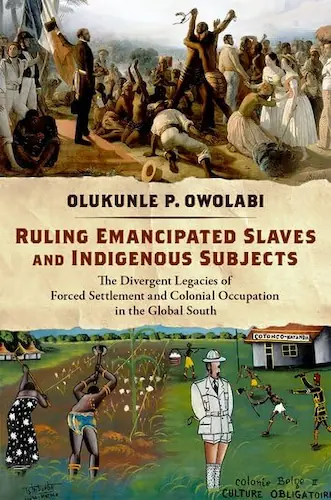
Colonialism-Cover of the book Ruling Emancipated Slaves and Indigenous Subjects

The book identifies three key ways in which colonialism shaped modern inequality:

1. The Divide Between Forced Settlement and Colonial Occupation

Owolabi’s central argument is that colonies where enslaved Africans were forcibly settled (e.g., the Caribbean, Cape Verde) followed a different developmental path than those where Europeans ruled over indigenous populations (e.g., much of Africa and South Asia)​.

Forced settlement colonies eventually received legal reforms that extended European-style rights to emancipated Afro-descendants, while colonial occupation territories maintained repressive legal codes that kept indigenous populations politically and economically marginalized​. This foundational divide continues to shape disparities in governance and economic outcomes.

2. The Impact on Education and Democracy

One of the book’s most striking findings is that forced settlement colonies saw higher investments in education and broader political participation after slavery was abolished​. Countries like Jamaica, Trinidad, and Cape Verde had access to state-funded schooling and electoral representation much earlier than their counterparts in colonial occupation territories. In contrast, places like Sierra Leone and Guinea-Bissau inherited weak institutions that stunted democratic development​. Statistical analysis shows that this early divergence in education and political inclusion remains a key predictor of postcolonial democracy.

3. The Persistence of Inequality After Independence

The final and perhaps most unsettling insight is that colonial-era governance structures continue to influence modern political and economic stability. Colonial occupation territories, where indigenous populations were ruled through authoritarian legal-administrative systems, have struggled with weak state capacity, persistent authoritarianism, and underdevelopment​. The book contrasts cases like Cape Verde, which transitioned into a stable democracy, with Guinea-Bissau, where post-independence governance has been plagued by instability​. This analysis challenges the common assumption that economic performance and governance failures in the Global South are simply the result of internal mismanagement rather than deep-rooted colonial legacies.

A Must-Read on Colonialism and Inequality

Owolabi’s research provides a groundbreaking framework for understanding why some postcolonial states have thrived while others have struggled. His distinction between forced settlement and colonial occupation offers a powerful lens through which to analyze global inequality. For scholars of political science, history, and international development, Ruling Emancipated Slaves and Indigenous Subjects is an essential work that reshapes our understanding of colonialism’s enduring impact. The book is available here.   

Explore More Award-Winning Books
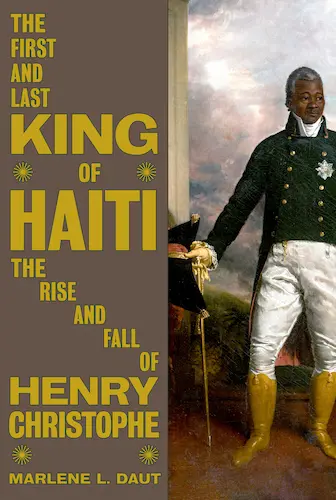
Portrait of Henry Christophe: A Haitian King’s Rise and Legacy
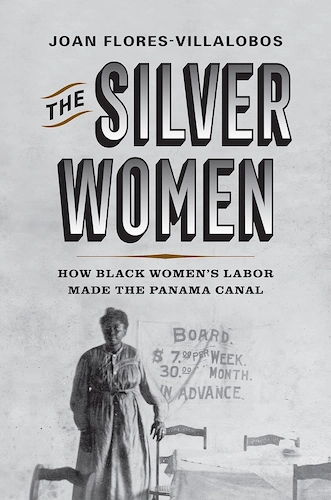
Cover of the book The Silver Women: How Black Women’s Labor Made the Panama Canal
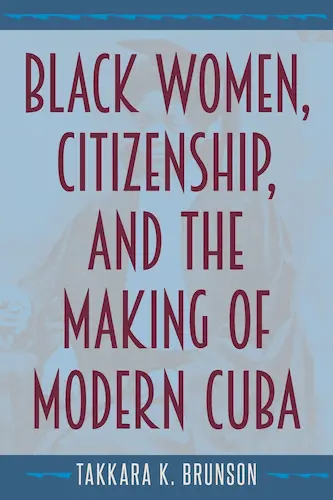
Cover of Takkara K. Brunson's Black Women, Citizenship, and the Making of Modern Cuba (University Press of Florida, 2021), about the role Afro-Cuban women played in shaping modern Cuban identity.
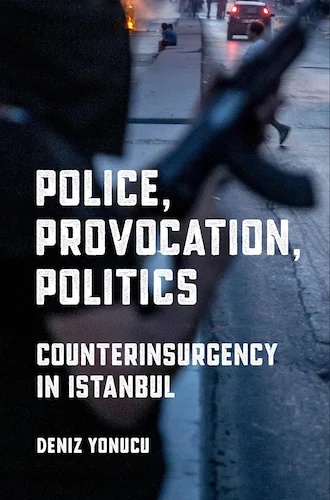
Cover of the book_Police, Provocation, Politics: Counterinsurgency in Istanbulb (policing)

DON’T MISS AN ARTICLE

We don’t spam! Read our privacy policy for more info.

Check your inbox or spam folder to confirm your subscription.

TAGGED:History

Sign Up For Our Newsletter

Keep up with our latest work

Check your inbox or spam folder to confirm your subscription.

By signing up, you agree to our Terms of Use and acknowledge the data practices in our Privacy Policy. You may unsubscribe at any time.
Share This Article
Facebook Pinterest Whatsapp Whatsapp LinkedIn Email Copy Link Print
Previous Article Cover of the book Resisting-Change-in-Suburbia Asian Immigration and the Myth of Suburban Stability
Next Article Heritage in War: The reconstructed Old Bridge of Mostar, originally built in the 16th century, was destroyed during the Bosnian War in 1993 and rebuilt in 2004 as a symbol of reconciliation and cultural heritage preservation. Heritage in War and Peace: An Ever-Growing Field

Latest

Worlds end : A boat left stranded on cracked earth, its water gone. A small, literal picture of what it means when a world ends. Photo by Pijarn Jangsawang, public domain.

What Happens When Worlds End: A Perturbed System

Susannah Crockford
By
Susannah Crockford
School in USA
Slow Violence: Rethinking Schools as Democratic Institutions
Ranita Ray
By
Ranita Ray
Pieter van Mol, Diogenes with His Lantern Looking for an Honest Man, 17th century. Jacqui Safra Collection. Public domain.
The Honesty Crises We Are Confronting Today
Christian B. Miller
By
Christian B. Miller

Distinguished Scholars

Jeremy Black
Distinguished Fellow at the Center for History and Strategy, Hillsdale College. A British historian and prolific author of over 190...
Melissa B. Jacoby
Graham Kenan Distinguished Professor of Law at the University of North Carolina at Chapel Hill, she wrote over fifty articles...
Michael Patrick Lynch
Provost Professor of the Humanities and Board of Trustees Distinguished Professor at the University of Connecticut. His new book is...
Gennifer Weisenfeld
Walter H. Annenberg Distinguished Professor at Duke University. She specializes in modern Japanese art, design, and visual culture. Her books...
Merry Wiesner-Hanks
Distinguished Professor Emerita at the University of Wisconsin-Milwaukee. She is the author or editor of forty books that have been...

Partner With Us

Reach a global academic audience in English, French, and Spanish.

Explore partnerships

Read in 200+ countries and territories by scholars, students, and engaged citizens.

Dont' Miss

Pericles addresses the Athenian assembly from the Pnyx, delivering the funeral oration Thucydides renders as the definitive statement of Athenian democratic self-understanding — the speech Smith gestures toward when he names Pericles among history's masters of persuasion. Philipp Foltz, Pericles' Funeral Oration (Perikles hält die Leichenrede), 1852. Public domain.

Democracy and the Art of Rhetoric

Steven B. Smith
By
Steven B. Smith

Queer Making: What Does It Feel Like to Make a Work of Art?

Karl Whittington
By
Karl Whittington

Epistemic Ecology: Thinking for Ourselves Together

Catherine Z. Elgin
By
Catherine Z. Elgin

How Emotions Shape Climate Action: Barriers and Agency

Debra Davidson
By
Debra Davidson

How Institutional Cooperation Enables Intelligence Competition

Jon R. Lindsay
By
Jon R. Lindsay

You Might Also Like

Cover of the book Supremacy.AI, ChatGPT by Parmy Olson.
Laureates

AI Supremacy and the Power Behind the Machines

8 Min Read
Portrait of Henry Christophe: A Haitian King’s Rise and Legacy
Laureates

Henry Christophe: Haiti’s Revolutionary King

3 Min Read
cover of The Creole Archipelago: Race and Borders in the Colonial Caribbean
Laureates

Rethinking Colonial Caribbean History

7 Min Read
A Black woman holds a banner listing victims of police violence during a protest in the United States. Her mask features the faces of Black individuals killed by police, including George Floyd.
BooksHuman Rights

Black Women and the Making of Human Rights

17 Min Read
Politics and Rights Review
ISSN 2818-4610
  • Resources
  • Guidelines for Authors
  • Terms and Conditions
  • Privacy Policy
  • Menu
  • Politics
  • Human Rights
  • Books
  • About
  • Partner With Us
  • en_US
  • ISSN 2818-4610
  • Contact

[email protected]

LinkedInFollow
BlueskyFollow
RSS FeedFollow
Politics and Rights Review is licensed under a Creative Commons Attribution-NonCommercial-NoDerivs License (CC BY-NC-ND), except where otherwise noted. Some links on this site are affiliate links. We may earn a commission from qualifying purchases made through these links, at no additional cost to you. This helps support the mission of Politics and Rights Review.
Welcome Back!

Sign in to your account

Username or Email Address
Password

Lost your password?