Politics and Rights Review connects academic knowledge with society, uniquely synthesizing clarity and rigor in a way that appeals to both academic and non-academic audiences.
  • Politics
    • Analysis & Theories
    • Democracy & Human Rights
    • Environment & Sustainability
    • International Relations
    • Political History
    • Opinion & Insights
    • Politics & Religion
    • Technology
  • Books
  • About
    • Academic Advisory Board
    • Contributors
    • Guidelines for Authors
  • Partner With Us
  • en_US
    • fr_FR
    • es_ES
  • ISSN 2818-4610
Reading: Unveiling the Paradoxes of Emancipation in Colombia
Share
Politics and Rights ReviewPolitics and Rights Review
Font ResizerAa
Search
  • Politics
    • Analysis & Theories
    • Democracy & Human Rights
    • Environment & Sustainability
    • International Relations
    • Political History
    • Opinion & Insights
    • Politics & Religion
    • Technology
  • Books
  • About
    • Academic Advisory Board
    • Contributors
    • Guidelines for Authors
  • Partner With Us
  • en_US
    • fr_FR
    • es_ES
  • ISSN 2818-4610
Have an existing account? Sign In
Follow US
Politics and Rights Review is licensed under a Creative Commons Attribution-NonCommercial-NoDerivs License (CC BY-NC-ND), except where otherwise noted.
Politics and Rights Review > Laureates > Unveiling the Paradoxes of Emancipation in Colombia
Laureates

Unveiling the Paradoxes of Emancipation in Colombia

P&RR
P&RR
Published: April 24, 2025
Share
SHARE

Yesenia Barragan’s Freedom’s Captives: Slavery and Gradual Emancipation on the Colombian Black Pacific (Cambridge University Press, 2021), winner of the 2022 Wesley-Logan Prize in African Diaspora History, is a pivotal contribution to the historiography of abolition in Latin America. Barragan’s work meticulously examines the Colombian Free Womb Law of 1821, situating it within the broader Atlantic abolitionist movement. Her study illuminates how this law, ostensibly designed to phase out slavery, paradoxically entrenched new forms of racial governance, perpetuating de facto servitude under the guise of legal freedom.
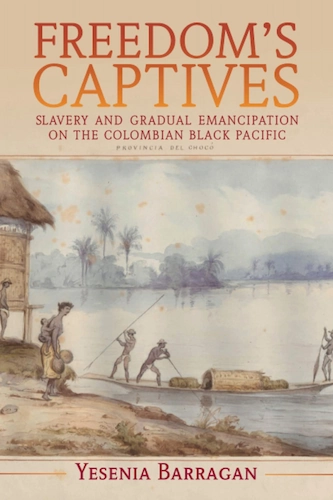
Cover of the book Freedom's Captives in Colombia

Barragan argues that the gradual emancipation model constituted a modern mechanism of racial control, where “free” children born to enslaved mothers remained bound to their mother’s masters until adulthood. This legal framework fostered what she terms “racial governance,” embedding systemic inequalities that outlived formal abolition in 1852. Through detailed archival research, she uncovers the contradictions of liberal freedom—how it simultaneously promised emancipation while institutionalizing captivity.

The book is organized into three interlinked parts. The first section explores the socio-economic fabric of the Colombian Black Pacific, focusing on regions like Chocó, where enslaved and free Black communities navigated autonomy within oppressive structures. Barragan’s ethnographic lens reveals how geography and local economies shaped resistance and survival strategies. The second part delves into the legal and political landscapes that birthed the Free Womb Law, highlighting the influence of revolutionary anti-slavery rhetoric juxtaposed against entrenched slaveholder interests. The final section scrutinizes the aftermath of abolition, detailing how former slaves grappled with systemic barriers that restricted genuine autonomy.

One of the book’s significant strengths lies in its interdisciplinary approach, blending legal history, political theory, and cultural studies. Barragan’s engagement with concepts from scholars like Saidiya Hartman enriches her analysis of the archival silences surrounding enslaved individuals’ lived experiences. Her narrative reconstructs these lives, offering a profound critique of the liberal promises of freedom that often masked continued exploitation.

Freedom’s Captives challenges conventional abolition narratives by exposing the complexities and contradictions inherent in gradual emancipation policies. It is an essential read for scholars of Latin American history, African diaspora studies, and human rights, providing critical insights into the enduring legacies of slavery in shaping modern racial and social hierarchies.

For those interested in understanding the nuanced history of abolition and its afterlives, Barragan’s work is not just an academic milestone but a compelling call to reassess how we define and recognize freedom. The book is available here.

Explore More Award-Winning Books
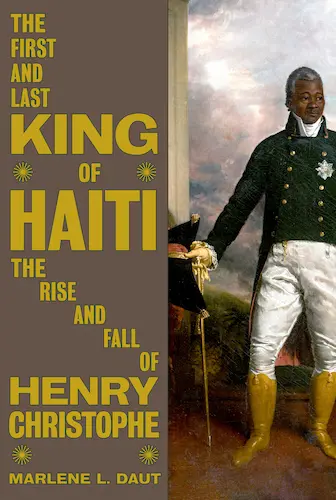
Portrait of Henry Christophe: A Haitian King’s Rise and Legacy
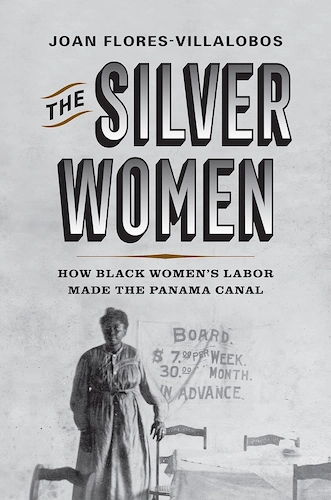
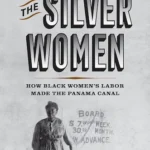
Cover of the book The Silver Women: How Black Women’s Labor Made the Panama Canal
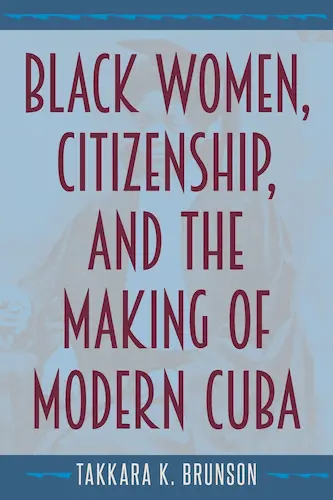
Cover of Takkara K. Brunson's Black Women, Citizenship, and the Making of Modern Cuba (University Press of Florida, 2021), about the role Afro-Cuban women played in shaping modern Cuban identity.
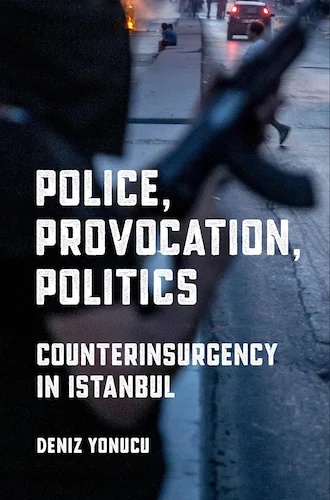
Cover of the book_Police, Provocation, Politics: Counterinsurgency in Istanbulb (policing)

DON’T MISS AN ARTICLE

We don’t spam! Read our privacy policy for more info.

Check your inbox or spam folder to confirm your subscription.

TAGGED:Latin AmericaPolitical History

Sign Up For Our Newsletter

Keep up with our latest work

Check your inbox or spam folder to confirm your subscription.

By signing up, you agree to our Terms of Use and acknowledge the data practices in our Privacy Policy. You may unsubscribe at any time.
Share This Article
Facebook Pinterest Whatsapp Whatsapp LinkedIn Email Copy Link Print
Previous Article The image shows soldiers moving quickly up a sandy hill, appearing to be in a tactical operation. The uniforms suggest they belong to the Israel Defense Forces (IDF), aligning with ongoing tensions in the Israel-Iran conflict. Israel-Iran Conflict: Escalation, Nuclear Strategy, Global Impact
Next Article Cover of the book The Silver Women: How Black Women’s Labor Made the Panama Canal West Indian Women and the Hidden History of the Panama Canal

Latest

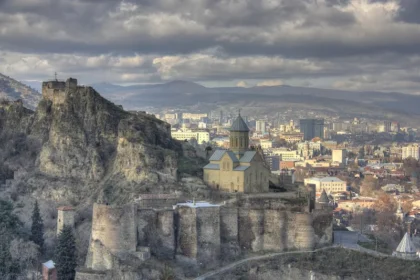
Tbilisi, the capital of Georgia, seen from Narikala Fortress. Situated in the South Caucasus, between Russia and Turkey, the country has been a focus of competing Russian and Western influence since the end of the Soviet Union in 1991. Photo: George Melashvili, CC BY-SA.

The War for Georgia’s Hearts and Minds

Vladimir Liparteliani
By
Vladimir Liparteliani
Small Talk _Whispers in the Pews examines the conversations churchgoers avoid, and how that silence shapes their politics.
The Political Power of Small Talk in Evangelical Churches
Amy McDowell
By
Amy McDowell
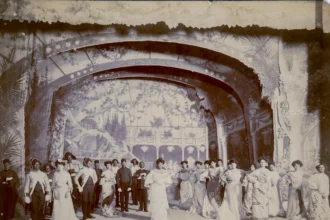
Black Performance Under Empire and Anti-Blackness
Cheryl Thompson
By
Cheryl Thompson

Distinguished Scholars

Jeremy Black
Distinguished Fellow at the Center for History and Strategy, Hillsdale College. A British historian and prolific author of over 190...
Melissa B. Jacoby
Graham Kenan Distinguished Professor of Law at the University of North Carolina at Chapel Hill, she wrote over fifty articles...
Michael Patrick Lynch
Provost Professor of the Humanities and Board of Trustees Distinguished Professor at the University of Connecticut. His new book is...
Gennifer Weisenfeld
Walter H. Annenberg Distinguished Professor at Duke University. She specializes in modern Japanese art, design, and visual culture. Her books...
Merry Wiesner-Hanks
Distinguished Professor Emerita at the University of Wisconsin-Milwaukee. She is the author or editor of forty books that have been...

Partner With Us

Reach a global academic audience in English, French, and Spanish.

Explore partnerships

Read in 200+ countries and territories by scholars, students, and engaged citizens.

Dont' Miss

A potter's hands shaping clay on the wheel: the kind of embodied, uncodifiable skill that lies at the heart of tacit knowledge.

Beyond the Facts: Tacit Knowledge in an AI World

James W. Cortada
By
James W. Cortada

What Happens When Worlds End: A Perturbed System

Susannah Crockford
By
Susannah Crockford

Reflections on the Effect of Excessive Private Power

Mordecai Kurz
By
Mordecai Kurz

Are We All Nationalists Now? 

Siniša Malešević
By
Siniša Malešević

Slow Violence: Rethinking Schools as Democratic Institutions

Ranita Ray
By
Ranita Ray

You Might Also Like

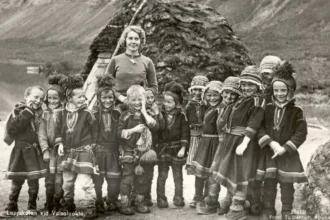
Sami children in traditional dress at a nomad school, showcasing a pivotal aspect of Sami identity through education and cultural attire.
Political History

Sami Identity: Beyond Myths, Embracing Evolving Legacies

11 Min Read
A bustling street scene in Aosta, representing the vibrant social tapestry where linguistic diversity thrives. People from various walks of life engage in daily activities, potentially conversing in a multitude of languages and dialects that echo the region's rich cultural heritage
Political History

Linguistic Diversity in Italy’s Alps: A Socio-Political Analysis

14 Min Read
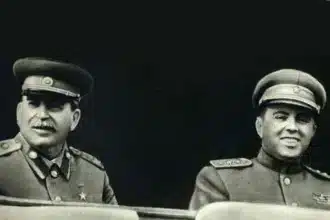
Photograph depicting General Secretary Enver Hoxha of Albania and First Secretary of the Soviet Union's Communist Party Joseph Stalin, standing together in Moscow, Soviet Union. The image represents a significant moment in war narratives, capturing the alliance and political dynamics between the two communist leaders.
Political History

War Narratives: The Bedrock of Albania’s Totalitarian Past

16 Min Read
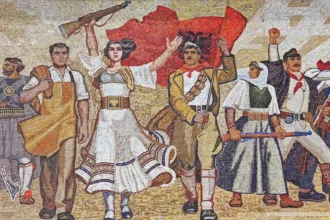
Socialist-style mural depicting a group of Albanian agitators in a march, with a central female figure raising a rifle. The characters wear traditional and work attire, representing various social classes united, with a red flag featuring the double-headed eagle, a symbol of Albania, in the background. The agitators move forward with determined expressions, emphasizing the revolutionary spirit and the struggle for freedom.
Political History

Agitators in Albanian Communism: Face-to-face propaganda

13 Min Read
Politics and Rights Review
ISSN 2818-4610
  • Resources
  • Guidelines for Authors
  • Terms and Conditions
  • Privacy Policy
  • Menu
  • Politics
  • Books
  • About
  • Partner With Us
  • en_US
  • ISSN 2818-4610
  • Contact

[email protected]

LinkedInFollow
BlueskyFollow
RSS FeedFollow
Politics and Rights Review is licensed under a Creative Commons Attribution-NonCommercial-NoDerivs License (CC BY-NC-ND), except where otherwise noted. Some links on this site are affiliate links. We may earn a commission from qualifying purchases made through these links, at no additional cost to you. This helps support the mission of Politics and Rights Review.
Welcome Back!

Sign in to your account

Username or Email Address
Password

Lost your password?