
On November 3, Americans will elect all 435 members of the House of Representatives, about a third of the Senate, and governors in many states. Republicans hold a majority in the Senate (53 of 100 seats) and in the House (218 of 435), and Democrats are trying to win at least one chamber.
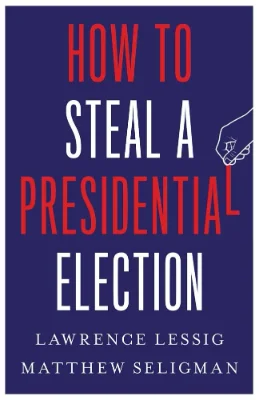
Beneath that contest runs a second one, about election integrity: who guards the count when President Donald Trump has spent six years promoting the false claim that the 2020 election was stolen? This essay argues that election integrity cannot rest on any single referee, however honest.
Election integrity is not a verdict that one trusted official can deliver; it is a result that rivals produce by checking one another. In the United States, counties, states, courts, parties, and auditors each hold part of the count and can expose one another’s errors or abuses. That divided system, often mocked as chaotic, supplies the rivalry. But rivalry protects the count only when officials refuse improper pressure, and the 2026 midterms will test whether they do.
Fifty States, Thousands of Counting Offices
Start with who actually runs an American election. As Richard Hasen explains in a chapter of Our Nation at Risk, states do not run elections directly. They delegate the work to thousands of local jurisdictions, usually counties, which register voters, staff polling places, process absentee ballots, and tabulate votes. States set voter qualifications for congressional elections and the rules for choosing presidential electors.
Election integrity is not a verdict that one trusted official can deliver; it is a result that rivals produce by checking one another.
The president has no place in that chain. Trevor Morrison observes, in another chapter of the same volume, that neither the Constitution nor any federal statute gives the president a direct role in administering federal elections. His influence runs through indirect channels: executive agencies such as the Department of Justice, emergency powers, and his ability to persuade others.
Persuasion has limits, Morrison adds. A president who tries to change an election outcome fails unless his advisers, executive officials, and perhaps state and local officials agree to follow his orders. Morrison also names a problem that affects every election system: election rules are written by elected officials who are often candidates in those same elections, so incumbents may bend the rules to their own advantage.
Decentralization has costs. Voters face different rules depending on where they live, and counties report results at different speeds. Those differences feed suspicion about election integrity, and suspicion is the raw material of fraud claims. The question is whether the remedy is a single national authority or common minimum standards that many administrators apply.

Executive Order 14399 Meets the Courts
This division of power matters for 2026. On March 31, the president signed Executive Order 14399, titled “Ensuring Citizenship Verification and Integrity in Federal Elections.” It directs agencies to send states lists of confirmed citizens, tells the Postal Service to restrict how mail ballots are handled, and calls for withholding federal funds from noncompliant states where the law allows. Critics see an executive reaching into a field the Constitution assigns to others.
Courts have blocked parts of this effort. In June, Judge Denise Casper permanently blocked a 2025 order on proof of citizenship and mail ballots, writing that the Constitution gives the president no specific powers over elections. In September, a judge enjoined a Postal Service rule that implemented the 2026 order, and the Supreme Court declined to lift that injunction.
Disputing the Count: Lessons From 2020
After the 2020 election, the president pressed Georgia Secretary of State Brad Raffensperger to “find” the 11,870 votes he needed to win the state. The president and his allies also wanted state officials to declare irregularities, which would let Republican legislators in states that Joe Biden won send Congress alternative slates of electors. They failed to persuade state officials in many states.
Contested elections are not new. Karen Greenberg notes in the volume’s opening chapter that the elections of 1800, 1824, 1876, and 2000 all produced serious disputes over who had won. The five candidates who won the popular vote but lost the Electoral College eventually conceded, though some kept alleging unfairness. In 2020, she argues, a sitting president tried to overturn the result through illegal overreaches involving Congress, the courts, and the White House.
Why do claims about election integrity turn so quickly into partisan fights? A study of the 2020 election by Kenneth Vail and colleagues offers part of the answer. Before the vote, supporters of both candidates were only mildly worried about integrity and were willing to accept the outcome. Once Biden was projected the winner, Trump supporters disputed the election’s integrity and began to support challenges to the result, while Biden supporters affirmed it.
That finding has a practical consequence. If voters judge integrity by whether their side won, whoever loses will accuse any single referee of bias. Asking citizens to trust one official therefore asks the losing side for something it will not give. A system in which each side can watch the other, and independent parties verify the arithmetic, can earn trust that does not depend on who won.
One Referee or Many Rivals?
Two theories of election integrity compete here. The referee theory holds that one authority, whether Congress, a federal agency, or the president, should set uniform standards and enforce them. Its appeal is real: voters in Texas and Vermont would follow the same rules, and errors could be corrected from the top. Its weakness is that whoever controls the referee can use it for partisan ends.
The rivals theory holds that integrity emerges when power over the count is divided and each holder has reason to watch the others. This is an old republican idea. In Federalist No. 51, Publius wrote that “ambition must be made to counteract ambition.” Applied to elections, county clerks, state officials, party observers, courts, and auditors each check the others, so no single faction can both run the count and announce the winner.
Verification shows why redundancy is a strength. Charles Stewart reports in his chapter that machines counted over 99 percent of ballots in the 2020 presidential election. Because software always carries some uncertainty, he argues, elections need independent verification, such as postelection audits and paper ballots, instead of blind trust in the machines. The audits of the 2020 election, he notes, found counting errors that were vanishingly small.
Social media platforms have also acted as guardians of the count. Christian Katzenbach, Vasilisa Kuznetsova, and Elizabeth Dubois compared the election policies of major platforms and found three phases: rules aimed at concrete threats (2018 to 2020), affirmed responsibility for civic processes (2020 to 2022), and a profound backlash since 2022. Platforms’ willingness to play that role has therefore varied over time.
The Mexican Objection: Why Not One Independent Referee?
The strongest objection comes from outside the United States. Mexico entrusts elections to a single autonomous body, the National Electoral Institute (INE), which is insulated from the executive. If one nonpartisan referee can work there, why does the United States protect election integrity with fifty state systems instead of one independent national authority? The question deserves a direct answer.
The answer begins with how the INE survived. In 2023, Mexico’s Congress passed an electoral reform, known as Plan B, that cut the institute’s budget and curtailed its autonomy. On June 22, 2023, Mexico’s Supreme Court struck down the second part of the reform by a 9-2 vote, ruling that it had been rushed through the lower house without adequate debate.
In other words, the independent referee survived because a rival, the Supreme Court, stood in the way of the government. The INE model does not escape the logic of rivals; it moves the rivalry into the courts. Independent central banks, which are also insulated from elected officials, face a comparable test of democratic legitimacy.
Two obstacles stand in the way of an American INE. The Constitution gives states and Congress, not the president, authority over federal elections, so a national authority would have to come from Congress. And an authority created in a polarized moment would be captured by whichever party controlled it, or at least seen as captured.
This essay’s own proposal, which is an opinion and not an established finding, is more modest: Congress, not the president, sets minimum federal standards; states and counties administer them; and bipartisan observers and routine audits check the results. That keeps the rivals in place while narrowing the unevenness that fuels distrust.
When the Rivals Share a Party
The rivals theory has a weak point: states can be bulwarks against election subversion or facilitators of it. In 2020, the president’s complaints about fraud led some states to pull back from pandemic-era efforts to make voting easier. Rivalry works only if the rivals have different interests. When one party controls the governor, the legislature, and the secretary of state, the check among them weakens.
This is the best objection to the argument here, and it has no tidy answer. Divided power protects election integrity only while someone in the chain is willing to say no: a county clerk, a canvassing board member, a judge. Structure creates the opportunity for refusal, but people supply the refusal. Election integrity therefore needs institutions that divide power and a culture that rewards officials who certify honest results under pressure from their own side.
That is why the courts matter so much in 2026. Judges are the rival of last resort. In 2022, court orders were needed to make county boards in Otero County, New Mexico, and Cochise County, Arizona, certify the results of fair elections. Federal judges also have life tenure, so the executive cannot remove them at will.
If the courts keep treating election law as a matter of statute and constitutional text, the system keeps a check even where one party controls the other officials. If they stop, the other rivals will carry more weight than they can bear.
What the 2026 Midterms Will Test
The public record reviewed for this essay shows efforts to change election rules, not manipulated counts. Those efforts include a 2026 executive order, a Postal Service rule implementing it that a court enjoined, and a 2025 order that a court permanently blocked. The president has also questioned election results since 2020. Nobody can yet say what will happen on November 3, and this essay does not predict it.
Four things are worth watching. First, whether county and state officials resist pressure on certification, as many state officials did in 2020 when the president failed to persuade them. Second, whether courts keep restraining executive moves on elections. Third, whether the losing side contests results through courts and recounts rather than pressure on officials. Fourth, whether audits and bipartisan observers can do their work.
Each is a check held by a different hand, and election integrity is the name for what happens when all of them hold. The same logic applies to any claim about election integrity, from any party. Ask not only who guards the count but how many independent hands touch it, and whether one faction controls all of them.
Legitimacy is tested in defeat. Where power is divided, the loser can check the count through rivals and accept a defeat that is real. Where power is concentrated, even honest officials cannot convince a skeptical loser that the count was fair. Citizens do not need a perfect referee; they need rivals.
Selected Readings