Politics and Rights Review connects academic knowledge with society, uniquely synthesizing clarity and rigor in a way that appeals to both academic and non-academic audiences.
  • Politics
    • Analysis & Theories
    • Culture & Politics
    • Democracy & Authoritarianism
    • Environment & Sustainability
    • Global North
    • Political History
    • Opinion & Insights
    • Politics & Religion
    • Technology
    • The Politics Brief
  • Human Rights
  • Books
  • About
    • Academic Advisory Board
    • Contributors
    • Guidelines for Authors
  • Partner With Us
  • en_US
    • fr_FR
    • es_ES
  • ISSN 2818-4610
Reading: Patchwork Freedoms: How Enslaved People Won Their Rights
Share
Politics and Rights ReviewPolitics and Rights Review
Font ResizerAa
Search
  • Politics
    • Analysis & Theories
    • Culture & Politics
    • Democracy & Authoritarianism
    • Environment & Sustainability
    • Global North
    • Political History
    • Opinion & Insights
    • Politics & Religion
    • Technology
    • The Politics Brief
  • Human Rights
  • Books
  • About
    • Academic Advisory Board
    • Contributors
    • Guidelines for Authors
  • Partner With Us
  • en_US
    • fr_FR
    • es_ES
  • ISSN 2818-4610
Have an existing account? Sign In
Follow US
Politics and Rights Review is licensed under a Creative Commons Attribution-NonCommercial-NoDerivs License (CC BY-NC-ND), except where otherwise noted.
Politics and Rights Review > Laureates > Patchwork Freedoms: How Enslaved People Won Their Rights
Laureates

Patchwork Freedoms: How Enslaved People Won Their Rights

P&RR
P&RR
Published: October 5, 2025
Share
SHARE

Enslaved People and Legal Resistance in Patchwork Freedoms

How did enslaved and free people of African descent navigate oppressive legal systems to carve out spaces of autonomy? Patchwork Freedoms by Adriana Chira, winner of the James A. Rawley Prize in Atlantic History (2023) and the Peter Gonville Stein Book Award (2023), offers a profound exploration of emancipation strategies in 19th-century Cuba. Published by Cambridge University Press, this critically acclaimed book reveals how Afro-descendant communities in Santiago de Cuba challenged colonial power through legal maneuvers and customary rights.

Contents
  • Enslaved People and Legal Resistance in Patchwork Freedoms
  • How Enslaved People Used the Law to Win Freedom
  • The Lasting Impact of Enslaved People’s Legal Struggles

How Enslaved People Used the Law to Win Freedom

Unlike conventional histories of abolition that center on political decrees and elite decision-making, Patchwork Freedoms shifts the focus to everyday legal battles fought by Afro-descendants.
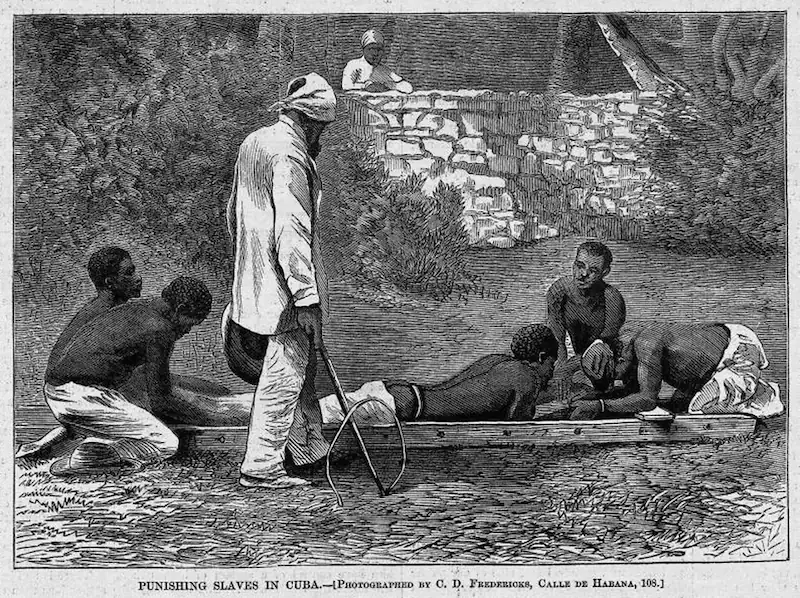
Enslaved people, by Harper's Weekly (Nov. 28, 1868) vol.12, p. 753.
Enslaved people, by Harper’s Weekly (Nov. 28, 1868) vol.12, p. 753.

Chira meticulously examines court cases, municipal records, and community testimonies to argue that freedom was not granted from above but painstakingly assembled from below. This thesis aligns with recent historiographical debates on “emancipation from below,” emphasizing the agency of marginalized groups rather than the benevolence of colonial authorities.
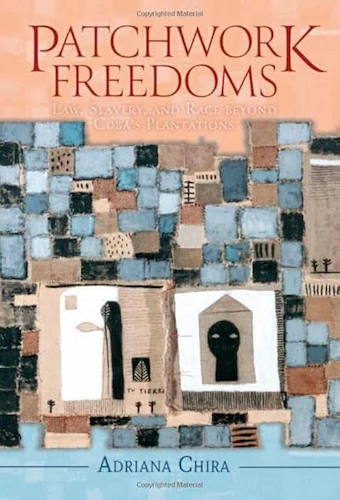
Cover-of-the-book-Patchwork-Freedoms_Law-Slavery-and-Race-beyond-Cubas-Plantations-by-Adriana-Chira

The book explores key themes such as manumission through coartación (self-purchase in installments), customary rights, and local legal autonomy. Chira illustrates how enslaved and free people in Santiago de Cuba strategically used colonial courts, negotiating with local officials to expand their rights incrementally. As she demonstrates, these legal struggles shaped broader political movements, influencing Cuba’s independence wars and the eventual abolition of slavery in the 1880s.

One of the book’s most compelling arguments is that the legal culture in Santiago differed significantly from other plantation societies. Unlike the rigid racial hierarchies in places like Louisiana or Jamaica, Santiago’s communities leveraged vernacular legalism, where oral contracts, local reputations, and community networks played a decisive role in legal outcomes. This insight challenges the dominant narrative that legal systems uniformly reinforced racial oppression and instead highlights the fluidity and contestation within colonial law.

Furthermore, Patchwork Freedoms contributes to contemporary discussions on racial justice and legal activism. By illustrating how marginalized communities used the law both as a tool of resistance and a site of struggle, the book resonates with current debates on systemic inequality and grassroots advocacy. In an era where legal battles continue to shape racial and economic justice, Chira’s work offers historical depth to ongoing struggles.

The Lasting Impact of Enslaved People’s Legal Struggles

Patchwork Freedoms forces us to reconsider what emancipation truly meant for those who lived through it. Rather than a singular event marked by legislative acts, freedom was an uneven, contested, and locally negotiated process. Chira’s meticulous research and engaging narrative make this book essential for scholars of Atlantic history, legal studies, and Black resistance.

For readers interested in the complexities of historical emancipation and the power of legal activism, Patchwork Freedoms is an indispensable addition to any collection. The book is available here.

Explore More Award-Winning Books

Portrait of Henry Christophe: A Haitian King’s Rise and Legacy
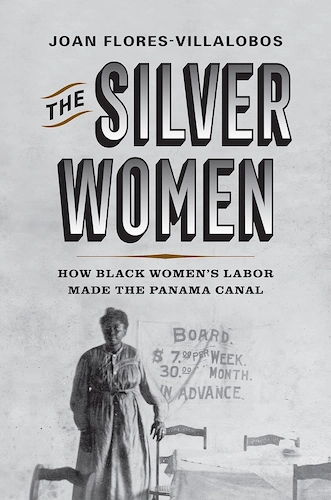
Cover of the book The Silver Women: How Black Women’s Labor Made the Panama Canal
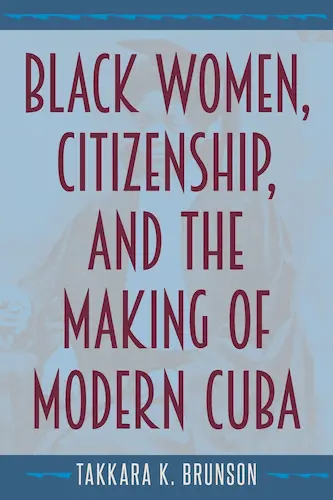
Cover of Takkara K. Brunson's Black Women, Citizenship, and the Making of Modern Cuba (University Press of Florida, 2021), about the role Afro-Cuban women played in shaping modern Cuban identity.
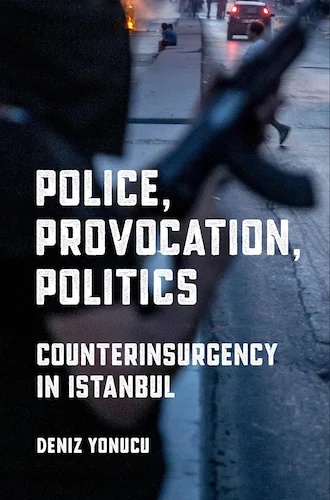
Cover of the book_Police, Provocation, Politics: Counterinsurgency in Istanbulb (policing)

DON’T MISS AN ARTICLE

We don’t spam! Read our privacy policy for more info.

Check your inbox or spam folder to confirm your subscription.

TAGGED:RacismSlavery

Sign Up For Our Newsletter

Keep up with our latest work

Check your inbox or spam folder to confirm your subscription.

By signing up, you agree to our Terms of Use and acknowledge the data practices in our Privacy Policy. You may unsubscribe at any time.
Share This Article
Facebook Pinterest Whatsapp Whatsapp LinkedIn Email Copy Link Print
Previous Article A political street mural in San Diego with bold red, black, and beige tones. It features a woman holding a newspaper questioning climate denial, propaganda-style posters, and imagery related to surveillance and control. The artwork highlights free speech, censorship, and political power dynamics. Does Free Speech Have a Future?
Next Article A New History of Atlantic Slavery from the Global South

Latest

A potter's hands shaping clay on the wheel: the kind of embodied, uncodifiable skill that lies at the heart of tacit knowledge.

Beyond the Facts: Tacit Knowledge in an AI World

James W. Cortada
By
James W. Cortada
A public ceremony in Latvia where participants carry national flags and white flowers, illustrating the rituals through which nationhood is symbolically reproduced in public life.
Are We All Nationalists Now? 
Siniša Malešević
By
Siniša Malešević
School in USA
Slow Violence: Rethinking Schools as Democratic Institutions
Ranita Ray
By
Ranita Ray

Distinguished Scholars

Jeremy Black
Distinguished Fellow at the Center for History and Strategy, Hillsdale College. A British historian and prolific author of over 190...
Melissa B. Jacoby
Graham Kenan Distinguished Professor of Law at the University of North Carolina at Chapel Hill, she wrote over fifty articles...
Michael Patrick Lynch
Provost Professor of the Humanities and Board of Trustees Distinguished Professor at the University of Connecticut. His new book is...
Gennifer Weisenfeld
Walter H. Annenberg Distinguished Professor at Duke University. She specializes in modern Japanese art, design, and visual culture. Her books...
Merry Wiesner-Hanks
Distinguished Professor Emerita at the University of Wisconsin-Milwaukee. She is the author or editor of forty books that have been...

Partner With Us

Reach a global academic audience in English, French, and Spanish.

Explore partnerships

Read in 200+ countries and territories by scholars, students, and engaged citizens.

Dont' Miss

Pieter van Mol, Diogenes with His Lantern Looking for an Honest Man, 17th century. Jacqui Safra Collection. Public domain.

The Honesty Crises We Are Confronting Today

Christian B. Miller
By
Christian B. Miller

Democracy and the Art of Rhetoric

Steven B. Smith
By
Steven B. Smith

Queer Making: What Does It Feel Like to Make a Work of Art?

Karl Whittington
By
Karl Whittington

Epistemic Ecology: Thinking for Ourselves Together

Catherine Z. Elgin
By
Catherine Z. Elgin

How Emotions Shape Climate Action: Barriers and Agency

Debra Davidson
By
Debra Davidson

You Might Also Like

c0ver of the book Seeing Us in Them
Laureates

How Group Empathy Can Transform Politics and Society

5 Min Read
A street view of Harlem, New York—an urban space that, like many across the Americas, has borne witness to shifting racial and communal boundaries shaped by patterns of absorption, mobility, and exclusion.
Books

What Gets Absorbed? Jews, Race, and Identity Across the Americas

13 Min Read
Cover of Takkara K. Brunson's Black Women, Citizenship, and the Making of Modern Cuba (University Press of Florida, 2021), about the role Afro-Cuban women played in shaping modern Cuban identity.
Laureates

How Afro-Cuban Women Shaped Modern Cuba

3 Min Read
cover of The Creole Archipelago: Race and Borders in the Colonial Caribbean
Laureates

Rethinking Colonial Caribbean History

7 Min Read
Politics and Rights Review
ISSN 2818-4610
  • Resources
  • Guidelines for Authors
  • Terms and Conditions
  • Privacy Policy
  • Menu
  • Politics
  • Human Rights
  • Books
  • About
  • Partner With Us
  • en_US
  • ISSN 2818-4610
  • Contact

[email protected]

LinkedInFollow
BlueskyFollow
RSS FeedFollow
Politics and Rights Review is licensed under a Creative Commons Attribution-NonCommercial-NoDerivs License (CC BY-NC-ND), except where otherwise noted. Some links on this site are affiliate links. We may earn a commission from qualifying purchases made through these links, at no additional cost to you. This helps support the mission of Politics and Rights Review.
Welcome Back!

Sign in to your account

Username or Email Address
Password

Lost your password?