Politics and Rights Review connects academic knowledge with society, uniquely synthesizing clarity and rigor in a way that appeals to both academic and non-academic audiences.
  • Politics
    • Analysis & Theories
    • Democracy & Human Rights
    • Environment & Sustainability
    • International Relations
    • Political History
    • Opinion & Insights
    • Politics & Religion
    • Technology
  • Books
  • About
    • Academic Advisory Board
    • Contributors
    • Guidelines for Authors
  • Partner With Us
  • en_US
    • fr_FR
    • es_ES
  • ISSN 2818-4610
Reading: The Politics of Black Death
Share
Politics and Rights ReviewPolitics and Rights Review
Font ResizerAa
Search
  • Politics
    • Analysis & Theories
    • Democracy & Human Rights
    • Environment & Sustainability
    • International Relations
    • Political History
    • Opinion & Insights
    • Politics & Religion
    • Technology
  • Books
  • About
    • Academic Advisory Board
    • Contributors
    • Guidelines for Authors
  • Partner With Us
  • en_US
    • fr_FR
    • es_ES
  • ISSN 2818-4610
Have an existing account? Sign In
Follow US
Politics and Rights Review is licensed under a Creative Commons Attribution-NonCommercial-NoDerivs License (CC BY-NC-ND), except where otherwise noted.
Politics and Rights Review > Laureates > The Politics of Black Death
Laureates

The Politics of Black Death

About Death’s Futurity, winner of the 2024 Modern Language Association William Sanders Scarborough Prize.

P&RR
P&RR
Published: October 5, 2025
Share
SHARE

Death’s Futurity, winner of the 2024 Modern Language Association William Sanders Scarborough Prize, examines how Black radical movements responded to state violence through visual culture, turning images of Black death into political tools for mobilization.

Contents
  • Photographic Fugitivity and the Politics of Black Death
  • Artistic Intervention and the Absence of Black Death

Focusing on the murders of Bobby Hutton, Fred Hampton, and George Jackson, the book argues that these deaths were not only acts of repression but also catalysts for resistance. Through a detailed analysis of political posters, journalistic media, and documentary films, the author traces how revolutionary imagery was deployed to challenge dominant narratives and assert alternative histories of struggle.

Photographic Fugitivity and the Politics of Black Death

A central argument in the book is the concept of “photographic fugitivity,” which captures the tension between visibility and erasure in representations of Black death. State violence seeks to render Black resistance invisible or criminal, but radical artists and activists countered this through a visual politics that reclaimed these deaths as revolutionary acts.
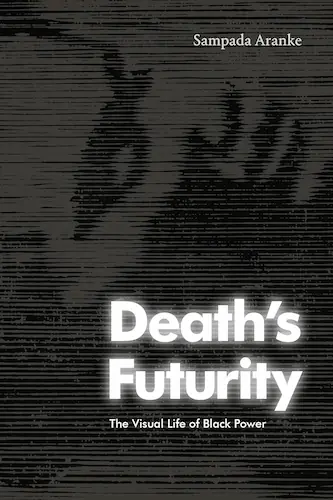
ccCover-of-the-book-Deaths-Futurity_-The-Visual-Life-of-Black-Power_Black-Death

The Black Panther Party, for instance, used its newspaper and other media to construct a counter-history that defied the state’s attempts to control the narrative. The author examines how images of Hutton, Hampton, and Jackson were reproduced, manipulated, and circulated to maintain their political presence even after their deaths.

The book also addresses the way documentary cinema functioned as a site of resistance. The Murder of Fred Hampton serves as a key case study, illustrating how film was used to document and expose state violence. By juxtaposing footage of Hampton’s activism with evidence of his assassination, the documentary builds a visual argument that refutes official state accounts.

This strategy, the book argues, extends beyond film into political posters, which often depicted Black revolutionaries as martyrs, drawing on both historical and religious iconography to frame their deaths as sacrifices for liberation.

Artistic Intervention and the Absence of Black Death

A particularly striking discussion focuses on George Jackson’s murder in San Quentin Prison. Unlike Hampton and Hutton, Jackson’s death was not widely photographed, leading to a different kind of visual politics. The absence of direct photographic evidence resulted in radical artists reimagining his image, creating speculative and symbolic representations that filled the gaps left by state censorship.

These artistic interventions, the book suggests, resonate with earlier anti-lynching activism, where the refusal to let violence disappear into silence was itself an act of defiance. By linking Black radical deaths to a broader genealogy of resistance, the book highlights the continuity between historical struggles against racial terror and contemporary abolitionist movements.

Beyond its historical analysis, Death’s Futurity engages with broader theoretical questions about the politics of seeing. It interrogates how Black death has been both spectacularized and suppressed, and how radical visual culture has worked to reclaim agency over these representations. The author situates these discussions within debates on race, surveillance, and the prison-industrial complex, making the book not only a historical study but also a critical intervention in contemporary discussions on carceral violence.

This book is an essential contribution to scholarship on Black radicalism, media studies, and abolitionist thought. It provides a nuanced and deeply researched exploration of how images shape political memory and resistance. For those interested in Black radicalism and visual culture, the book is available here.  

Explore More Award-Winning Books
Portrait of Henry Christophe: A Haitian King’s Rise and Legacy
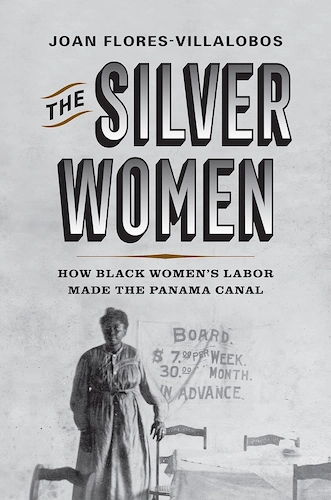
Cover of the book The Silver Women: How Black Women’s Labor Made the Panama Canal
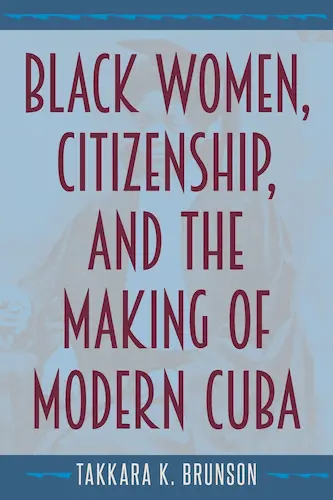
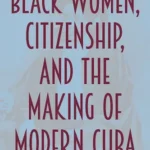
Cover of Takkara K. Brunson's Black Women, Citizenship, and the Making of Modern Cuba (University Press of Florida, 2021), about the role Afro-Cuban women played in shaping modern Cuban identity.
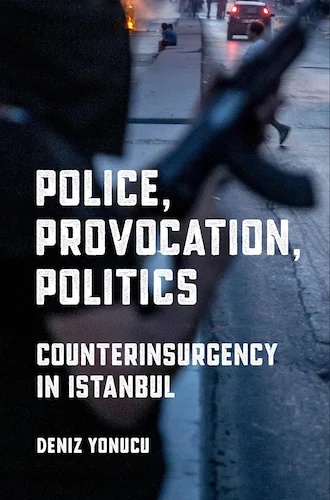
Cover of the book_Police, Provocation, Politics: Counterinsurgency in Istanbulb (policing)

DON’T MISS AN ARTICLE

We don’t spam! Read our privacy policy for more info.

Check your inbox or spam folder to confirm your subscription.

TAGGED:Racism

Sign Up For Our Newsletter

Keep up with our latest work

Check your inbox or spam folder to confirm your subscription.

By signing up, you agree to our Terms of Use and acknowledge the data practices in our Privacy Policy. You may unsubscribe at any time.
Share This Article
Facebook Pinterest Whatsapp Whatsapp LinkedIn Email Copy Link Print
Previous Article Cover of Takkara K. Brunson's Black Women, Citizenship, and the Making of Modern Cuba (University Press of Florida, 2021), about the role Afro-Cuban women played in shaping modern Cuban identity. How Afro-Cuban Women Shaped Modern Cuba
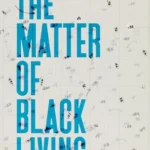
Next Article Cover-of-The-Matter-of-Black-Living-The-Aesthetic-Experiment-of-Racial-Data-1880–1930 The Limits of Data: Race, Representation, and Experimentation

Latest

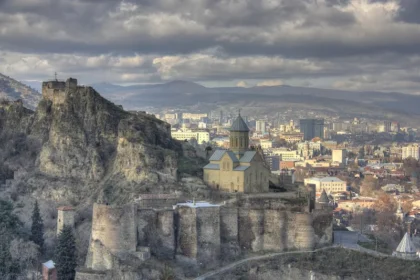
Tbilisi, the capital of Georgia, seen from Narikala Fortress. Situated in the South Caucasus, between Russia and Turkey, the country has been a focus of competing Russian and Western influence since the end of the Soviet Union in 1991. Photo: George Melashvili, CC BY-SA.

The War for Georgia’s Hearts and Minds

Vladimir Liparteliani
By
Vladimir Liparteliani
Small Talk _Whispers in the Pews examines the conversations churchgoers avoid, and how that silence shapes their politics.
The Political Power of Small Talk in Evangelical Churches
Amy McDowell
By
Amy McDowell
Black Performance Under Empire and Anti-Blackness
Cheryl Thompson
By
Cheryl Thompson

Distinguished Scholars

Jeremy Black
Distinguished Fellow at the Center for History and Strategy, Hillsdale College. A British historian and prolific author of over 190...
Melissa B. Jacoby
Graham Kenan Distinguished Professor of Law at the University of North Carolina at Chapel Hill, she wrote over fifty articles...
Michael Patrick Lynch
Provost Professor of the Humanities and Board of Trustees Distinguished Professor at the University of Connecticut. His new book is...
Gennifer Weisenfeld
Walter H. Annenberg Distinguished Professor at Duke University. She specializes in modern Japanese art, design, and visual culture. Her books...
Merry Wiesner-Hanks
Distinguished Professor Emerita at the University of Wisconsin-Milwaukee. She is the author or editor of forty books that have been...

Partner With Us

Reach a global academic audience in English, French, and Spanish.

Explore partnerships

Read in 200+ countries and territories by scholars, students, and engaged citizens.

Dont' Miss

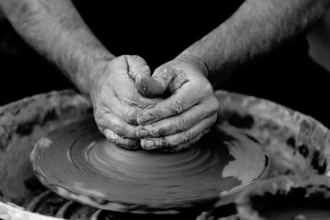
A potter's hands shaping clay on the wheel: the kind of embodied, uncodifiable skill that lies at the heart of tacit knowledge.

Beyond the Facts: Tacit Knowledge in an AI World

James W. Cortada
By
James W. Cortada

What Happens When Worlds End: A Perturbed System

Susannah Crockford
By
Susannah Crockford

Reflections on the Effect of Excessive Private Power

Mordecai Kurz
By
Mordecai Kurz

Are We All Nationalists Now? 

Siniša Malešević
By
Siniša Malešević

Slow Violence: Rethinking Schools as Democratic Institutions

Ranita Ray
By
Ranita Ray

You Might Also Like

Cover of the book The Silver Women: How Black Women’s Labor Made the Panama Canal
Laureates

West Indian Women and the Hidden History of the Panama Canal

3 Min Read
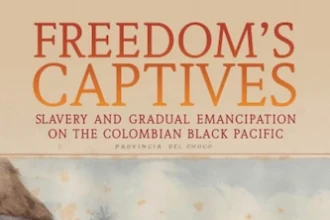
Cover of the book Freedom's Captives in Colombia
Laureates

Unveiling the Paradoxes of Emancipation in Colombia

3 Min Read
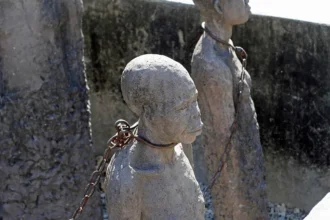
Microhistories of Africa: Statues at the Slave Market Memorial in Stone Town, Zanzibar, commemorating the victims of the transatlantic slave trade. Photo by Son of Groucho (CC BY).
BooksPolitical History

Microhistories and the African Past

16 Min Read
Colonialism-Cover of the book Ruling Emancipated Slaves and Indigenous Subjects
Laureates

3 Ways Colonialism Shaped Modern Inequality

4 Min Read
Politics and Rights Review
ISSN 2818-4610
  • Resources
  • Guidelines for Authors
  • Terms and Conditions
  • Privacy Policy
  • Menu
  • Politics
  • Books
  • About
  • Partner With Us
  • en_US
  • ISSN 2818-4610
  • Contact

[email protected]

LinkedInFollow
BlueskyFollow
RSS FeedFollow
Politics and Rights Review is licensed under a Creative Commons Attribution-NonCommercial-NoDerivs License (CC BY-NC-ND), except where otherwise noted. Some links on this site are affiliate links. We may earn a commission from qualifying purchases made through these links, at no additional cost to you. This helps support the mission of Politics and Rights Review.
Welcome Back!

Sign in to your account

Username or Email Address
Password

Lost your password?