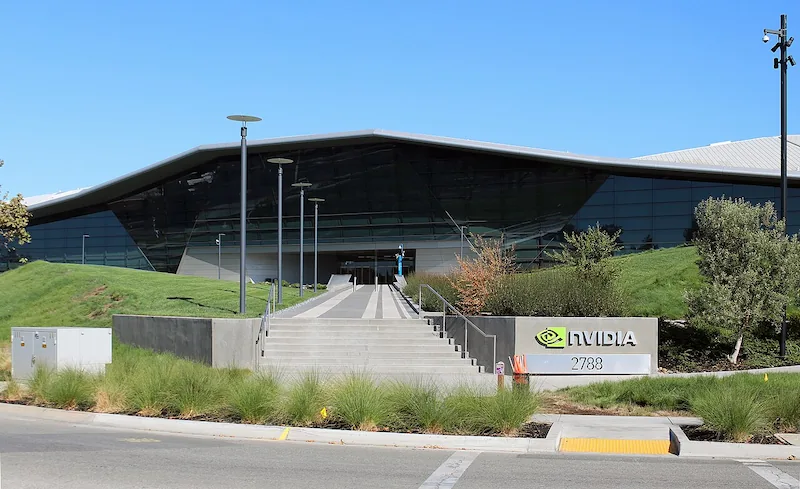
Political economists spent most of the twentieth century treating semiconductors as an unremarkable industrial input, no more strategic than steel or glass. That assumption has not survived the last decade. Large language models, data centers, and much of the world’s most advanced military hardware now run on a small number of chips designed in Silicon Valley, manufactured almost entirely in Taiwan, and assembled from minerals whose extraction and trade are frequently bound up with illicit activity.
Nvidia sits at the center of this arrangement. Its processors train most of the world’s large AI models, yet the company’s own fortunes depend on a single Taiwanese factory. Washington and Beijing have spent nearly a decade trying to control that dependency, and neither has fully succeeded. Recent academic literature makes it possible to explain why, with considerably more precision than the phrase “chip war” usually allows.
A Monopoly No One Can Replicate
Taiwan’s TSMC manufactures more than 60% of the world’s semiconductors and close to nine in ten of the most advanced chips produced anywhere. The United States, after years of trying to bring that capacity home, still produces only about 10% of the global total, none of it at the leading edge.
That imbalance is the basis of what Taiwanese officials call the “silicon shield”: as long as both China and the United States need Taiwanese chips, each has an economic reason not to attack, or abandon, the island.
Nvidia illustrates the dependency at its sharpest. Supply-chain data on TSMC show that Jensen Huang’s company grew from 4.1% of TSMC’s revenue in 2018 to close to 19% in 2026, a rise driven almost entirely by demand for AI chips.
This dependence, however, cuts unevenly. On one side, Nvidia’s production costs rely on TSMC for more than 37% of the total; on the other, TSMC relies on Nvidia for less than 20% of its revenue. Bargaining power in that relationship sits with the supplier, not the customer.
The AI boom already shows up in TSMC’s own accounts: in the third quarter of 2024 the company reported a 54% year-on-year jump in net profit, to $10.1 billion, well above analysts’ forecasts.

None of this makes an American TSMC easy to build. Constructing a fab in Arizona costs an estimated 10% to 30% more than in Taiwan, and running one can cost up to 35% more, according to industry and McKinsey estimates.
Washington has already authorized more than $280 billion in spending under the CHIPS and Science Act, and TSMC expects to invest up to $165 billion on American soil. Taiwanese law nonetheless requires the company to keep its most advanced processes at home, which means its Arizona plants will remain at least one technological generation behind Taiwan’s.
TSMC is also diversifying toward Japan, where it opened a Kumamoto plant in February 2024, financed roughly 50% by the Japanese government. Its most advanced processes, however, will stay concentrated on the island.
Washington’s Commercial Weapon
Since 2019, the United States has relied on a legal instrument called the Foreign Direct Product Rule to extend its export controls to any chip made anywhere with American technology. Under that rule, Washington forced TSMC to cut off Huawei in 2020, and since October 2022 has barred the sale to China of advanced chips and the equipment used to make them.
The reasoning behind these measures is straightforward: if TSMC depends on American technology and American customers, Washington can turn that dependence into leverage. International relations scholars call this logic “weaponized interdependence,” and it explains much of the trade policy pursued toward China under both the Trump and Biden administrations. A recent study of TSMC’s economic geography suggests the logic captures only part of the story.
Selected Readings
TSMC remains deeply rooted in mainland China, where it runs two plants, in Shanghai and Nanjing, whose combined assets grew from under $1 billion in the mid-2000s to roughly $9.5 billion by 2025. Those two subsidiaries rank among the most profitable in the entire TSMC group.
TSMC received temporary exemptions from American sanctions in 2023, made permanent the following year. The Trump administration replaced that permanent status with annual export licenses at the end of 2025, yet the company continues to supply its Chinese plants. One TSMC executive described the strategy as an effort to become the “Switzerland of semiconductors.”
ASML holds a similar kind of leverage. It is the sole manufacturer of the extreme ultraviolet lithography machines the most advanced chips require, and its production is concentrated in a single American ally, the Netherlands. That concentration makes ASML far easier to sanction, with far less collateral damage, than TSMC.
Beijing’s Answer: Minerals and Export Controls
In 2015, Beijing launched “Made in China 2025,” which set a target of 70% self-sufficiency in semiconductors. China fell well short: it produced only 15.9% of the chips it consumed in 2020, rising to about 30% by 2023.
Even so, that same year the Chinese firm SMIC, working with Huawei, managed to fabricate a 7-nanometer chip, a technical achievement many analysts had assumed was beyond China’s reach.
China compensates for its manufacturing lag with control over raw materials. By the International Energy Agency’s estimate, the country accounts for roughly 61% of global rare-earth production and 92% of its processing.
In July 2023, after years of American pressure that included a 2021 alliance of 64 companies from Japan, South Korea, and Taiwan that explicitly excluded mainland China and the CHIPS Act itself, Chinese customs imposed export controls on gallium and germanium, two minerals essential to chip manufacturing.
An econometric study of the supply risk facing these minerals in China’s chip industry finds that gallium and silicon carry low to medium-low risk, while germanium and arsenic show rising vulnerability. Market risk and geopolitics, in that order, are the two largest contributing factors.
This dispute over minerals has a less visible dimension. A study in the Journal of Economic Geography documents how the “AI chip battle” is entangled with illicit activity: irregular mining, smuggling, and violence in mineral-rich regions, above all in Africa, which holds an estimated 30% of the world’s critical mineral reserves.
As non-Chinese AI firms look for minerals outside Beijing’s control, they end up dealing, directly or indirectly, with supply chains that pass through irregular extraction.
Nvidia as a Market Barometer
Nvidia’s stock doubles as a barometer of the tensions running through this contest. A 2026 study of interdependence among technology assets, cryptocurrencies, and commodities found that Nvidia shares delivered the strongest cumulative returns of any asset examined since 2023, driven by demand for AI infrastructure.
The same study found a strong correlation between Nvidia and AMD (0.62), reflecting their shared exposure to the semiconductor sector, and a tail dependence between Nvidia and Bitcoin, the probability of simultaneous extreme losses, that grows during periods of market stress such as the covid-19 pandemic or Russia’s invasion of Ukraine.
Nvidia has responded to this exposure commercially as well as financially: its data-center chips still come from TSMC, but some of its personal gaming chips are now made by Samsung. Apple, TSMC’s other major customer, has not made the same move.
The Biological Horizon Neither Side Controls
Even as Washington and Beijing compete over silicon fabrication, both may be racing toward a technology that is already showing its age. Researchers at Macquarie University argue that the next computing revolution will combine silicon with synthetic biology, a field that can write information directly onto DNA and grow biological neural networks capable of outperforming today’s AI chips in speed and energy efficiency.
By the estimates cited in that study, a single kilogram of DNA could store the entire world’s data output, against the 7.4 gigawatts of electricity that today’s data centers consumed in 2023 alone, enough to power roughly 1.48 million American homes.
China appears to hold the lead in this parallel race. It holds roughly half of all global synthetic-biology patents, against just 12.8% for the United States, and its researchers produced 60% of the field’s most-cited papers in 2023, against 7% from their American counterparts.
In early 2025, the Trump administration rescinded the Biden executive order that had funded American bioeconomy research. A Stanford report cited in the same study warned that the United States risks a “Sputnik-like strategic surprise”, this time in biotechnology.
A War With No Clear Winner
None of the three main protagonists fully controls its own fate. The United States depends on an island it does not govern to manufacture the chips that sustain its lead in AI. China depends on minerals and technology it has not yet mastered to close that gap.
Nvidia, the most valuable company in this story, depends on a single Taiwanese factory, while its shares amplify every geopolitical shock that reaches global financial markets.
The literature surveyed here describes a web of mutual dependence, one in which no single actor can impose its will without damaging itself. Taiwan, Japan, the mineral mines of Africa, and the laboratories of synthetic biology are all secondary theaters of the same dispute.
As the researchers cited throughout this piece keep suggesting, the technology that eventually settles this war may not be the one anyone is currently fighting over.
Further Reading
On the industrial monopoly this piece describes, Chris Miller’s Chip War: The Fight for the World’s Most Critical Technology traces how Taiwan came to dominate chip manufacturing, and how that dominance turned into a matter of national security for Washington and Beijing alike.
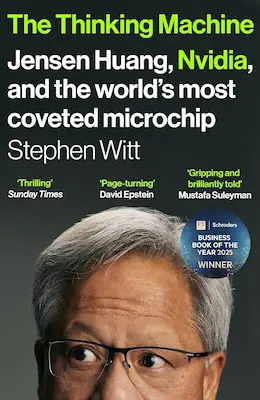
On the company whose fortunes this piece follows most closely, Stephen Witt’s The Thinking Machine: Jensen Huang, Nvidia, and the World’s Most Coveted Microchip tells the history of Nvidia and the engineering culture behind its dominance in AI hardware.
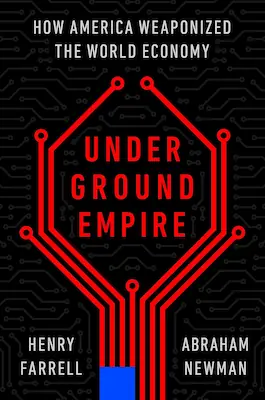
On the theory of coercion discussed in the second section, Henry Farrell and Abraham Newman’s Underground Empire: How America Weaponized the World Economy lays out the concept of weaponized interdependence that the two scholars developed, and that now shapes much of Washington’s chip policy.
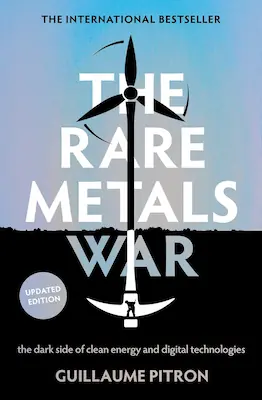
On the mineral dependencies discussed in the third section, Guillaume Pitron’s The Rare Metals War: The Dark Side of Clean Energy and Digital Technologies documents how the shift to green and digital technologies has created new dependencies on rare and critical minerals, most of them processed in China.
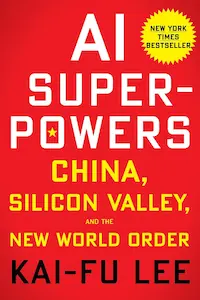
On the wider contest between Washington and Beijing over artificial intelligence, Kai-Fu Lee’s AI Superpowers: China, Silicon Valley, and the New World Order remains a widely read account of how the two countries built rival AI ecosystems.
Related Titles